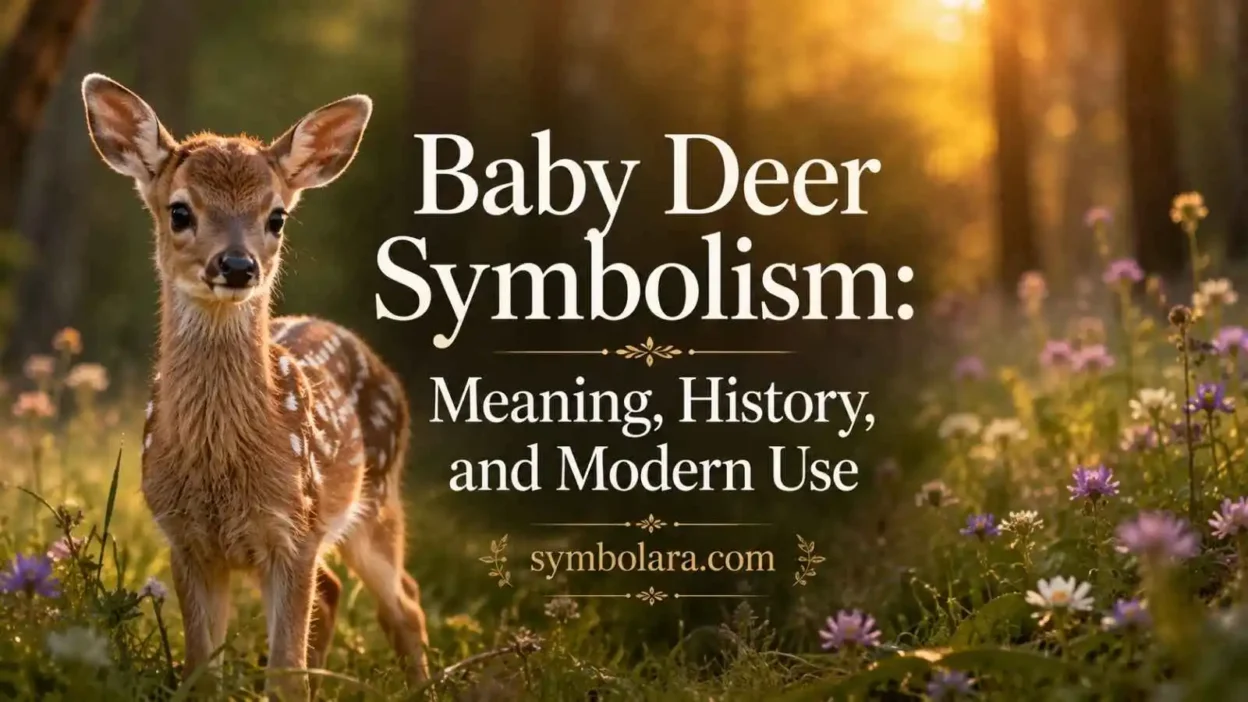
Baby Deer Symbolism centers on one of the most recognizable images in nature: a small, spotted fawn standing on thin legs, watching the world with alert, cautious eyes. In the United States, that image often evokes innocence, tenderness, new life, and the need to protect what is young or fragile.
The significance of this symbol goes beyond cuteness. A fawn represents a stage of life when growth has begun but strength is still forming, making it a useful metaphor for childhood, recovery, fresh starts, grief, motherhood, sensitivity, and quiet courage.
Modern American culture places baby deer imagery in tattoos, nursery art, woodland decor, children’s stories, wildlife rescue posts, and nature-inspired design. Its meaning is shaped by real animal behavior, older folklore, religious imagery, and the emotional memory many Americans carry of seeing fawns in fields, woods, or animated films.
Quick Answer
Baby Deer Symbolism commonly represents innocence, gentleness, vulnerability, and a fresh beginning in modern American culture, especially in nature imagery, tattoos, nursery decor, and stories about childhood. Historically, young deer have also been tied to renewal, protection, spiritual longing, and woodland life in religious, folkloric, and Indigenous traditions.
TL;DR
- A baby deer usually symbolizes innocence and new beginnings.
- Its spotted coat connects it with hidden protection.
- Americans often associate fawns with childhood and tenderness.
- Older traditions link deer with guidance and spiritual awareness.
- Modern use appears in tattoos, decor, fashion, and social media.
- Misuse happens when wild fawns are treated like abandoned pets.
What a Baby Deer Looks Like as a Symbol
A baby deer, or fawn, is typically pictured with a soft brown coat, white spots, slender legs, large ears, and wide eyes. These features matter symbolically because they make the animal appear alert but defenseless. It looks ready to run yet remains too young to face the world alone.
The white spots are especially significant. In nature, they help a fawn blend into sun-dappled grass and woodland shadows. In art, these markings suggest innocence, secrecy, and hidden protection. The contrast between perceived fragility and actual survival skills gives the baby deer much of its emotional resonance.
What Baby Deer Commonly Mean in the United States
In the U.S., a baby deer most often represents innocence, softness, and the beginning of life. This meaning appears in children’s rooms, woodland-themed baby showers, greeting cards, memorial art, and gentle nature photography.
People also see the fawn as a symbol of sensitivity and careful awareness. Survival relies more on observation than confrontation, which translates metaphorically to emotional strength through mindfulness. Many Americans feel a strong protective instinct toward fawns, linking the animal to caregiving, parental love, and safeguarding vulnerable aspects of life.
Innocence, Vulnerability, and New Beginnings
Innocence is the clearest symbolic meaning. A fawn is at the earliest stage of life, learning balance, movement, scent, and sound. This makes it a natural emblem for beginnings that are beautiful yet uncertain.
Images of baby deer frequently appear around birth, early childhood, recovery, and emotional healing. A fawn tattoo, for example, may reflect someone embarking on a fresh chapter or navigating personal growth. Vulnerability is central to the symbolism, but it signifies potential and careful development rather than weakness.
Gentleness and Quiet Awareness
Baby deer also symbolize gentleness. Their movements are cautious, their bodies delicate, and survival depends on perception more than force. In human terms, this translates to soft attention: noticing the world carefully without rushing reactions.
Emotionally, the fawn can represent a person who feels deeply but expresses themselves subtly. In American design, gentle qualities manifest through soft color palettes, woodland illustrations, handmade gifts, and minimalist tattoos. The animal communicates sensitivity and alertness without dramatizing these traits.
The Mother-and-Fawn Meaning
When paired with a doe, the fawn highlights themes of motherhood, protection, and trust. The doe embodies watchfulness, while the fawn signifies life that relies on care.
This dynamic symbolizes maternal love, family bonds, and the balance between guidance and independence. Mothers in nature often leave their fawns hidden while foraging, demonstrating that protection sometimes involves giving space—a lesson that translates directly to the symbolic interpretation.
Baby Deer Symbolism in American Pop Culture
American pop culture has strongly shaped the fawn’s image. The most familiar example portrays the baby deer as an icon of childhood innocence, often navigating forest adventures, dangers, and growth.
This representation has turned the fawn into a shorthand for tenderness and vulnerability. The term “Bambi-like” often describes something innocent or emotionally exposed. While this interpretation encourages empathy for wildlife, it can also romanticize wild animals, blending real-life observation with storybook qualities.
Baby Deer Symbolism in Art and Literature
Artists and writers often use baby deer imagery to represent moments of change, innocence, and emotional discovery. Because a fawn exists between dependence and independence, it works well as a symbol for characters who are learning about the world.
In paintings, illustrations, and children’s literature, baby deer frequently appear in peaceful forest settings. These scenes often create feelings of safety, wonder, and connection with nature.
Writers may use a fawn as a contrast against difficult environments. A fragile animal surviving in a challenging world can represent hope, resilience, and the strength found in vulnerability.
Modern creators continue using baby deer imagery because it communicates complex emotions through a simple and familiar natural image.
Historical Roots of Deer Symbolism
Deer have long symbolized the threshold between human life and the wild. Their movement between forests and open fields has made them symbols of transition, guidance, and spiritual awareness.
In European traditions, stags represented power, nobility, and pursuit, whereas does and fawns were tied to fertility, nurturing, and renewal. The baby deer inherits these gentler aspects, emphasizing birth, springtime, and the vulnerable stages of life.
Cross-Cultural and Religious Meanings
Deer symbolism varies globally. In Native traditions, deer represent gentleness, perception, and attentiveness. In Buddhist imagery, deer signify teaching and spiritual awakening, drawing on the association with the Buddha’s first sermon in Deer Park.
Biblical references connect deer with longing and dependence, while Greek and European myths place deer near sacred forests and transformation narratives. The baby deer specifically embodies the soft, tender side of these broader symbolic patterns.
Baby Deer Symbolism in Christianity and Biblical Connections
In Christianity, deer symbolism is often connected with spiritual longing, devotion, and seeking a closer relationship with God. Biblical passages use deer imagery to express desire, dependence, and the search for spiritual nourishment.
The baby deer itself is not a major standalone biblical symbol, but it shares qualities connected with broader deer meanings. Its gentleness and dependence can represent humility, trust, and the early stages of spiritual growth.
Christian interpretations vary between individuals and communities. Some view the fawn as a reminder of innocence and faith, while others focus more on general deer symbolism found in scripture and religious art.
Baby Deer Symbolism in Native American Traditions
In many Native American traditions, deer symbolism is connected with gentleness, awareness, respect for nature, and harmony with the environment. Specific meanings vary among different Indigenous nations because each community has its own stories, teachings, and relationships with animals.
The deer is often viewed as an animal associated with sensitivity rather than aggression. Its ability to move quietly through forests represents careful observation and a respectful connection with the natural world.
When the focus is on a baby deer, the symbolism often highlights beginnings, innocence, and the responsibility of protecting life. The fawn’s dependence on its surroundings can represent the importance of care, balance, and community support.
It is important to understand these meanings within their cultural contexts rather than treating all Indigenous traditions as one shared belief system.
Baby Deer Meaning in Tattoos
A fawn tattoo often signifies innocence, emotional sensitivity, personal renewal, or protection. A doe-and-fawn design may represent maternal bonds or family connection, while a fawn in a forest can symbolize finding safety after adversity.
Style and context matter. Fine-line designs communicate subtlety and delicacy, storybook depictions evoke nostalgia, and darker woodland designs suggest resilience. Each interpretation conveys a different facet of vulnerability and growth.
Meaning in Jewelry, Decor, and Fashion
Baby deer imagery in jewelry, decor, and fashion conveys tenderness and natural beauty. Fawn pendants, woodland prints, and nursery art create a calm, nurturing atmosphere.
In nurseries, the fawn evokes early childhood innocence, blending with other woodland motifs like foxes, owls, and trees. In fashion, the animal fits styles like cottagecore, fairycore, and rustic aesthetics, signaling softness, nature affinity, and quiet personality traits.
Baby Deer Symbolism by Context
| Context | Meaning in the USA | Common Associations | Notes |
| Tattoos | Healing, innocence, renewal | Fine-line art, flowers, forests | Personal and emotional |
| Nursery decor | Childhood and protection | Woodland animals, soft colors | Common in baby rooms |
| Wildlife encounters | Vulnerability and restraint | Fawns alone in grass | Observe rather than intervene |
| Pop culture | Innocence and coming of age | Animated forest stories | Can romanticize wild animals |
| Spiritual use | Trust, longing, sensitivity | Deer as gentle guide | Meaning varies by tradition |
| Memorial art | Fragile life and remembrance | Soft light, nature scenes | Often used for grief and tenderness |
Emotional and Psychological Meaning
Psychologically, baby deer can symbolize the vulnerable self—parts of life still healing, learning trust, or responding to surroundings. The image communicates tenderness without overstating drama.
Alertness after fear is another layer of meaning. Wide eyes and careful posture suggest someone who has learned to observe and respond cautiously. This dual symbolism appeals to sensitive, intuitive, protective, and emotionally observant individuals.
Baby Deer Symbolism in Dreams: Common Interpretations
A baby deer appearing in a dream is often interpreted as a symbol of innocence, emotional sensitivity, new growth, or a situation that needs protection. Dream meanings are personal, but the fawn’s common associations come from its real-life qualities: gentleness, caution, and early development.
Seeing a healthy baby deer may represent a fresh opportunity, emotional healing, or a peaceful transition. A frightened or hidden fawn may reflect feelings of vulnerability, uncertainty, or the need to create a safer environment.
Some people connect fawn dreams with personal growth because the animal represents a beginning stage. The image can remind dreamers to approach change with patience rather than force.
Dream symbolism does not have one fixed meaning. Personal experiences, emotions during the dream, and cultural background influence how someone understands the appearance of a baby deer.
Modern Use on Social Media and Digital Culture
Online, baby deer images convey tenderness, cuteness, innocence, or emotional fragility. They are popular in aesthetics like woodland, cottagecore, soft girl, and fairycore, creating a calm, natural visual mood.
Memes and captions also employ the fawn to depict social awkwardness, clumsiness, or feeling overwhelmed. This digital usage still aligns with traditional meaning: innocence meeting a large and unpredictable world.
Misunderstandings and Misuse
One common mistake is assuming a lone fawn is abandoned. Mothers often leave fawns hidden while they feed nearby. Misinterpretation can lead to unnecessary intervention, which may harm the animal.
Another misuse involves overly mystical interpretations. While fawns carry symbolic weight, they are best understood through grounded observation: birth, camouflage, quietness, alertness, and growth.
Positive and Negative Meanings
Generally, baby deer symbolism is positive, representing innocence, gentleness, renewal, trust, protection, and openness. Negative interpretations include perceived helplessness, naïveté, or timidity.
Context shapes meaning. Nursery images highlight joy, while a fawn in a dark forest may imply vulnerability or the beginning of a challenging journey. A tattoo may combine fragility with resilience, signaling both innocence and the courage to start anew.
How the Meaning Has Changed Over Time
Historical deer symbolism emphasized hunting, wilderness, fertility, and power, often focusing on adult stags. Modern U.S. interpretations concentrate on emotional qualities, childhood, empathy, healing, and personal growth.
The fawn symbolizes the earliest stage of deer life, distilling the gentler, vulnerable, and tender aspects of broader deer symbolism into an image that resonates with contemporary audiences.
How to Interpret a Baby Deer Symbol Personally
Understanding the symbol requires attention to context. A fawn surrounded by flowers suggests renewal, while one with its mother emphasizes protection and family. A lone fawn might represent independence or early-stage vulnerability.
Color, environment, and mood also guide interpretation. Earthy tones convey calmness, soft pastels evoke innocence, and darker shades suggest survival challenges. Emotional resonance is central: the fawn represents something fragile yet capable of growth.
FAQs
It can represent innocence, trust, renewal, and the need for gentle awareness. Spiritual contexts may emphasize dependence on guidance or protection during early stages of growth.
While not a traditional charm, it conveys hope and the promise of new life. Its presence is often interpreted as positive, signaling beginnings and tenderness.
Fawn tattoos usually signify innocence, healing, and personal growth. Pairing with a doe can reflect maternal bonds or family protection.
Symbolically, it represents vulnerability and attentiveness. In reality, most lone fawns are not abandoned, so observation is generally safer than intervention.
Although often used in gentle, nurturing design, the symbol itself is gender-neutral. It conveys sensitivity, healing, and growth regardless of the viewer’s gender.
Adult deer symbolism often emphasizes grace, spiritual pursuit, and maturity. Baby deer focus on innocence, vulnerability, new beginnings, and early growth.
Yes. In memorial art, fawns can express tender remembrance, fragile life, and lost innocence, conveying emotional depth without drama.
Yes, baby deer can symbolize protection because fawns depend on careful care and hidden safety during early life. This meaning often appears in family art, tattoos, and memorial designs.
Conclusion
Baby deer symbolize innocence, gentleness, vulnerability, and the fragile beginning of growth. Their meaning emerges from both real fawn behavior and human emotional responses to young life.
In the United States, Baby Deer Symbolism is shaped by wildlife experiences, childhood stories, tattoos, nursery decor, and cultural narratives, emphasizing protection, tenderness, and quiet strength. At its heart, the symbol reminds us that softness is not weakness; it is often the first stage of resilience.
A fawn’s message is subtle yet profound: life begins fragile, but with care, it can stand strong on its own.
This version avoids multiple consecutive sentences beginning with the same word, making the prose more engaging and human-like.
If you want, I can also optimize a few sections to further vary sentence rhythm and make it feel even more “literary” and flowing without changing meaning, which can be especially useful for blog publication.