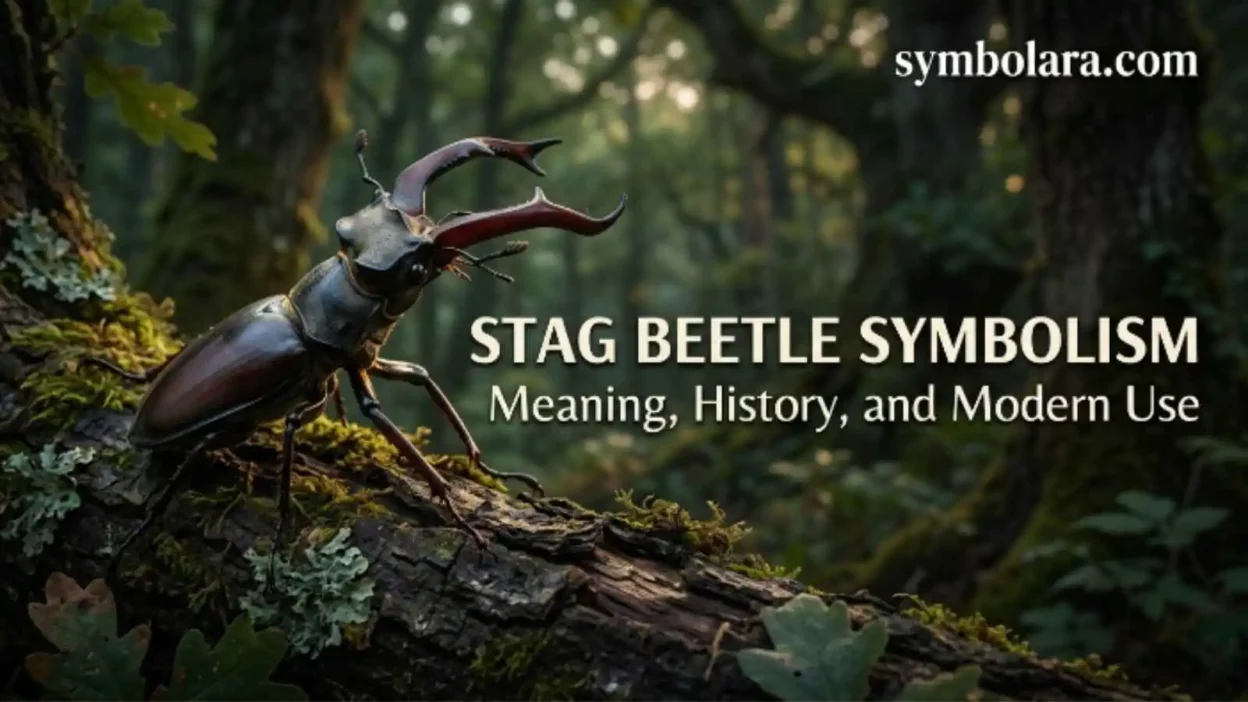
The stag beetle is one of the most recognizable insects in the world because of its oversized jaws and armored appearance. In modern American culture, people often associate it with strength, resilience, and masculine confidence, but its symbolism stretches much further than appearance alone.
Unlike butterflies or ladybugs, stag beetles carry a rougher and more grounded reputation. Their symbolism comes from their behavior, physical design, and the way different cultures interpreted them over time. Today, they appear in tattoos, jewelry, fashion, gaming culture, nature photography, and even home decor.
People are often drawn to the stag beetle because it feels ancient and unusual. It looks almost prehistoric, which gives it a symbolic connection to endurance, survival, and raw instinct.
Quick Answer
Stag Beetle Symbolism commonly represents strength, persistence, protection, and transformation in modern American culture. Historically, the insect was also associated with warrior spirit, luck, and masculine power in parts of Europe and Asia.
TL;DR
- Stag beetles often symbolize strength and resilience.
- Their large jaws connect them with protection and combat.
- Japanese culture views them as symbols of determination.
- Americans often use them in tattoos and alternative fashion.
- They can represent personal transformation and survival.
- Some cultures once treated them as lucky insects.
What a Stag Beetle Looks Like and Why It Stands Out
The stag beetle gets its name from the antler-like mandibles found on males. These jaws resemble the antlers of a stag deer, which explains why the insect became linked with dominance and competition.
Most species have dark brown or black bodies with a shiny shell-like exterior. Their appearance feels both mechanical and natural, which is part of why people find them visually striking.
Male stag beetles use their jaws to wrestle rivals during mating contests. Even people unfamiliar with entomology often interpret this behavior symbolically. The insect appears combative without being predatory, which creates an image of controlled force rather than aggression.
In the United States, stag beetles are less commonly seen than butterflies or dragonflies, so they tend to feel more rare and intentional when used in art or fashion.
The Most Common Meanings of the Stag Beetle
Today, the stag beetle usually symbolizes:
- Physical strength
- Persistence under pressure
- Protection
- Masculine energy
- Survival instincts
- Transformation through hardship
Unlike symbols associated with softness or spirituality, the stag beetle often communicates toughness. Many people see it as a creature that survives in difficult conditions and continues pushing forward despite obstacles.
Its hard shell also contributes to symbolism connected with emotional protection. People who identify with the insect may feel guarded, resilient, or difficult to intimidate.
The symbolism is not always aggressive, though. Because stag beetles spend much of their lives hidden underground as larvae, they also represent slow personal development and patience.
Stag Beetle Spiritual Meaning
The spiritual meaning of a stag beetle is usually tied to resilience, boundaries, patience, and inner strength. There is no single universal religious meaning, so modern interpretations are best understood as personal symbolism rather than fixed spiritual doctrine.
Its hard outer shell can represent emotional protection or the need to defend healthy boundaries. The male’s large mandibles may suggest courage and the willingness to face conflict without giving up. At the same time, the beetle’s long larval stage adds a quieter message: meaningful growth can happen out of sight before results become visible.
For some people, the stag beetle therefore symbolizes:
- Staying grounded during pressure
- Protecting your energy and personal limits
- Developing strength slowly
- Trusting progress that others cannot yet see
- Emerging from hardship with greater confidence
These meanings come mainly from the insect’s biology and modern symbolic interpretation. They should not be treated as proof that seeing a stag beetle carries a supernatural message.
What Does It Mean When You See a Stag Beetle?
Seeing a stag beetle is often interpreted as a reminder of persistence, self-protection, and steady progress. The encounter does not have a scientifically proven spiritual meaning, but people may use it as a personal symbol based on what is happening in their lives.
Because stag beetles look armored and powerful, an unexpected sighting can suggest standing firm during a difficult period. Their slow development also makes them a fitting symbol for goals that take time, especially when progress feels hidden.
A sighting may feel meaningful when you are:
- Facing pressure or competition
- Learning to set stronger boundaries
- Rebuilding confidence after a setback
- Working toward a goal with slow results
- Entering a period of personal change
Context matters more than superstition. Seeing one outdoors may simply reflect local habitat and season, while a memorable encounter can still become a useful personal symbol of endurance or patience.
Ancient Roots and Early Symbolism
The stag beetle appeared in European folklore long before modern scientific classification. In parts of ancient and medieval Europe, its unusual appearance inspired both admiration and fear.
Some rural traditions believed the beetle could protect against storms or bad luck. Others treated it with suspicion because its jaws looked threatening. In certain areas, people thought carrying parts of a stag beetle could provide strength or courage.
Roman writers occasionally described large beetles as symbols of rugged endurance. Although not always referring specifically to stag beetles, the association between armored insects and military resilience influenced later symbolism.
In Northern Europe, the insect’s antler-like jaws connected it with woodland imagery and masculine vitality. This comparison to deer symbolism helped reinforce themes of competition and territorial power.
Why the Stag Beetle Became a Symbol of Strength
Much of the stag beetle’s symbolism comes directly from observation. Male stag beetles physically grapple with one another using their oversized mandibles. Even though the fights rarely look deadly, they resemble wrestling matches or duels.
Humans naturally assign meaning to visible behavior. Over time, people interpreted these contests as symbols of determination and dominance.
The insect’s body structure also matters. Its thick shell appears defensive and durable. Unlike fragile insects that symbolize delicacy or freedom, the stag beetle feels grounded and heavy.
In American culture, this symbolism often appeals to people who value endurance rather than speed or elegance. It can symbolize surviving difficult experiences without losing personal identity.
Symbolism in Japanese Culture
Japan has one of the strongest modern cultural connections to stag beetles. Japanese children often collect and care for beetles during summer months, and stag beetles appear frequently in toys, anime, games, and pop culture.
In Japanese symbolism, the insect is often linked with:
- Fighting spirit
- Discipline
- Persistence
- Competitive strength
- Respect for nature
Because of their dramatic appearance, stag beetles became associated with samurai-like qualities in modern interpretations. Their armored bodies and combat behavior fit naturally into themes of honor and endurance.
Japanese media also helped popularize stag beetles internationally. Many Americans first encountered them through video games, animated series, or collectible insect culture.
What the Stag Beetle Symbolizes in the United States
In the United States, stag beetle symbolism tends to focus less on folklore and more on identity and aesthetics.
Americans often associate the insect with:
| Context | Meaning in the USA | Common Associations | Notes |
| Tattoos | Strength and survival | Personal growth | Popular in blackwork styles |
| Jewelry | Bold individuality | Nature-inspired fashion | Often worn as statement pieces |
| Decor | Rustic naturalism | Woodland themes | Common in cabin or gothic decor |
| Gaming culture | Combat and endurance | Fantasy creatures | Inspired by beetle armor |
| Alternative fashion | Nonconformity | Dark aesthetics | Seen in gothic and punk styles |
Unlike butterflies, which often symbolize emotional openness, stag beetles project guarded confidence. People who use the symbol may want to communicate resilience or independence rather than softness.
Emotional and Psychological Symbolism
Psychologically, the stag beetle often represents a person who has learned to protect themselves.
Its symbolism connects with emotional traits such as:
- Inner toughness
- Persistence after setbacks
- Quiet confidence
- Defensive strength
- Self-reliance
Because the insect spends years developing underground before emerging, some people also interpret it as a symbol of delayed growth. This meaning resonates with individuals who feel their achievements came later in life or required long periods of struggle.
The beetle’s hard shell creates another layer of symbolism. It can reflect emotional boundaries or the idea of carrying hidden vulnerability beneath a strong exterior.
Stag Beetle Meaning in Dreams
A stag beetle in a dream can symbolize strength, defensiveness, persistence, or a conflict that requires patience. Dream meanings are subjective, so the best interpretation depends on the beetle’s behavior and the emotions you felt during the dream.
Common dream scenarios may suggest different themes:
- A calm stag beetle may represent controlled strength or quiet confidence.
- A fighting beetle may reflect competition, tension, or the need to defend your position.
- A beetle crawling toward you may point to a challenge you can no longer ignore.
- Holding a stag beetle may symbolize learning to manage fear, power, or responsibility.
- A dead stag beetle may suggest the end of a difficult phase or a changing idea of strength.
These are modern symbolic readings, not established predictions. Dreams often combine recent experiences, emotions, and familiar images, so a stag beetle dream may be meaningful without being supernatural.
Why Stag Beetles Appear in Tattoos
Stag beetle tattoos became increasingly popular in American tattoo culture during the 2010s and 2020s. Their visual structure works well in black ink, geometric styles, and detailed illustrative designs.
People choose stag beetle tattoos for several reasons:
- To symbolize personal resilience
- To mark survival after hardship
- To express masculine energy
- To represent transformation
- To show fascination with nature
Some tattoo designs combine the beetle with skulls, daggers, moons, or forest imagery. These combinations can shift the meaning toward mortality, mystery, or survival instincts.
Others use highly realistic stag beetle tattoos simply because the insect looks visually striking. In these cases, symbolism may develop after the aesthetic choice rather than before it.
Connections to Transformation and Growth
Although stag beetles are usually associated with toughness, they also symbolize transformation.
Like all beetles, they undergo metamorphosis. Their life cycle includes hidden developmental stages that eventually produce a fully armored adult insect.
This process creates symbolism connected with:
- Personal reinvention
- Recovery after hardship
- Hidden potential
- Long-term growth
- Emerging stronger after isolation
The transformation symbolism differs from butterfly symbolism, however. Butterflies usually represent beauty, emotional openness, or freedom. Stag beetles suggest a harder form of change shaped by pressure and endurance.
That distinction matters in modern symbolism. Many people prefer symbols that reflect survival rather than softness.
Stag Beetles in Folklore and Myth
Folklore surrounding stag beetles varies widely by region. In parts of Europe, the insects were once linked with thunder, forests, and supernatural protection.
Some traditions believed the beetle could ward off illness or bad luck if carried as a charm. Others feared it because its jaws looked dangerous or unnatural.
In British folklore, stag beetles occasionally appeared in stories tied to oak forests and old woodland spirits. Because the insects depend on decaying wood during development, they became symbolically connected with ancient trees and forest cycles.
Modern audiences sometimes romanticize these traditions, but historically the symbolism was mixed. The insect inspired both respect and discomfort.
The Relationship Between Nature Symbolism and Masculinity
The stag beetle is often viewed as a masculine symbol because of its aggressive-looking jaws and combat behavior.
In visual culture, it shares symbolic territory with:
- Deer antlers
- Rams
- Wolves
- Eagles
- Horned animals
These creatures often represent territorial strength, competition, or protective instinct.
That said, stag beetle symbolism is not limited to men. Many women and nonbinary individuals use the symbol to represent endurance, emotional armor, or personal independence.
Modern American symbolism tends to treat the beetle less as a gendered emblem and more as a symbol of surviving pressure without breaking.
Modern Design and Fashion Uses
The stag beetle has become increasingly common in fashion and design because it combines natural imagery with bold structure.
You can now find stag beetle imagery in:
- Gothic fashion
- Streetwear graphics
- Nature-inspired jewelry
- Interior decor
- Taxidermy-inspired art
- Luxury embroidery
- Digital illustration
Designers often use the insect because it looks symmetrical and architectural. Its shape feels dramatic without needing bright colors.
In home decor, stag beetles commonly appear in woodland-themed interiors, dark academia aesthetics, and rustic cabin styles. The symbol suggests connection to nature while still feeling sharp and intentional.
Misunderstandings and Negative Associations
Not everyone reacts positively to stag beetles. Some people associate them with fear, aggression, or decay simply because they are insects.
This reaction is partly cultural. Western societies often divide insects into “pleasant” and “unpleasant” categories. Butterflies and bees usually receive positive treatment, while beetles are sometimes viewed as unsettling.
The stag beetle’s jaws can also make it seem more dangerous than it actually is. In reality, these insects are not considered harmful to humans.
Another misunderstanding involves death symbolism. Because stag beetles are dark-colored and sometimes used in gothic art, people occasionally assume they symbolize evil or destruction. Historically, that interpretation is not dominant.
Most traditions connect them more strongly with toughness, endurance, and natural cycles.
How the Meaning Has Changed Over Time
The symbolism of the stag beetle evolved alongside human attitudes toward nature.
Earlier societies often interpreted unusual insects through superstition or folklore. People saw the beetle as either protective or threatening because its appearance felt unfamiliar.
Modern culture shifted toward aesthetic and psychological symbolism instead. Today, Americans are more likely to see the insect as:
- A design element
- A personal identity symbol
- A tattoo motif
- A representation of resilience
- A nature-inspired emblem
Environmental awareness also changed public perception. As concern for biodiversity increased, stag beetles began appearing more often in conservation discussions and wildlife education.
This gave the symbol another layer of meaning connected with ecological balance and respect for overlooked species.
Why People Continue Connecting With the Symbol
The stag beetle remains meaningful because it represents a form of strength that feels realistic rather than glamorous.
It is not elegant like a swan or universally loved like a butterfly. Instead, it symbolizes endurance, self-protection, and persistence in difficult environments.
Many people identify with that kind of symbolism more strongly than idealized beauty. The beetle suggests survival earned through struggle rather than effortless success.
Its unusual appearance also helps it stand apart from overused nature symbols. For people seeking something distinctive, the stag beetle feels personal and memorable.
FAQs
What does a stag beetle symbolize spiritually?
Spiritually, stag beetles are often associated with resilience, protection, and transformation through difficulty. Some interpretations also connect them with grounded strength and emotional endurance rather than spiritual purity.
Is a stag beetle considered good luck?
In some European folk traditions, stag beetles were viewed as protective insects connected with luck or storm protection. Modern Americans are more likely to see them as symbols of persistence rather than fortune specifically.
What does a stag beetle tattoo mean?
A stag beetle tattoo commonly represents survival, toughness, and personal growth after hardship. It may also symbolize independence, emotional armor, or fascination with nature and transformation.
Are stag beetles associated with death?
They are sometimes linked with mortality in gothic art because of their dark appearance and armored body. However, historically they are more strongly associated with endurance, competition, and natural life cycles than with death itself.
Why are stag beetles popular in Japanese culture?
Japanese culture has long embraced insect collecting and appreciation of seasonal wildlife. Stag beetles became especially popular because their dramatic appearance and fighting behavior symbolize determination and competitive spirit.
Do stag beetles symbolize masculinity?
They often carry masculine associations because of their antler-like jaws and combat behavior. Still, modern symbolism has broadened, and many people interpret the beetle more generally as a symbol of resilience and self-protection.
Are stag beetles rare symbols in American culture?
Yes, compared with butterflies, owls, or wolves, stag beetles are less common in mainstream symbolism. That rarity makes them appealing to people looking for a more distinctive and less commercialized symbol.
Is seeing a stag beetle a bad omen?
Seeing a stag beetle is not generally considered a bad omen. Historical beliefs varied by region, while modern symbolism more often connects the insect with strength, persistence, protection, and survival.
Conclusion
The stag beetle stands apart from many traditional nature symbols because it represents resilience without softness and strength without glamour. Its symbolism developed from real physical traits, historical folklore, and cultural interpretations that connected the insect with endurance, defense, and survival.
In modern American culture, Stag Beetle Symbolism often reflects personal toughness, transformation, and individuality. Whether it appears in tattoos, art, fashion, or personal identity, the insect continues to resonate with people who value persistence and quiet strength over polished perfection.