A red fox can disappear into tall grass, move quietly through a forest, and find food in places where other animals struggle. Its pointed ears, narrow muzzle, bushy tail, and alert movements make it easy to recognize. These traits have helped shape the way people interpret the animal.
Fox Symbolism often centers on intelligence, cleverness, adaptability, independence, and the ability to handle difficult situations. However, the fox has not always represented something positive. In European stories, it can be a dishonest trickster, while other cultural traditions connect it with spiritual beings, transformation, or good fortune.
In the United States, foxes appear in children’s stories, wildlife photography, tattoos, clothing designs, sports imagery, and everyday conversations. Their meaning often depends on the setting and the qualities someone wants to express.
Quick Answer
Foxes commonly symbolize intelligence, cleverness, adaptability, independence, and resourcefulness in modern American culture. These associations developed partly from the animal’s real hunting behavior and partly from centuries of folklore, fables, and storytelling. Today, people use fox imagery to express confidence, quick thinking, curiosity, and the ability to adapt.
TL;DR
- Cleverness: Foxes represent intelligence and quick thinking.
- Adaptability: Their survival skills suggest flexibility during change.
- Independence: A solitary fox can represent self-reliance.
- Trickery: European fables often portray foxes as cunning characters.
- Spiritual meaning: Japanese folklore connects foxes with kami and transformation.
- Modern use: Fox imagery appears in tattoos, fashion, art, and popular culture.
What Does a Fox Look Like, and Why Does Its Appearance Matter?
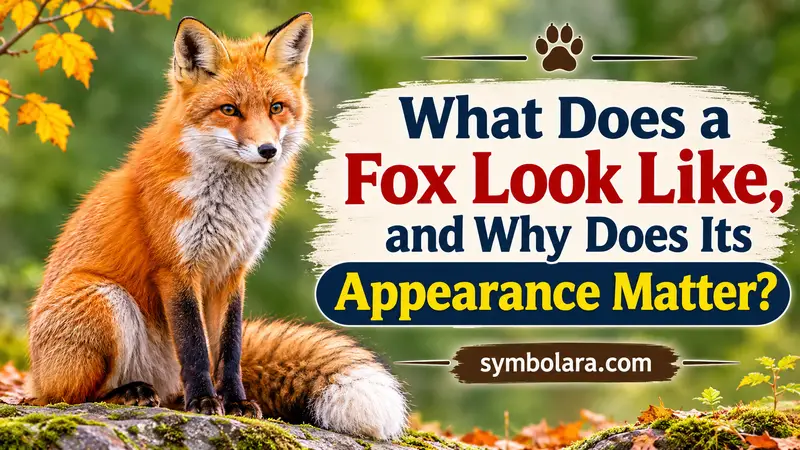
Foxes are small to medium-sized mammals belonging to the dog family, Canidae. The red fox (Vulpes vulpes) is one of the best-known species and is found across much of North America, Europe, and Asia.
Its most recognizable features include a pointed face, upright ears, narrow legs, and a long, bushy tail. Red foxes usually have reddish-orange fur, a pale underside, dark lower legs, and a white-tipped tail. However, their coats can vary from silver and black to golden and pale shades.
These physical features help explain several common associations:
- Pointed ears: Suggest alertness and awareness.
- Sharp facial features: Often create an impression of intelligence.
- Bushy tail: Gives the animal a recognizable and expressive appearance.
- Quiet movements: Connect the fox with patience and careful observation.
- Changing coat colors: Can suggest variety and adjustment to different environments.
Foxes are also highly adaptable. They live in forests, grasslands, mountains, farmland, and even suburban neighborhoods. Their ability to survive in different environments has helped establish their association with flexibility.
What Does a Fox Symbolize in Modern American Culture?
In the United States, the fox is most commonly associated with cleverness and the ability to find solutions when circumstances become difficult.
However, its meaning can change depending on how it appears and what someone wants to communicate.
Intelligence and quick thinking: A fox often represents someone who notices details, understands situations quickly, and finds creative solutions. This association comes from the animal’s hunting behavior and its reputation in traditional stories.
Adaptability: Foxes can adjust their behavior to different surroundings. As a symbol, they can represent someone who handles new experiences without losing their sense of direction.
Independence: A fox moving alone through a field may suggest self-reliance. This interpretation is particularly common in artwork and personal designs.
Caution and awareness: Foxes rely on their senses to detect danger and locate food. Their image can represent the importance of observing a situation before acting.
Cunning and deception: Not every interpretation is flattering. The fox can also represent manipulation, dishonesty, or someone who uses intelligence for personal advantage.
These meanings can exist together. A person might admire a fox for its intelligence while recognizing that cleverness can sometimes be used unfairly.
Where Did the Fox’s Reputation for Cleverness Come From?
The connection between foxes and cleverness developed through a combination of animal observation and storytelling.
Foxes are skilled hunters. They use hearing to locate prey beneath grass or snow, approach carefully, and change their movements according to the situation. Their ability to find food in different environments also makes them appear resourceful.
People noticed these behaviors long before modern wildlife research explained them.
Stories helped turn those observations into familiar character traits. In traditional European fables, the fox frequently appears as a clever animal that survives through planning, persuasion, and deception.
One well-known example is the story of the fox and the grapes, commonly associated with Aesop’s fables. A fox tries to reach grapes hanging high above him but eventually gives up and declares that they are probably sour.
The story became a way to describe people who criticize something they cannot obtain.
Over time, the fox became more than an animal known for hunting. It became a character representing intelligence, quick judgment, and sometimes dishonest behavior.
How Did European Folklore Shape the Fox’s Meaning?
European storytelling played a major role in establishing the fox as a clever trickster.
One important example is Reynard the Fox, a collection of medieval animal tales that developed through several European literary traditions. Reynard is a fox who uses clever arguments, manipulation, and deception to survive conflicts with other animals.
He is not simply a hero or villain. His behavior often exposes greed, dishonesty, and hypocrisy among the characters around him.
This made the fox useful as a literary character. Writers could use an animal to criticize human behavior without directly describing real political or social figures.
The fox also appears in European versions of traditional animal fables, where it frequently outsmarts stronger animals through intelligence rather than physical strength.
These stories influenced later children’s books, illustrations, cartoons, and popular entertainment.
By the time European settlers brought familiar stories to North America, the fox already had a recognizable reputation as a clever and sometimes untrustworthy character.
What Does the Fox Represent in Native American Traditions?
Fox stories appear in some Native American oral traditions, but their meanings differ between individual nations and communities.
There is no single Native American interpretation of the fox.
In some traditions, foxes appear as clever animals connected with hunting, survival, observation, or lessons about human behavior. Certain stories give animals roles as teachers, helpers, or trickster figures.
However, it is important not to assume that every Indigenous fox story has the same meaning. Native American cultures include many distinct languages, histories, and storytelling traditions.
For example, the role of an animal in a particular tribal story may depend on the region, the community’s relationship with local wildlife, and the purpose of the story.
Some stories may use a fox to demonstrate the consequences of selfish behavior. Others may emphasize its ability to notice danger or find a way through difficult circumstances.
These traditions should be understood within their own cultural settings rather than combined into one general spiritual meaning.
What Does a Fox Mean in Japanese Culture?
Japanese folklore offers one of the best-known cultural interpretations of the fox.
The fox, called kitsune in Japanese, appears in traditional stories as an intelligent animal associated with transformation, supernatural abilities, and spiritual connections.
In many Japanese traditions, kitsune can change their appearance, communicate with humans, or take human form. Some stories portray them as helpful and protective, while others describe them as mischievous or deceptive.
Foxes also have an important connection with Inari, a Japanese kami associated with rice, agriculture, prosperity, and other forms of well-being.
Fox statues are commonly found at Inari shrines. They may hold objects such as keys, jewels, or sheaves of grain in their mouths. These objects carry different associations within the shrine tradition.
One important distinction is that foxes are generally understood as messengers or associated figures of Inari, rather than simply being the deity itself.
This connection explains why fox imagery in Japanese-inspired artwork can communicate meanings beyond cleverness. Depending on the design, it may suggest protection, prosperity, transformation, or a connection with Japanese folklore.
Why Is the Fox Important in American Stories and Everyday Life?

Foxes have a visible place in American culture because they exist in the country’s wildlife and storytelling traditions.
The red fox is found across much of the United States. People may encounter one near a wooded trail, on farmland, or even crossing a suburban road at night.
These real-life encounters influence how Americans understand the animal.
In children’s literature, fox characters often represent curiosity and intelligence. A familiar example is Roald Dahl’s Fantastic Mr. Fox, published in 1970. Its main character uses planning and cleverness to overcome obstacles and protect his family.
The story helped keep the fox’s association with quick thinking visible in modern children’s entertainment.
Fox imagery also appears in sports and school mascots. Schools and teams may choose a fox to suggest speed, alertness, and competitive intelligence.
In everyday American language, calling someone a fox can have different meanings depending on the context. Historically, the expression has sometimes described an attractive person, while calling someone a clever fox usually suggests intelligence or craftiness.
The animal therefore occupies several roles at once: a familiar wild mammal, a fictional character, a mascot, and a recognizable cultural image.
What Does a Fox Represent Emotionally and Psychologically?
People often connect with fox imagery because it reflects qualities they admire or want to develop.
A person who sees themselves as independent may appreciate the image of a fox traveling alone. Someone going through a major life change might connect with its ability to survive in different environments.
The animal can also represent a desire to become more observant.
For example, someone starting a new job may choose a small fox illustration because it reminds them to pay attention, learn quickly, and make thoughtful decisions.
A person recovering from a difficult experience might associate the fox with finding another way forward instead of giving up.
There is also a less positive emotional interpretation. Someone who has experienced dishonesty may see a fox as a reminder to recognize manipulation and avoid trusting appearances too quickly.
Psychologically, these connections are personal interpretations rather than universal rules. Seeing a fox does not prove that someone possesses a particular personality trait or that a specific event is about to happen.
The meaning comes from the connection a person makes between the animal and their own experiences.
Why Do People Choose Fox Tattoos?
Fox tattoos are popular among people who want an animal design that can communicate intelligence, independence, and adaptability.
The meaning often depends on the style, color, and other elements included in the artwork.
Some common designs include:
- Red fox tattoo: Often represents cleverness, confidence, and resourcefulness.
- Sleeping fox tattoo: Can suggest rest, comfort, and a peaceful relationship with solitude.
- Geometric fox tattoo: Combines natural imagery with ideas of order, planning, and modern design.
- Fox with flowers: May represent a balance between alertness and gentleness.
- Fox in a forest: Can suggest independence, curiosity, and a connection with nature.
- Japanese kitsune mask: Often draws on Japanese folklore, transformation, and traditional artistic styles.
Color can also affect the interpretation. An orange fox may emphasize its recognizable natural appearance, while a black fox design might communicate a more dramatic or personal artistic style.
People sometimes choose a fox tattoo to mark a period when they learned to trust their judgment or adjust to an unexpected change.
Others simply appreciate the animal’s appearance. A tattoo does not need to represent a major personal experience to have meaning.
How Is Fox Imagery Used in Jewelry, Fashion, and Home Decor?
Fox designs appear in many everyday products, particularly items inspired by forests, wildlife, and nature.
In jewelry, a small fox pendant or ring can represent intelligence, independence, or affection for wildlife. Some people choose a fox charm because it reminds them of a favorite childhood story or a meaningful encounter with an animal.
Fashion designers and clothing brands sometimes use fox illustrations to create a playful or outdoors-inspired appearance.
A fox printed on a sweatshirt, scarf, or tote bag may simply communicate an interest in woodland animals. It does not necessarily carry a traditional spiritual meaning.
Home decor offers another setting for this imagery.
A ceramic fox figurine on a bookshelf can create a woodland theme. Fox illustrations on children’s bedding or nursery decorations often give a room a friendly, imaginative appearance.
In rustic American interiors, fox artwork may appear alongside trees, deer, birds, and other wildlife designs.
The meaning depends on the person’s reason for choosing the object. A fox necklace might represent independence to one person and a favorite animal to another.
What Does It Mean When You See a Fox in Real Life?

Seeing a fox in your neighborhood or during a walk can create a memorable experience, especially if the animal appears unexpectedly.
Some people interpret the encounter as a reminder to stay alert, think carefully, or adjust to changing circumstances. Others simply enjoy seeing wildlife in its natural environment.
A few common personal interpretations include:
A fox crossing your path: Someone might associate this encounter with paying attention to their surroundings or considering a different approach to a problem.
A fox watching from a distance: Its cautious behavior may remind someone to observe a situation before making a decision.
A fox appearing near your home: This may inspire thoughts about the relationship between people, wildlife, and shared outdoor spaces.
A fox appearing repeatedly: Repeated sightings may encourage someone to reflect on why the animal catches their attention. However, the sightings may also have a straightforward explanation, such as a nearby den or regular feeding area.
There is no scientific evidence that seeing a fox predicts a future event. In practical terms, foxes may visit residential areas because they can find rodents, insects, fruit, and other food nearby.
Enjoying the encounter without assuming it carries a fixed message is a reasonable way to appreciate the experience.
Is the Fox a Positive or Negative Symbol?
The fox can represent positive and negative qualities. Its reputation depends largely on the story or situation in which it appears.
| Context | Meaning in USA | Common Associations | Notes |
| Personal tattoo | Intelligence and independence | Confidence, adaptability | Often reflects personal values. |
| Children’s stories | Cleverness and curiosity | Imagination, problem-solving | The character may be a hero or troublemaker. |
| Jewelry and accessories | Individuality | Self-reliance, creativity | Often chosen for appearance or personal meaning. |
| Traditional folklore | Cunning and trickery | Deception, strategy | European stories frequently use the fox as a trickster. |
| Wildlife artwork | Connection with nature | Freedom, observation | Often reflects an interest in animals and outdoor life. |
A fox is positive when its intelligence represents good judgment, resourcefulness, or the ability to handle challenges.
It can take on a negative meaning when cleverness becomes manipulation or dishonesty.
Neither interpretation is automatically correct in every situation. The surrounding context matters more than the animal alone.
What Are the Most Common Misunderstandings About Fox Symbolism?
Several misconceptions can make the animal’s cultural meaning seem simpler than it really is.
Misunderstanding 1: Every fox represents deception.
European fables often portray foxes as dishonest characters, but this is only one part of their cultural identity. Other stories emphasize intelligence, survival, protection, or helpful behavior.
Misunderstanding 2: Foxes always represent good luck.
Some cultural traditions connect foxes with prosperity or favorable outcomes. However, this is not a universal belief, and many traditions give them more complicated roles.
Misunderstanding 3: All foxes have the same meaning.
Different species, artistic styles, and cultural traditions can create different associations. A red fox in a wildlife painting may communicate something different from a Japanese kitsune mask.
Misunderstanding 4: Seeing a fox predicts something.
A real fox sighting does not provide reliable evidence about future events. Personal interpretations belong to folklore, spirituality, or individual belief rather than scientific prediction.
Misunderstanding 5: The fox is simply a symbol of intelligence.
Its associations also include caution, independence, adaptability, playfulness, and trickery. Reducing the animal to one characteristic overlooks much of its cultural history.
Understanding these differences makes it easier to appreciate fox imagery without treating every interpretation as a universal fact.
How Has the Meaning of the Fox Changed Over Time?
The fox’s cultural role has developed through several periods, with each generation adding new interpretations.
In ancient and medieval storytelling traditions, foxes often appeared as clever animals that could defeat stronger opponents through strategy. European stories later developed this idea into recognizable trickster characters, including Reynard.
During the medieval period, Reynard stories became especially important in European literature. They used animal characters to comment on social behavior, political power, and human weaknesses.
When European settlers arrived in North America, they brought familiar stories and attitudes toward foxes. At the same time, the animals were part of the continent’s wildlife and appeared in different Indigenous storytelling traditions.
During the 19th century, foxes also became associated with hunting and sporting culture in parts of the United States. Red fox hunting and the use of fox imagery in outdoor traditions contributed to their place in rural and country-inspired art.
The 20th century introduced new interpretations through children’s books, animation, advertising, and entertainment. Characters such as Fantastic Mr. Fox helped present the animal as a resourceful figure who could use intelligence to overcome unfair situations.
By the 2000s and 2010s, woodland-inspired fashion, nature photography, decorative illustrations, and animal-themed accessories gave fox imagery another place in everyday life.
In 2025–2026, the fox continues to appear in tattoos, digital illustrations, clothing, home decorations, and wildlife-related content. Some people focus on its traditional reputation for cleverness, while others appreciate it as an attractive wild animal.
The main shift is that modern interpretations are more personal. People can choose the meaning they prefer without needing to follow one cultural tradition.
FAQs
Does a fox symbolize intelligence or wisdom?
A fox most commonly represents cleverness, practical intelligence, and quick thinking. Wisdom is a related but slightly different interpretation because it involves using knowledge and experience to make sound decisions.
What does a fox symbolize in Christianity?
The fox appears in the Bible, including a passage in Luke 13:32, where Jesus refers to Herod as a fox. In that setting, the comparison is generally understood as criticism of Herod rather than a statement about foxes having a universal Christian meaning.
What does a white fox symbolize?
A white fox may represent purity, rarity, winter, or individuality in modern artwork. Its interpretation also depends on the design and cultural background, since white foxes are not assigned one universal meaning.
What does a fox symbolize in dreams?
A fox in a dream may remind someone of cleverness, caution, independence, or a situation involving trust. Dream interpretations are personal, so the animal’s behavior and the dreamer’s feelings are more useful than assuming one fixed explanation.
Why is the fox associated with tricksters?
Foxes became associated with trickery through European fables and medieval animal literature. Their reputation for avoiding danger and finding creative ways to hunt also helped make them suitable characters for stories about deception and cleverness.
What does a fox symbolize in Japanese tattoos?
A Japanese fox tattoo often draws inspiration from kitsune folklore. Depending on its design, it may represent transformation, protection, cleverness, or a connection with Inari traditions.
Is a fox a symbol of independence?
Yes, independence is a common modern interpretation, especially in personal artwork and tattoos. This association comes partly from the image of a fox moving and hunting on its own, although foxes also form family groups and participate in social behavior.
Conclusion
Fox Symbolism brings together several recognizable ideas, including intelligence, adaptability, independence, caution, and cleverness. Its reputation developed through real animal behavior, European fables, Indigenous storytelling traditions, Japanese folklore, and modern entertainment.
In American culture, the fox can appear as a wildlife subject, a children’s story character, a tattoo, a fashion design, or a reminder to approach difficult situations with careful thought. Its meaning changes with the person and the setting.
Perhaps that flexibility explains why fox imagery remains appealing. A small fox illustration on a necklace, for example, can remind someone of independence, a favorite childhood story, or a memorable encounter with wildlife. The same animal can communicate different things without losing its recognizable character.