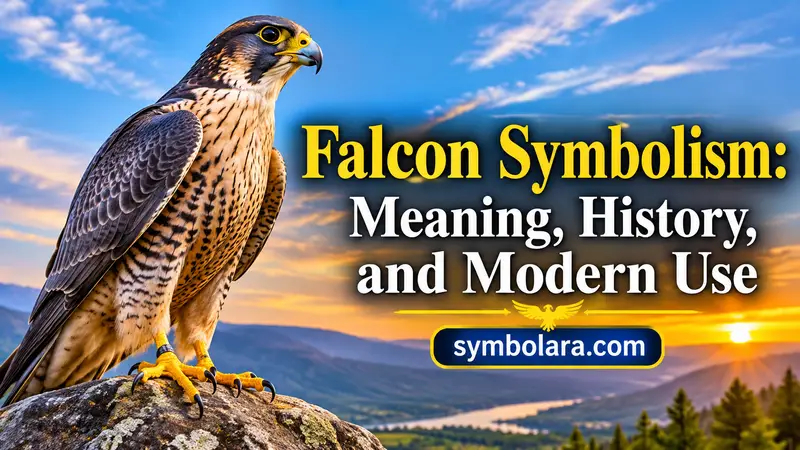
A falcon is easy to recognize by its pointed wings, hooked beak, and fast, controlled flight. The peregrine falcon, one of the best-known species, can reach extraordinary speeds when diving toward prey. Its ability to spot movement from a distance and change direction quickly has made it a familiar image of sharp vision, focus, and independence.
Falcon symbolism often centers on freedom, ambition, courage, and the ability to see a situation clearly. People search for its meaning after seeing one in the wild, choosing a bird-themed tattoo, or noticing its image in artwork and cultural traditions.
In the United States, the falcon appears in wildlife conservation, sports branding, falconry, tattoos, and personal artwork. Its meaning can change depending on the setting, but the bird’s alert posture and hunting skills remain central to many interpretations.
Quick Answer
Falcon symbolism commonly represents freedom, focus, ambition, courage, and clear vision in modern American culture. These associations developed partly from the bird’s hunting abilities and partly from historical traditions that connected falcons with royalty, protection, and the sky. Today, Americans often use the falcon as an image of independence, determination, and personal achievement.
TL;DR
- Freedom: Falcons represent independence and the ability to move beyond limits.
- Focus: Their hunting skills are associated with attention and clear thinking.
- Ambition: Their fast, controlled flight suggests determination and achievement.
- History: Ancient Egyptian art connected falcons with Horus and royal protection.
- American culture: Conservation efforts made the peregrine falcon a sign of environmental recovery.
- Personal meaning: Tattoos and artwork often express confidence, courage, and independence.
What Does a Falcon Look Like?
Falcons are birds of prey belonging to the genus Falco. They have narrow, pointed wings, strong feet, sharp claws, and hooked beaks. Their bodies are built for speed and controlled movement through the air.
The peregrine falcon is especially recognizable. It often has a dark facial marking that looks like a mustache, a blue-gray back, and a pale chest with dark markings. It lives in many parts of the world and can be found in the United States, including cities where tall buildings provide nesting and resting places.
Other species have different appearances. The American kestrel, for example, is a small falcon with colorful feathers and a habit of hovering while searching for prey.
These physical traits help explain why people connect the bird with certain qualities:
- Pointed wings suggest speed and movement.
- Sharp eyesight suggests awareness and observation.
- Controlled flight suggests precision.
- Strong claws suggest readiness and survival.
- High perches suggest watching and evaluating a situation.
Its appearance is one reason the falcon works so well in paintings, logos, clothing, and personal designs.
What Does a Falcon Symbolize Today?
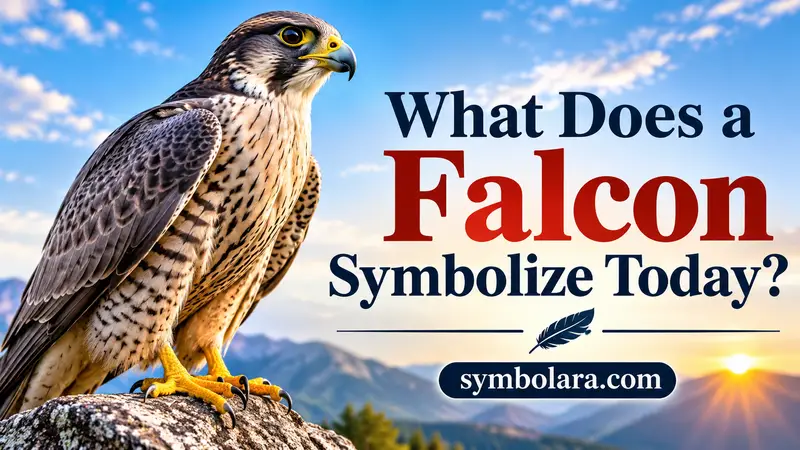
The most common modern meanings are freedom, focus, ambition, courage, and independence. However, not every interpretation carries the same message.
Freedom and independence
A falcon flying across an open sky can represent the desire to make personal choices. People often connect this image with independence, especially when they are beginning a new stage of life or moving away from difficult circumstances.
Focus and clear vision
Falcons locate prey from a distance and make carefully timed movements. This behavior makes them natural symbols of concentration, awareness, and knowing what deserves attention.
Ambition and achievement
Their speed and hunting ability can represent the drive to reach a goal. In personal artwork, a flying falcon may express a desire to keep moving forward despite obstacles.
Courage and confidence
A falcon does not need to be the largest bird to be an effective hunter. Its abilities can represent confidence, skill, and the willingness to face challenges.
Patience and timing
Although people often associate falcons with speed, hunting also requires waiting and choosing the right moment. This gives the bird another interpretation: knowing when to act instead of rushing into every situation.
Where Did Falcon Symbolism Begin?
Some of the earliest well-known cultural associations between falcons and spiritual or royal authority appear in ancient Egypt.
The Egyptian god Horus was commonly represented as a falcon or a human figure with a falcon’s head. Horus was associated with kingship and the sky. His connection with the ruler helped establish the falcon as an image of royal authority and protection.
The Eye of Horus, a familiar symbol in Egyptian art, is also associated with protection, healing, and restoration. Although it is connected with Horus, it should not be confused with a direct picture of a falcon.
Falcons also appeared in hunting traditions in different regions. Their ability to catch prey in flight made them valuable partners for trained hunters.
Over time, the bird became associated with qualities beyond hunting. Its connection with rulers, skilled hunters, and the open sky helped develop ideas of status, discipline, and independence.
There is no single origin for every modern interpretation. Different societies developed their own meanings based on local beliefs, wildlife, and traditions.
What Did Falcons Mean in Ancient Egyptian Culture?
Ancient Egyptian culture provides one of the clearest historical connections between the falcon and authority.
Horus was a major deity whose stories and forms changed across different periods. He was often connected with the sky, kingship, and the protection of the ruler. Falcon imagery appeared in temples, religious objects, royal art, and other forms of Egyptian visual culture.
The pharaoh was associated with Horus during life in certain religious traditions. This relationship helped make the falcon an important image of legitimate rule and protection.
The falcon was not simply a decorative bird in this setting. Its image carried religious and political meaning.
It is also important to distinguish historical Egyptian beliefs from modern personal interpretations. Someone wearing a falcon necklace today may appreciate its connection with protection or leadership without following ancient Egyptian religious practices.
How Did Medieval Falconry Change Its Meaning?
During the medieval period, falconry became an important sport and hunting practice among wealthy and noble communities in parts of Europe and the Middle East.
Falconry involves training birds of prey to hunt alongside people. Falcons were valued because of their speed, hunting skills, and ability to respond to trained handlers.
In medieval European society, owning and training certain birds of prey could communicate social status. Hunting traditions were also connected with discipline, patience, and specialized knowledge.
The English king Frederick II of Hohenstaufen, who ruled in the 13th century, was particularly interested in falconry. His work, The Art of Falconry, is an important historical text on the subject.
These traditions added new associations to the falcon:
- Status: Owning a trained bird could reflect wealth and social position.
- Discipline: Falconry required regular training and careful handling.
- Skill: Successful hunting depended on knowledge of the bird and its behavior.
- Partnership: The relationship between handler and bird involved trust and practice.
Falconry helped spread the image of the falcon as a bird associated with skilled leadership rather than speed alone.
What Does the Falcon Represent in American Culture?
In the United States, falcon symbolism has several practical and cultural connections. Wildlife conservation, sports, personal identity, and falconry all contribute to its modern meaning.
One of the most important American examples is the recovery of the peregrine falcon.
During the 20th century, widespread use of the pesticide DDT caused serious problems for peregrine falcons and other birds of prey. The chemical affected eggshell formation, making it harder for many birds to reproduce successfully.
The United States banned most uses of DDT in 1972. Conservation programs, breeding efforts, and legal protection helped peregrine populations recover.
The peregrine falcon was removed from the federal endangered species list in 1999.
This recovery gave the bird a particular place in American environmental culture. It became an example of how conservation work can help wildlife return after a major population decline.
Another familiar connection comes from American sports. The Atlanta Falcons, for example, use the bird as their team identity. In this setting, the falcon communicates speed, competition, determination, and athletic performance.
American falconry also remains an organized activity, with licensing and wildlife regulations governing the practice.
Together, these examples show why the bird can represent both personal ambition and collective responsibility.
What Does a Falcon Mean in Different Cultures?
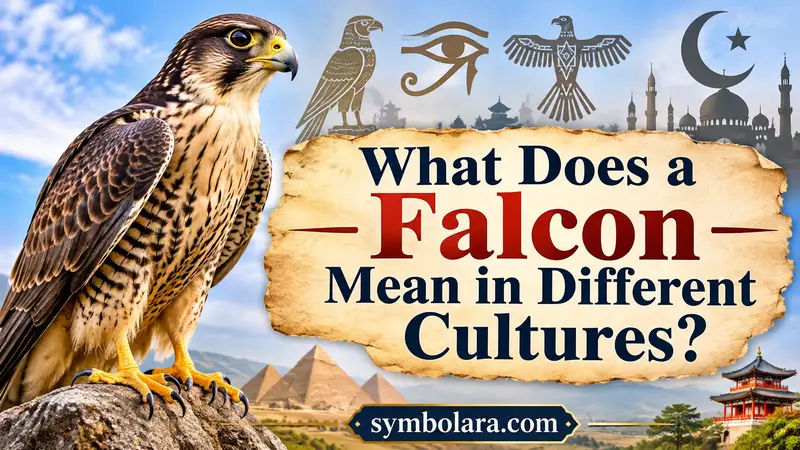
Falcons have documented connections with several cultural and historical traditions. Their meanings are not identical everywhere.
Ancient Egypt
Falcons were closely connected with Horus, a deity associated with the sky, kingship, and protection. Falcon imagery appeared in religious and royal art.
Medieval Europe
Falconry was associated with noble households, hunting skills, and social position. The bird could communicate wealth, training, and discipline.
Middle Eastern traditions
Falconry developed as an important hunting practice in several parts of the Middle East. Falcons became associated with skilled handling, heritage, patience, and respect for hunting traditions.
Central Asian traditions
Falconry has also been practiced across parts of Central Asia, where trained birds of prey have played a role in traditional hunting and community life.
Modern international culture
Falconry is now recognized as a multinational cultural heritage practice. Different communities maintain their own methods, equipment, training traditions, and celebrations.
These examples show that falcon meanings depend on cultural context. A falcon in Egyptian religious artwork does not communicate exactly the same thing as a trained hunting bird in a traditional falconry community.
What Is the Psychological Meaning of Seeing a Falcon?
Seeing a falcon can create a strong personal impression, particularly when the bird appears unexpectedly or behaves in an unusual way.
From a psychological perspective, people often connect an animal encounter with whatever is happening in their lives. A person preparing for a major decision might associate a falcon with confidence or the need to remain focused.
Someone going through a period of change may interpret its flight as a reminder of independence.
These interpretations can be useful as personal reflections, but they are not scientific predictions. Seeing a falcon does not prove that an important event is about to happen.
The bird’s behavior can also influence the meaning someone gives the encounter.
For example:
- A falcon sitting quietly on a building may suggest patience and observation.
- A falcon flying across an open field may bring thoughts of freedom.
- A falcon searching for prey may remind someone to stay focused.
- A falcon returning to a perch may suggest the importance of rest and preparation.
The meaning comes from the individual’s thoughts and circumstances, not from a universal rule about animal encounters.
What Does a Falcon Tattoo Symbolize?
Falcon tattoos are often chosen to express independence, determination, confidence, and personal ambition.
The design can change the message. A bird shown with open wings may suggest freedom, while a diving falcon can represent speed and commitment to a goal.
Common design choices include:
Flying falcon: Often represents independence, opportunity, and personal growth.
Diving falcon: Can communicate ambition, decisive action, and concentration.
Falcon head: Often emphasizes alertness, intelligence, and confidence.
Falcon with mountains: May represent overcoming challenges and finding personal direction.
Falcon with a sun: Can connect the bird with light, clarity, and the Egyptian association with Horus.
Some people choose a falcon tattoo to honor their interest in wildlife or falconry rather than to express a particular spiritual belief.
A meaningful design should reflect the wearer’s own reason for choosing the bird. Its historical associations can add context, but they do not determine what the tattoo must mean.
What Does a Falcon Symbolize in Dreams?
A falcon appearing in a dream may reflect thoughts about independence, ambition, attention, or personal goals.
Dream interpretations are subjective. There is no reliable evidence that a particular bird appearance predicts future events.
The setting and behavior of the falcon can help someone think about the dream.
A falcon flying high: You may connect this image with freedom, long-term plans, or a desire to move beyond current limitations.
A falcon watching you: This could bring attention to awareness, observation, or feeling evaluated by someone.
A falcon hunting: The scene may reflect concentration, competition, or working toward a specific goal.
A falcon landing: You might associate it with taking a break, reaching a temporary destination, or considering your next step.
An injured falcon: This image could reflect concerns about independence, confidence, or a goal that feels difficult to reach.
Rather than treating a dream as a warning, consider what the bird reminded you of and whether that feeling connects with something happening in your waking life.
Why Do Businesses and Sports Teams Use Falcon Imagery?
The falcon is a popular choice for logos because its appearance communicates movement and alertness without requiring complicated visual details.
Its pointed wings and recognizable head can create a strong design, even when the image is reduced to a small emblem.
In American sports, the Atlanta Falcons are a well-known example. The team’s name and logo connect the bird with athletic competition, speed, and determination.
Businesses may also use falcon imagery to suggest:
- Quick service and efficient performance.
- Accuracy and attention to detail.
- Leadership and confidence.
- Competition and forward movement.
- A clear focus on specific goals.
However, a company’s use of the bird does not automatically mean it follows historical falcon traditions.
In commercial branding, the design usually communicates the qualities the organization wants customers to associate with its name.
What Does a Falcon Symbolize in Jewelry and Home Decor?
Falcon images appear in necklaces, rings, bracelets, wall art, sculptures, and decorative objects.
In jewelry, a small falcon pendant can represent personal independence or an interest in birds of prey. Designs featuring Egyptian-style falcon imagery may also appeal to people interested in ancient Egyptian history.
In home decor, a falcon sculpture or painting can express an appreciation for wildlife, outdoor life, or traditional hunting culture.
The style also affects the impression:
- A realistic peregrine falcon painting highlights natural beauty and wildlife.
- A metal falcon sculpture may suggest strength and determination.
- A minimalist falcon pendant can communicate independence without an elaborate design.
- An Egyptian-inspired falcon illustration may reflect an interest in historical art.
Unlike a religious object, decorative falcon artwork does not have to carry a fixed belief. Its meaning can simply come from the owner’s interests and personal memories.
Is Falcon Symbolism Always Positive?
Falcons are generally associated with positive qualities, but their interpretation can become more complicated in certain settings.
Their hunting behavior can represent competition, control, or the pursuit of personal goals. In some situations, a person might view the bird as a reminder to avoid becoming too aggressive or focused on winning.
Its connection with royalty and social status can also create associations with authority and hierarchy.
There is another important distinction between falcons and the way people use birds as symbols. A falcon used in a sports logo may represent competitive success, while a falcon in a wildlife conservation campaign may represent ecological responsibility.
Neither interpretation is the only correct one.
Falcons are predators, and their natural behavior should not be judged through human moral standards. Hunting is part of their role in the ecosystem.
A balanced interpretation recognizes both their impressive abilities and their place in nature.
How Has Falcon Symbolism Changed Over Time?
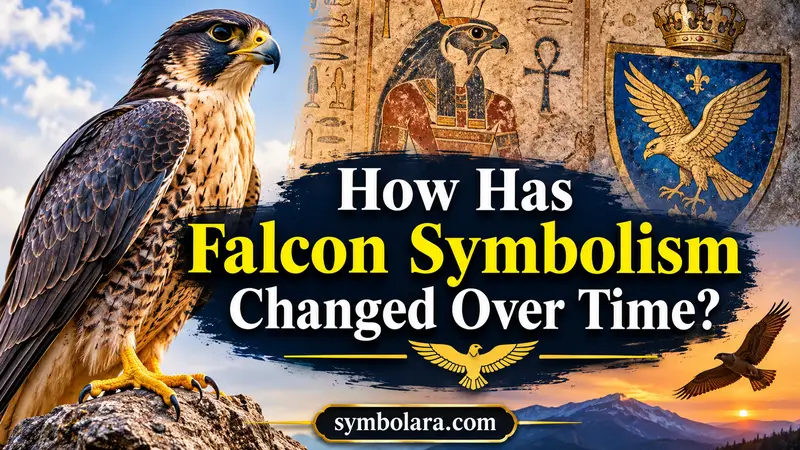
The falcon’s meaning has developed as different societies have used its image for religious, practical, political, and personal purposes.
In ancient Egypt, its association with Horus connected the bird with kingship, the sky, and protection.
During medieval periods, falconry added ideas of noble status, hunting skill, and disciplined training.
In modern America, wildlife conservation gave the peregrine falcon another important association: environmental recovery.
Sports teams and businesses later adopted its image to communicate competition, speed, and performance.
Personal expression has also changed how people use the bird. Today, someone might choose a falcon tattoo to represent independence without knowing much about medieval falconry or Egyptian mythology.
The meanings have not completely replaced one another. Historical, cultural, and personal interpretations continue to exist side by side.
Falcon Symbolism in Different American Contexts
| Context | Meaning in USA | Common Associations | Notes |
| Wildlife conservation | Environmental recovery | Resilience, protection, responsibility | The peregrine falcon’s recovery is a notable example. |
| Sports and team logos | Competitive identity | Speed, determination, performance | The Atlanta Falcons are a familiar example. |
| Tattoos | Personal expression | Independence, ambition, confidence | Design details can change the intended message. |
| Jewelry | Individual identity | Freedom, awareness, personal strength | Egyptian-inspired designs may reference Horus. |
| Falconry | Traditional wildlife practice | Discipline, patience, partnership | The activity is subject to wildlife regulations. |
FAQs
Is seeing a falcon considered good luck?
Some people interpret an unexpected falcon encounter as a positive reminder of opportunity, confidence, or independence. However, there is no scientific evidence that seeing one predicts good fortune or a future event.
What does a falcon mean spiritually?
In personal spiritual interpretations, a falcon may represent awareness, freedom, protection, or direction. Its connection with Horus in ancient Egyptian religion is a documented historical association, but modern spiritual interpretations vary between individuals.
What is the difference between falcon and eagle symbolism?
Falcons are commonly associated with speed, precision, focus, and independence. Eagles are often connected with national identity, leadership, and broad authority, particularly in American culture, where the bald eagle is the national bird.
What does a black falcon symbolize?
A black falcon does not have one universally accepted symbolic meaning. In personal artwork, darker colors may be used to express mystery, strength, seriousness, or individuality, but these meanings come from artistic choices rather than an established falcon tradition.
Why is the falcon associated with Horus?
Horus was commonly represented as a falcon or a human with a falcon’s head in ancient Egyptian religion. His associations with the sky, kingship, and protection helped make falcon imagery important in Egyptian religious and royal artwork.
Are falcons protected in the United States?
Many native falcon species receive legal protection under American wildlife laws. The Migratory Bird Treaty Act protects numerous native birds, including peregrine falcons, and special permits are required for regulated falconry activities.
What is the difference between a falcon and a hawk?
Falcons and hawks are both birds of prey, but they belong to different bird groups. Falcons generally have pointed wings, streamlined bodies, and a distinctive notched upper beak, while many hawks have broader wings suited to soaring and gliding.
Conclusion
Falcon symbolism is mainly connected with freedom, focus, ambition, courage, and independence. Its associations developed through several traditions, from ancient Egyptian representations of Horus to medieval falconry and modern wildlife conservation.
In the United States, the bird has become a familiar image in sports, artwork, personal tattoos, and environmental campaigns. Its meaning depends on how and where it appears, rather than following one fixed interpretation.
A falcon flying over an open landscape can remind someone of independence, while a peregrine returning to an urban nesting site can represent the results of conservation work. These real examples help explain why the falcon continues to attract attention: its natural behavior gives people something concrete to connect with their own goals, values, and experiences.