
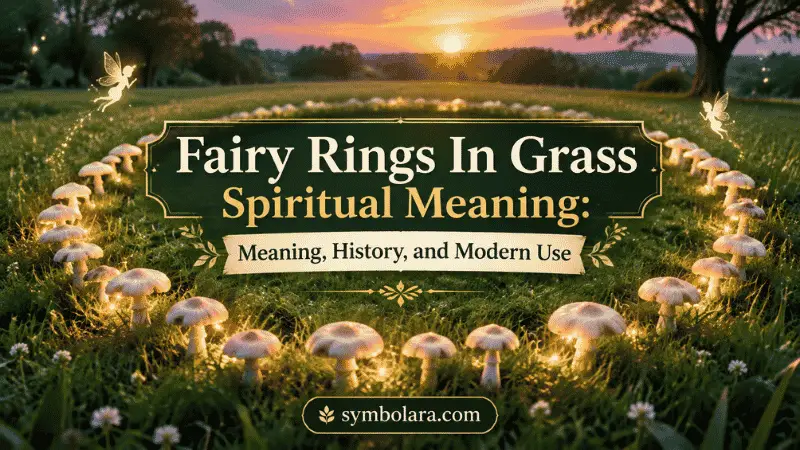
Circular patches of mushrooms appearing in lawns, forests, and meadows have long caught people’s attention. These natural circles, often called fairy rings, form when underground fungi grow outward and produce mushrooms along a ring-shaped edge. Their unusual shape has inspired stories, traditions, and personal interpretations for generations.
People often search for Fairy Rings In Grass Spiritual Meaning because these circles look different from ordinary plant growth and have been connected with ideas of wonder, nature, protection, and imagination. Today, many Americans view fairy rings as interesting natural features, garden curiosities, or symbols used in art, storytelling, and personal expression.
Although folklore has linked fairy rings with supernatural beings, modern science explains their formation through fungal growth patterns. The symbolic meanings come mainly from cultural stories and the way people have interpreted this unusual sight over time.
Quick Answer
Fairy rings in grass are commonly interpreted today as symbols of connection with nature, growth, cycles, and imagination. Their historical meaning comes from European folklore, where mushroom circles were often linked with fairies, spirits, and magical gatherings.
TL;DR
- Fairy rings form from underground fungal growth patterns.
- Folklore connected them with fairies and magical places.
- Modern meanings include nature, wonder, and renewal.
- Their symbolism varies across cultures and traditions.
- Many people use fairy rings in art and gardens.
- Science explains their formation without supernatural causes.
What Does a Fairy Ring Look Like in Grass?
A fairy ring is a naturally occurring circle or arc of mushrooms that appears in grass, soil, forests, or gardens. The mushrooms usually grow around the outer edge because the underground fungus spreads outward from a central point.
Some fairy rings appear as:
- A complete circle of mushrooms
- A darker green ring of grass
- A dry or thinner grass circle
- A large woodland circle with mushrooms around its border
The size can vary greatly. Some rings measure only a few feet across, while others can expand for many yards over time. In lawns, the grass inside the ring may look healthier because fungi can release nutrients into the soil. In other cases, the center may become brown or damaged.
The circular shape is one reason people have connected fairy rings with special meanings. Humans often notice patterns in nature, especially shapes that seem carefully arranged or unusual.
What Do Fairy Rings Symbolize Today?
Today, fairy rings are usually associated with nature, imagination, and the idea of hidden connections within the natural world. Their meaning depends on personal beliefs, cultural background, and how someone encounters the symbol.
Common interpretations include:
| Context | Meaning in USA | Common Associations | Notes |
| Garden design | Appreciation for natural growth | Woodland style, creativity, organic beauty | Often used as an inspiration rather than a literal symbol |
| Tattoos | Connection with nature and fantasy | Fairies, forests, personal stories | Meaning is usually chosen by the wearer |
| Children’s stories | Imagination and adventure | Magical worlds, curiosity, folklore | Common in fantasy books and art |
| Spiritual reflection | Personal growth and natural cycles | Renewal, change, balance | Interpretations differ between individuals |
For many people, the circle represents continuity because it has no visible beginning or end. Others connect it with seasonal change because mushrooms appear during certain times of the year, especially after moisture increases.
The meaning does not come from the mushroom itself. Instead, it comes from centuries of stories and personal interpretations built around this natural event.
Where Did Fairy Ring Folklore Begin?
The exact origin of fairy ring folklore is not fully settled, but many historians connect it with European traditions from the Middle Ages and earlier oral storytelling cultures.
In parts of Britain and Ireland, people believed mushroom circles were places where fairies gathered to dance. Some legends warned humans not to step inside the circle because disturbing it could bring bad luck or unwanted attention from supernatural beings.
Similar beliefs appeared in other European regions. In Germany, fairy rings were sometimes associated with witches’ gatherings. In Scandinavian folklore, some stories connected these circles with magical creatures or hidden activity.
These stories developed because people had limited knowledge of fungal growth. A perfect circle of mushrooms appearing overnight could seem unusual, especially in rural communities where nature played a major role in daily life.
Over time, fairy rings became part of folklore, songs, paintings, and written stories. Their meaning shifted from fear and caution toward fantasy and wonder.
The Science Behind the Circle Shape
Modern biology explains fairy rings through the growth of fungi beneath the ground. A fungus begins from a central point and expands outward as its underground network grows.
As the fungus spreads:
- The underground structure moves outward.
- Nutrients are released into surrounding soil.
- Mushrooms may appear along the growing edge.
- The circle expands as the fungus continues developing.
This natural process can create a pattern that looks carefully designed. However, the shape comes from biological growth rather than evidence of supernatural activity.
Understanding the science does not remove the cultural meaning people attach to fairy rings. Many symbols begin with ordinary objects or natural events and gain additional meanings through human stories.
Why People Connect Fairy Rings With Wonder and Imagination
Fairy rings often appear in quiet outdoor places such as forests, parks, and gardens. Their unusual appearance encourages people to slow down and notice details in nature.
Many people connect them with:
- Curiosity about the natural world
- Childhood memories of fantasy stories
- A sense of discovery during outdoor walks
- Creative inspiration for art and writing
In American culture, fairy imagery often appears in children’s books, fantasy films, garden decorations, and handmade crafts. Fairy rings fit naturally into these themes because they combine a real natural feature with imaginative storytelling.
For some people, finding a fairy ring feels like discovering something special during an ordinary day. The meaning comes from the personal experience rather than a fixed rule.
How Fairy Rings Became Part of American Symbolism
Fairy rings do not come from a single American tradition, but they became familiar through literature, gardening, fantasy art, and popular culture. European folklore arrived in North America through immigrants, books, and storytelling traditions. Over time, fairy imagery became part of American entertainment and creative expression.
In the United States, fairy rings are often viewed through a more playful and imaginative lens than the warnings found in some older European tales. They commonly appear in:
- Children’s fantasy books
- Nature-themed artwork
- Garden designs
- Fantasy games and films
- Handmade crafts and decorations
A homeowner may see a mushroom circle as a fascinating garden feature rather than something to fear. A writer or artist may use it as a symbol of hidden worlds, curiosity, or a connection between everyday life and imagination.
The meaning has also changed because Americans often combine older folklore with personal interpretation. Someone interested in gardening may see a fairy ring as a reminder of natural processes, while someone interested in fantasy may connect it with magical stories.
Fairy Rings in American Gardens and Outdoor Spaces
Gardens are one of the most common places where Americans encounter fairy rings. Because these circles can appear in lawns after periods of rain, homeowners sometimes notice them while caring for their yards.
Some gardeners choose to keep fairy rings because they enjoy the unusual pattern. Others remove them because certain fungal growth can affect grass quality.
In garden design, fairy rings are often connected with:
- Woodland-inspired landscapes
- Natural gardening styles
- Whimsical outdoor spaces
- Small fairy gardens with miniature houses and decorations
Fairy gardens became especially popular as a creative hobby in the United States, with people adding tiny doors, pathways, plants, and figurines to outdoor spaces. A mushroom circle fits naturally into this style because it already carries a connection with forests and fantasy.
The symbol works well in gardens because it represents imagination without requiring a fixed belief system.
Cross-Cultural Meanings of Fairy Rings
Fairy ring stories appear mainly in European folklore, but different regions developed their own explanations for these circles.
In British and Irish traditions, fairy rings were often linked with fairies dancing at night. Some stories described them as places where supernatural beings gathered, and people were sometimes warned not to enter them.
In German folklore, mushroom circles were sometimes associated with witches or magical gatherings. These beliefs reflected local storytelling traditions rather than scientific explanations.
In Welsh folklore, fairy rings were also connected with fairy activity and places where unusual events might occur.
The details changed from one region to another, but a common idea remained: a naturally occurring circle in the landscape was viewed as a place with special meaning.
Modern interpretations are usually less focused on fear or caution. Many people now see fairy rings as examples of nature’s patterns and as symbols used in creative expression.
The Emotional Meaning Behind Fairy Rings
People often connect with fairy rings because they combine something real with something imaginative. A mushroom circle is a visible feature in nature, but the stories surrounding it invite people to think beyond what they immediately see.
For many individuals, fairy rings can represent:
- Curiosity about unknown things
- A desire to protect natural spaces
- Appreciation for small details in the environment
- Childhood memories of fantasy and storytelling
- A feeling of surprise during outdoor experiences
Someone who chooses a fairy ring design for personal art may be expressing a love for forests, fantasy, or creativity. Another person may simply like the shape and visual appeal.
The symbol does not carry one universal meaning. Its value often depends on the person using it and the story they connect with it.
Fairy Rings in Tattoos, Jewelry, and Creative Design
Fairy ring imagery appears in modern tattoos, jewelry, illustrations, and decorative items. Artists often combine mushroom circles with other fantasy or nature elements, such as:
- Fern leaves
- Moon designs
- Fairies
- Forest scenes
- Flowers
- Small animals
A fairy ring tattoo may represent a connection with nature, imagination, personal transformation, or a love of fantasy themes.
Jewelry designers may use mushroom and fairy motifs because they create a woodland-inspired appearance. These designs are especially common among people who enjoy cottagecore, fantasy aesthetics, and nature-based art styles.
In social media communities focused on gardening, crafts, and fantasy design, fairy rings are often shared as unusual discoveries or creative inspiration.
Misunderstandings About Fairy Ring Symbolism
One common misunderstanding is that fairy rings have the same meaning everywhere. In reality, their interpretation changes depending on culture, time period, and personal belief.
Some people still associate fairy rings with supernatural ideas from folklore. Others view them only as a natural fungal pattern.
Another misunderstanding is that fairy rings are always harmful. Some fungal species can affect lawns, but others simply create a temporary natural pattern without causing major problems.
The historical stories about fairies, witches, or magical gatherings belong to folklore traditions. They are cultural explanations created before modern science explained fungal growth.
Today, people usually separate the folklore from the biology. A fairy ring can be appreciated as both a natural event and a symbol from storytelling.
How Fairy Ring Meanings Changed Over Time
The meaning of fairy rings has moved through several stages.
In older European folklore, these circles were often treated with caution. Stories warned people about entering or disturbing them because they were believed to belong to supernatural beings.
During the 19th and early 20th centuries, fairy themes became popular in literature and art. Writers and artists often presented fairies as charming figures connected with imagination rather than danger.
In modern American culture, fairy rings are mostly connected with creativity, fantasy, gardening, and appreciation of nature. They are more likely to appear in children’s stories, artwork, and home decoration than in warnings about supernatural risks.
Generational changes also influenced the meaning. Older folklore emphasized rules and caution, while modern interpretations often focus on personal expression and enjoyment.
Why Fairy Rings Still Appear in Modern Culture
Fairy rings continue to appear because they bring together two things people often enjoy: the natural world and storytelling.
A mushroom circle can inspire a child’s imagination, a gardener’s creativity, or an artist’s design. It does not need a single explanation to remain interesting.
Modern uses include:
- Fantasy book illustrations
- Video game landscapes
- Nature photography
- Garden decoration themes
- Handmade crafts
- Tattoo artwork
The symbol remains popular because it sits between reality and imagination. The mushrooms are real, while the stories around them allow people to create their own meanings.
FAQs
Fairy rings have been viewed in different ways depending on the tradition. Some European stories described them as dangerous places, while modern interpretations often treat them as signs of nature, creativity, or curiosity.
Fairy rings do not have one specific religious meaning. They mainly come from folklore and cultural storytelling rather than established religious teachings.
Fairy rings form because fungi grow outward from a central point underground. The expanding fungal network can create a visible circular pattern of mushrooms or grass changes.
They can appear in many lawns, fields, and grassy areas where suitable fungi grow. Moist soil, organic material, and environmental conditions influence their development.
Yes. Fairy circles appear in European folklore and fantasy literature influenced by those traditions. They are often used as settings where ordinary characters encounter magical worlds.
Some people enjoy the folklore connection and may view them symbolically, but many others appreciate them simply as interesting natural formations.
A fairy ring tattoo often represents imagination, nature, fantasy, personal memories, or an appreciation for woodland themes. The meaning depends on the person wearing it.
Conclusion
Fairy rings are natural circles created by fungal growth, but their cultural meaning comes from centuries of storytelling and human imagination. Different communities have viewed them as places connected with fairies, caution, creativity, and the beauty of the natural world.
Today, Fairy Rings In Grass Spiritual Meaning is often understood as a personal symbol of curiosity, connection with nature, and the enjoyment of unusual moments found outdoors. Whether seen in a backyard, a forest path, or a piece of artwork, fairy rings continue to inspire stories because they combine a real feature of nature with the meanings people choose to give it.
A small circle of mushrooms can remind someone to notice details that are easy to miss a simple natural pattern that has encouraged stories, art, and personal reflection for generations.


