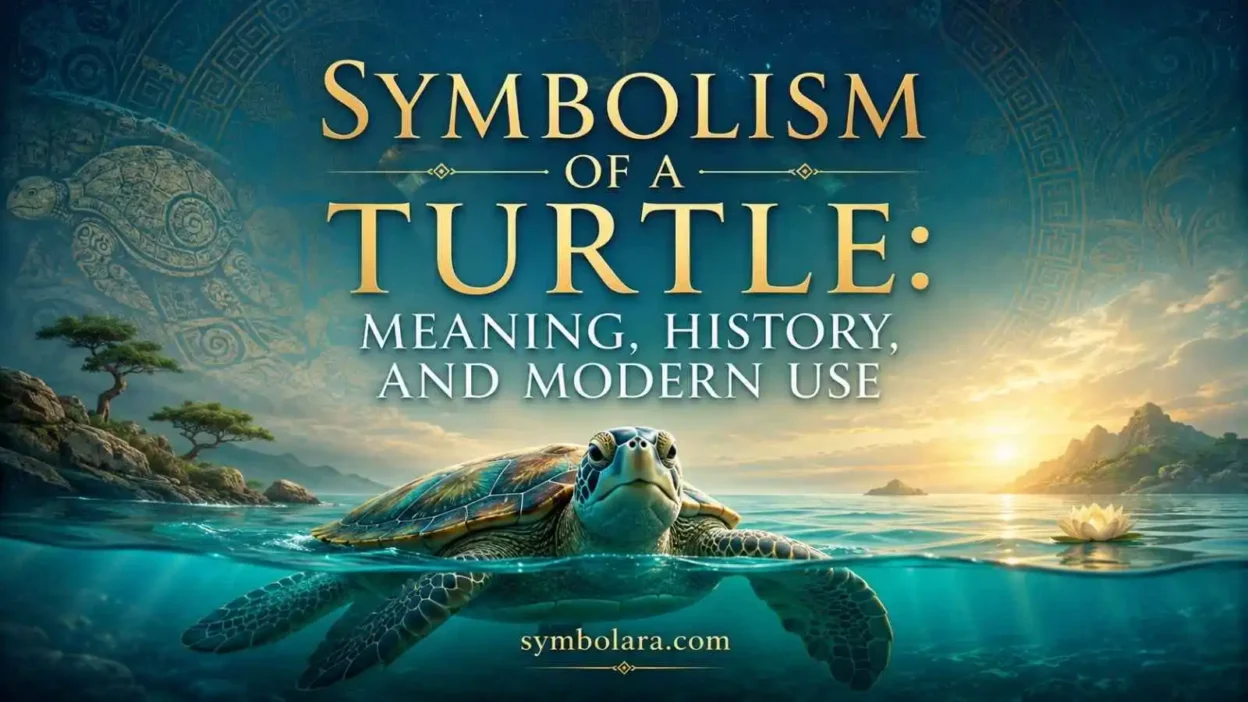
The Symbolism of a Turtle often centers on patience, protection, wisdom, endurance, and a steady relationship with nature. In the United States, people see turtles in tattoos, jewelry, beach art, conservation campaigns, children’s stories, garden decor, and spiritual designs.
A turtle is easy to understand visually. It moves slowly, carries its shell, lives close to land or water, and often suggests age, calm, and survival. Those physical traits are the reason the animal has become such a meaningful symbol across cultures.
For many Americans, the turtle feels gentle rather than dramatic. It does not suggest speed, force, or aggression. Instead, it points to quiet resilience, careful movement, emotional boundaries, and the ability to keep going through life at a steady pace.
Quick Answer
Symbolism of a Turtle commonly represents patience, protection, wisdom, endurance, and steady progress in modern American culture. Historically, turtles have also been associated with longevity, earth, creation stories, spiritual support, and the idea of moving through life with calm persistence.
TL;DR
- Turtles often symbolize patience, wisdom, and protection.
- The shell represents safety, boundaries, and home.
- Sea turtles suggest ocean care and migration.
- Indigenous turtle meanings deserve cultural respect.
- Turtle tattoos often show healing and endurance.
- Modern turtle imagery feels calm, natural, and resilient.
What a Turtle Symbol Looks Like
A turtle symbol usually shows a rounded shell, small head, short legs, and a low body close to the ground. In sea turtle designs, the body often looks smoother, with long flippers and a swimming shape that connects the image to oceans, beaches, and migration.
You may see turtle imagery on beach signs, conservation posters, necklaces, tattoos, garden statues, children’s books, home decor, and nature-themed clothing. Online, turtle icons and emojis can suggest slowness, calmness, cuteness, or a relaxed mood.
Much of the meaning comes from what people observe. The shell looks like natural armor. Slow movement suggests patience rather than weakness. Because turtles live close to water and earth, they often feel connected to nature, age, and stability.
What Turtles Commonly Mean in the United States
In modern U.S. culture, turtles most often symbolize patience, protection, calmness, resilience, and steady progress. Many Americans also connect turtles with the lesson behind “slow and steady wins the race,” a phrase shaped by the familiar tortoise-and-hare story.
This meaning is practical, not abstract. A turtle reminds people that progress does not always have to be fast to matter. It can represent someone who moves carefully, survives pressure, and reaches a goal without rushing.
Turtles also suggest emotional steadiness. Rather than reacting quickly, the animal seems measured and grounded. That is why turtle imagery appeals to people who value calm confidence, long-term growth, and quiet strength.
Why the Shell Matters
The shell is the turtle’s most important symbolic feature. It is not something the turtle wears for decoration. Instead, it is part of the animal’s body, which makes the idea of protection feel personal and natural.
In symbolic terms, the shell can represent safety, privacy, emotional boundaries, and the need to protect one’s peace. Someone may connect with a turtle image after learning to be more careful with trust, energy, or relationships.
Home is another meaning attached to the shell. Since the turtle carries its shelter, it can symbolize self-reliance and inner security. For people who have lived through instability, the turtle may suggest the ability to move forward without losing a sense of safety.
Ancient Roots of Turtle Meaning
Turtle symbolism appears in many old traditions because people noticed the same traits: long life, slow movement, strong shells, and a close bond with land or water. These traits made turtles natural symbols of endurance, wisdom, age, and protection.
In Chinese tradition, turtles and tortoises have long been connected with longevity, cosmic order, and divination. The shell’s pattern could suggest structure, time, and the relationship between heaven and earth.
Hindu mythology includes Kurma, the tortoise avatar of Vishnu, who is connected with support and stability. In several traditions around the world, turtle-like beings are linked with the earth or the idea of a creature that supports creation. These stories are not identical, but they show how often turtles became symbols of steadiness and survival.
Turtle Symbolism in Literature, Stories, and Popular Culture
Turtles have played an important symbolic role in stories because their natural traits easily translate into life lessons. Their slow movement, long lifespan, and protective shell make them powerful images for patience, wisdom, and survival.
One of the best-known examples in Western culture is the tortoise and the hare story, commonly associated with the idea that consistent effort can overcome speed or natural advantage. The turtle or tortoise becomes a symbol of discipline and persistence rather than weakness.
In myths and storytelling traditions, turtle-like creatures often represent stability, ancient knowledge, or a connection between humans and the natural world. Writers may use turtles to show characters who are thoughtful, resilient, protective, or connected to deeper truths.
Modern books, movies, and children’s stories continue using turtles because the symbol feels approachable. A turtle can represent comfort and safety for younger audiences while also carrying deeper themes of survival, identity, and personal growth for adults.
Turtle Island and Indigenous Meaning
In the United States, some of the most important turtle meanings come from Indigenous traditions connected to Turtle Island. For several Indigenous peoples, Turtle Island refers to the earth or North America, often through creation stories where land forms on the back of a great turtle.
This meaning deserves respect. It is not simply a general nature symbol or a decorative trend. In these traditions, the turtle can be tied to land, creation, responsibility, memory, and the relationship between people and the living world.
Care matters when using turtle imagery that clearly borrows from Indigenous stories or designs. A simple turtle charm is different from using sacred cultural patterns without understanding their origin. Respectful interpretation keeps cultural meaning separate from casual decoration.
Sea Turtle Symbolism in American Culture
Sea turtles have a slightly different meaning from land turtles and tortoises. In the United States, they often symbolize ocean life, migration, survival, peace, and environmental care.
Coastal communities frequently use sea turtle imagery in beach signs, aquarium education, marine protection campaigns, and local art. The animal has become a familiar symbol of ocean conservation, especially in conversations about plastic pollution, nesting beaches, fishing gear, and coastal development.
A sea turtle necklace, tattoo, or wall print may suggest love for the ocean, beach memories, travel, freedom, or concern for marine life. In states such as Florida, Hawaii, Texas, California, and the Carolinas, sea turtle imagery can also feel connected to regional identity.
Turtle Tattoos and Personal Meaning
Turtle tattoos are usually positive. They often represent patience, survival, healing, emotional protection, long life, and steady growth. Many people choose them after a difficult season because the turtle suggests continuing without needing to move quickly.
A small turtle tattoo can feel quiet and personal. Sea turtle tattoos often point to ocean love, travel, family roots, or freedom. Designs with flowers may add softness, renewal, or beauty after hardship.
Placement can change the feeling. On the wrist, a turtle may represent daily patience. Placed on the shoulder, it can feel protective. Near the ankle or foot, the design may suggest a life journey.
Cultural style matters as well. Tribal-style turtle tattoos may draw from specific Polynesian, Indigenous, or other traditions. Before using a culturally rooted pattern, it is better to understand where it comes from and whether it is appropriate to wear.
Turtle Jewelry, Decor, and Fashion
Turtle jewelry often carries a gentle message. A turtle necklace, bracelet, ring, or charm may symbolize calmness, protection, longevity, or good luck. Some people wear it as a reminder to slow down and stay steady.
In home decor, turtles create a grounded and peaceful feeling. Garden turtles suggest earthiness and patience. Sea turtle wall art brings in coastal style, beach memories, and ocean connection. A turtle in a child’s room may feel comforting, friendly, and safe.
Fashion uses the turtle in a relaxed way. It rarely feels flashy or aggressive. More often, turtle designs suggest a nature-loving personality, a calm lifestyle, or a preference for steady confidence over attention-seeking style.
Turtle Symbolism in Feng Shui and Home Design
In Feng Shui traditions, turtles and tortoises are often associated with stability, support, protection, and longevity. The turtle’s strong shell and grounded shape make it a symbol connected with security and a steady foundation.
Many Feng Shui practices use turtle imagery as a reminder of balance and protection within a home or workspace. Some people place turtle statues or artwork because they associate the animal with calm energy, resilience, and long-term stability.
The meaning of a turtle decoration depends on the person’s beliefs and cultural background. For some, it is a spiritual symbol. For others, it is simply a nature-inspired design that represents peace, patience, and connection with the natural world.
Emotional and Psychological Meaning
Emotionally, the turtle often represents the need to feel safe while still moving forward. It can speak to people who are cautious, introverted, sensitive, or recovering from stress.
Psychologically, turtle imagery may suggest pacing. Instead of rushing into every decision, the symbol encourages patience, stronger boundaries, and trust in gradual growth. That can feel meaningful for people healing from burnout, grief, disappointment, or major life change.
There is also a caution inside the symbol. Protection is helpful when it preserves peace and dignity. Taken too far, the shell can represent isolation, fear, or refusal to be vulnerable. The turtle’s lesson is balance: protect yourself, but do not disappear from life.
Turtle Symbolism in Dreams: Common Meanings and Interpretations
Dreams about turtles are often interpreted through themes already connected with the animal: patience, protection, emotional safety, and slow personal growth. A turtle appearing in a dream may reflect a situation where someone needs to move carefully, protect their energy, or trust gradual progress.
Common interpretations include:
- Seeing a turtle: may represent patience, stability, or a need to slow down and think carefully.
- A turtle hiding inside its shell: can suggest emotional protection, privacy, or avoiding a difficult situation.
- A swimming turtle: may connect with emotional movement, adaptability, or a peaceful transition.
- A turtle moving slowly: may represent progress that takes time but remains meaningful.
- A baby turtle: may symbolize new beginnings, vulnerability, or early personal growth.
Dream meanings are personal and depend on the dreamer’s experiences. Different cultures and belief systems may interpret turtle dreams differently, so these meanings are best viewed as symbolic reflections rather than fixed predictions.
Turtle Meaning by Context
| Context | Meaning in the USA | Common Associations | Notes |
| Tattoo | Survival and steady growth | Healing, patience, protection | Often chosen after personal change |
| Jewelry | Gentle protection | Good luck, calm, long life | Usually subtle and personal |
| Sea turtle art | Ocean care and migration | Beaches, conservation, travel | Common in coastal culture |
| Indigenous reference | Land and creation | Turtle Island, earth, responsibility | Should be handled respectfully |
| Children’s stories | Persistence | Tortoise and hare, patience | Often teaches steady effort |
Cross-Cultural Turtle Meanings
Across cultures, turtles and tortoises often represent long life because many species can live for a very long time. That natural fact helped create links with age, wisdom, patience, and endurance.
Chinese symbolism often connects turtles with longevity and order. Hindu tradition includes the tortoise as a form of divine support. Some Indigenous North American traditions connect the turtle with land, creation, and the earth itself.
These meanings should not be treated as one universal message. A turtle in Chinese art, a turtle in Hindu mythology, and a Turtle Island reference do not carry the exact same meaning. Shared themes exist, but each culture gives the animal its own story, setting, and importance.
Positive Meanings of a Turtle
The turtle is usually seen as a positive symbol. Its strongest meanings include patience, wisdom, protection, endurance, peace, and steady progress.
Many people connect with turtles because the animal offers a quieter idea of strength. It does not dominate through speed or force. Survival comes through design, instinct, caution, and persistence.
That makes the turtle especially meaningful for people who have grown through difficulty. The symbol can say, “I am still moving.” It honors progress that may be slow, private, and hard-earned.
Negative or Cautionary Meanings
Although turtle symbolism is mostly positive, it can have cautionary meanings. A turtle may suggest moving too slowly, hiding from life, avoiding risk, or becoming too guarded.
The shell can represent healthy boundaries, but it can also point to emotional withdrawal. Protection becomes limiting when it keeps someone from connection, honesty, or necessary change.
Some people also use turtle imagery to joke about slowness. In that casual sense, a turtle can mean delay or hesitation. Even then, the symbol does not have to be negative. It can simply remind people that careful movement has value.
Common Misunderstandings About Turtle Symbolism
One common misunderstanding is that turtle symbolism only means slowness. Speed is part of the image, but it is not the whole meaning. Protection, endurance, wisdom, and stability are often more important.
Another mistake is treating all turtle symbols as culturally neutral. Some turtle images belong to specific spiritual or cultural traditions. When a design references Turtle Island, tribal art, or sacred stories, it should not be used casually.
People also sometimes confuse turtles and tortoises. In everyday symbolism, the meanings often overlap, especially around patience and long life. Biologically, however, turtles are often linked with water, while tortoises are land-dwelling. That difference can affect the design’s mood and associations.
Difference Between Turtle, Tortoise, and Terrapin Symbolism
Although turtles, tortoises, and terrapins are closely related, people often connect them with slightly different symbolic ideas.
A turtle usually has stronger associations with water, movement, travel, and emotional flow because many turtles live in aquatic environments. Sea turtles especially connect with migration, freedom, and ocean conservation.
A tortoise often represents earth, stability, patience, and long life because it lives primarily on land and moves in a slow, steady way. In many traditions, tortoises carry meanings linked with wisdom and endurance.
A terrapin falls between these categories and may appear in symbolic discussions less often. Like turtles and tortoises, it can still suggest adaptability, resilience, and connection with natural environments.
These meanings overlap, but the specific animal can slightly change the feeling of a symbol.
How Turtle Meaning Has Changed Over Time
Older turtle meanings often focused on earth, creation, cosmic support, longevity, and sacred order. The animal appeared as a creature connected to the structure of the world and the stability of life.
Modern American meanings are more personal and environmental. Turtles now appear in conversations about mental health, slow living, boundaries, beach culture, animal protection, and ocean conservation.
This shift does not erase older meanings. Instead, it shows how symbols adapt. The turtle still carries ideas of endurance and protection, but people now apply those ideas to personal healing, lifestyle choices, identity, and ecological awareness.
When a Turtle Symbol Feels Most Meaningful
A turtle symbol feels most meaningful when it connects to real experience. Someone may choose it after learning patience, surviving grief, protecting their peace, moving near the coast, or developing a stronger bond with nature.
The image also works well when the message is quiet rather than dramatic. A turtle does not shout confidence. It suggests confidence that has been tested over time.
For many Americans, the turtle’s appeal is simple. It honors slow progress in a fast culture. That makes it a fitting symbol for people who want to grow carefully, live calmly, and keep moving without losing themselves.
FAQs
A turtle often symbolizes protection, patience, endurance, and connection to the earth. In some traditions, it can also represent creation, long life, sacred support, or the stable foundation beneath life.
Yes, turtles are often viewed as good luck symbols. Their connection with long life, protection, and steady progress makes them positive in many cultural and personal contexts.
A turtle tattoo often means survival, patience, healing, protection, or steady growth. A sea turtle tattoo may also suggest ocean love, travel, freedom, or care for marine life.
In some Indigenous North American traditions, the turtle is connected with land, creation, and the earth. Meanings vary by nation and story, so it is important not to treat all Indigenous turtle symbolism as the same.
Yes, protection is one of the clearest turtle meanings because of the shell. The shell can represent safety, boundaries, privacy, and the ability to move through life without being completely exposed.
A sea turtle often symbolizes ocean life, migration, endurance, peace, and conservation. In modern U.S. culture, it is strongly linked with beaches, marine protection, and coastal identity.
A turtle can sometimes suggest hiding, moving too slowly, or avoiding risk. Even so, its main meaning is usually positive, especially when the focus is patience, resilience, and thoughtful self-protection.
Turtles became symbols of longevity because many species can live for decades or longer. Their long lives, slow movement, and survival abilities helped create associations with endurance and wisdom.
Conclusion
The turtle remains meaningful because its body and behavior naturally support its message. Its shell suggests protection, its pace suggests patience, and its long life connects it with endurance and wisdom.
At its center, the Symbolism of a Turtle is about steady survival. In modern American culture, it often represents calm strength, personal boundaries, healing, nature, and progress that does not need to happen quickly.
A turtle reminds people that moving slowly is not the same as standing still. Sometimes the most lasting progress is the kind made carefully, quietly, and with protection intact.