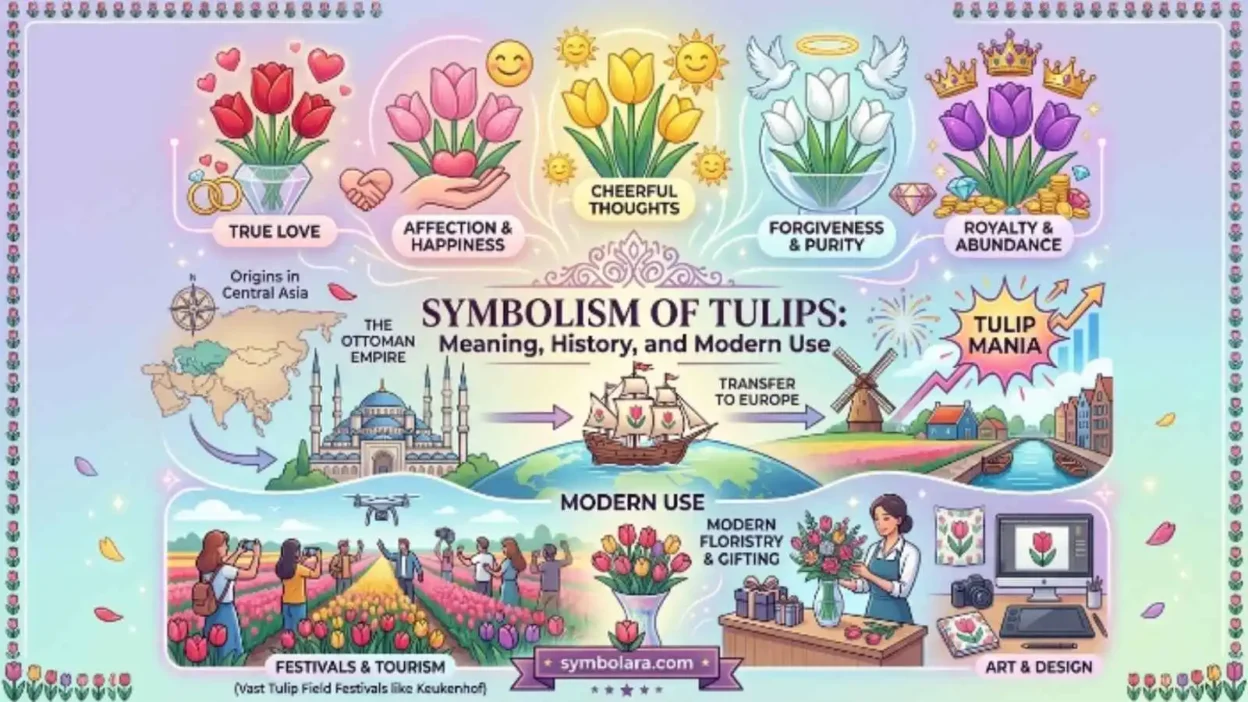
Tulips are known for their smooth cup-shaped flowers, bright colors, and strong connection with spring gardens. From red tulip bouquets given as romantic gifts to colorful displays at American flower festivals, these flowers often carry messages beyond their beauty. People search for Symbolism Of Tulips because tulips appear in weddings, holidays, artwork, tattoos, and personal gifts where their colors and arrangements can express different feelings.
Today, many Americans associate tulips with love, renewal, appreciation, and fresh beginnings. Their meaning depends on the color, occasion, and personal connection someone has with the flower. A red tulip may suggest romance, while a yellow tulip can represent friendship or cheerful thoughts.
Quick Answer
Tulip symbolism commonly represents love, care, renewal, and positive beginnings in modern American culture. These meanings developed from European flower traditions, especially during the Dutch tulip era of the 1600s, when tulips became linked with beauty, status, and personal expression.
TL;DR
- Tulips often symbolize love, spring, and new beginnings.
- Red tulips are commonly linked with romantic affection.
- Tulips became famous during 17th-century Dutch culture.
- Americans use tulips for gifts, gardens, and celebrations.
- Different colors create different symbolic meanings.
- Tulips can represent appreciation and personal growth.
What Makes Tulips Recognizable as a Symbol?
Tulips are flowering plants with tall green stems and a single cup-shaped bloom at the top. Their simple shape makes them easy to recognize in gardens, paintings, decorations, and floral arrangements. They come in many colors, including red, pink, yellow, white, purple, orange, and mixed patterns.
Unlike flowers with large numbers of petals or complicated shapes, tulips have a clean and balanced appearance. This simple design has helped people connect them with ideas such as elegance, honesty, and natural beauty.
Tulips grow from bulbs, which remain underground during colder months and produce flowers when spring arrives. Because of this seasonal cycle, many people connect tulips with returning growth after a period of rest. In the United States, tulips are often one of the first signs that winter is ending and warmer weather is coming.
The Main Meanings People Associate With Tulips Today
The meaning of a tulip changes depending on the situation, but several interpretations are common in American culture.
Love and affection are among the best-known meanings. Red tulips are often used to express romantic feelings because their color creates a connection with passion and admiration. While roses remain the most common romantic flower in the United States, tulips provide a simpler and more modern alternative.
Fresh starts and renewal are also closely connected with tulips. Since they bloom in spring, they often appear at events that mark changes, celebrations, and new chapters. A bouquet of tulips may be given to someone starting a new job, moving into a new home, or recovering from a difficult period.
Appreciation and kindness are another common association. Pink and yellow tulips are frequently chosen as friendly gifts because they communicate warmth without the strong romantic meaning of red flowers.
The flower’s meaning is not fixed. A person may choose tulips because they remind them of a family garden, a favorite season, or a special memory.
How Tulip Meanings Developed in History
Tulips originally grew in areas of Central Asia, including regions connected with modern-day Kazakhstan, Uzbekistan, and surrounding areas. Historical records show that tulips were cultivated in Persian gardens before they became popular in Europe.
In Persian culture, tulips were connected with ideas of love and beauty. Some traditional stories linked the red tulip with romantic devotion, although these interpretations vary by source and region.
Tulips reached the Ottoman Empire, where they became highly valued during the 1500s. Ottoman gardens featured many varieties of tulips, and the flower became associated with artistic design, gardens, and cultural refinement.
During the 16th century, tulips arrived in Europe through trade and diplomatic connections. Their unusual appearance attracted attention, especially among wealthy collectors.
The Netherlands later became strongly connected with tulips. During the 1600s, the Dutch experienced what became known as “Tulip Mania,” a period when rare tulip bulbs reached extremely high prices. Historians still debate some details of this event, but it remains one of the most famous examples of early market speculation.
Over time, tulips moved from being a luxury item for collectors to a common garden flower enjoyed by many people.
Why Tulips Became Important in American Culture
Tulips became popular in American gardens because they adapted well to many climates and offered reliable spring color. By the early 20th century, tulip planting became part of public gardening traditions across the country.
Many American cities and communities use tulips in spring festivals and public displays. Places such as Holland, Michigan, hold annual tulip festivals that celebrate Dutch heritage, gardening, and seasonal change.
In everyday American life, tulips appear in many personal situations:
- Spring home decoration
- Mother’s Day arrangements
- Wedding flowers
- Graduation gifts
- Community garden projects
- Memorial displays
Their connection with spring makes them especially common during March, April, and May events.
Tulips also fit modern American design preferences because their shape works well in simple arrangements. A small vase of tulips can create a clean look in homes, offices, and restaurants.
Tulip Colors and Their Different Messages
Tulip colors often influence the message people want to communicate. Although meanings can vary, certain associations are widely recognized.
| Context | Meaning in USA | Common Associations | Notes |
| Red tulips | Romantic love and admiration | Dating, anniversaries, affection | Often chosen as an alternative to red roses |
| Yellow tulips | Friendship and happiness | Cheerful gifts, spring celebrations | Modern meanings are generally positive |
| White tulips | Respect and remembrance | Weddings, sympathy arrangements | Can suggest simplicity and peace |
| Pink tulips | Caring and appreciation | Family gifts, friendships | Less romantic than red varieties |
| Purple tulips | Elegance and creativity | Luxury designs, artistic expression | Historically connected with rarity |
Tulips in Weddings, Holidays, and Personal Traditions
Tulips are popular wedding flowers because they offer a clean and graceful appearance. Many couples choose white, pink, or pastel tulips for spring weddings because they match soft color themes and outdoor settings.
In the United States, tulips also appear during Easter and other spring celebrations. Their seasonal timing makes them a natural decoration choice when people celebrate renewal and warmer weather.
Mother’s Day is another occasion where tulips are commonly gifted. Their connection with care and appreciation makes them suitable for expressing gratitude toward parents and family members.
Unlike some flowers with strong cultural restrictions, tulips are generally viewed as flexible gifts. They can fit romantic, family, professional, and friendly situations depending on the color and arrangement.
Tulips in Art, Design, and Visual Expression
Tulips have appeared in paintings, decorative objects, textiles, and garden designs for hundreds of years. Artists often use tulips because their shape is simple but recognizable, allowing the flower to communicate ideas through color and placement.
During the Dutch Golden Age in the 1600s, tulips became common subjects in still-life paintings. Artists often placed flowers alongside objects such as books, fruit, and household items. These paintings showed beauty, wealth, and the temporary nature of material things. Some works also reflected the idea that flowers bloom briefly, reminding viewers that beauty changes with time.
In modern American art and design, tulips are often used to create feelings of spring, freshness, and balance. Interior designers may include tulip patterns in fabrics, wallpaper, and artwork because the flower works well in both traditional and modern styles.
Graphic designers also use tulips in logos, invitations, and seasonal campaigns. A tulip image can suggest gardening, nature, celebration, or a welcoming atmosphere without requiring many words.
What Do Tulips Represent in Different Cultures?
Tulip meanings developed differently across regions, especially where the flower played an important role in gardens and art.
In Persian traditions, tulips were sometimes connected with love and devotion. Some stories linked the red tulip with a lover’s emotions, although these interpretations come from folklore rather than a single universal rule.
In Ottoman culture, tulips became highly valued during the 16th and 18th centuries. The Ottoman Empire experienced a period known as the “Tulip Era” in the early 1700s, when tulips appeared in art, gardens, celebrations, and court life.
In the Netherlands, tulips became connected with national identity and horticulture. The country developed a major tulip-growing industry, and Dutch tulip farming remains well known today.
In Japan, tulips are often associated with spring and cheerful outdoor spaces. Japanese flower meanings can vary by color and occasion, but tulips are generally viewed as pleasant seasonal flowers.
These cultural connections show that tulips can carry different messages depending on location and tradition. The flower does not have one fixed meaning everywhere.
The Emotional Meaning Behind Giving Tulips
People often choose flowers because they want to communicate something without saying it directly. Tulips are popular gifts because their appearance feels friendly, elegant, and easy to personalize.
A bouquet of red tulips may communicate romantic interest. Pink tulips may show care toward a friend or family member. Yellow tulips can create a cheerful message during a difficult time.
The emotional meaning often comes from the relationship between the giver and receiver. A tulip from a loved one may represent a shared memory, while tulips from a coworker may simply express appreciation.
Flowers also connect people with seasons and memories. Someone may associate tulips with a childhood garden, a yearly spring event, or a meaningful place they visited.
This personal connection is one reason tulips remain common in gifts and decorations.
Why People Choose Tulips for Tattoos and Personal Designs
Tulip tattoos have become a popular floral design choice because the flower can be both simple and meaningful. The shape works well for small tattoos, detailed artwork, and larger botanical designs.
Common tulip tattoo meanings include:
- Love and affection
- Personal growth
- New beginnings
- Beauty and confidence
- Memories connected with spring
The color chosen for the tattoo can change the message. A red tulip tattoo may represent romance, while a white tulip may represent a fresh chapter or remembrance.
Some people choose tulip tattoos because they remind them of a specific person, event, or place. Others simply appreciate the flower’s appearance and connection with nature.
Unlike symbols with strict cultural meanings, tulip tattoos usually allow personal interpretation.
Tulips in Modern Fashion, Home Decor, and Branding
Tulips continue to appear in modern lifestyle design. Their clean shape fits well with current preferences for simple and natural-looking patterns.
In fashion, tulip designs appear on:
- Dresses and scarves
- Jewelry patterns
- Spring collections
- Floral accessories
In home decoration, tulips are used in:
- Fresh flower arrangements
- Wall art
- Kitchen designs
- Seasonal decorations
Businesses also use tulip imagery when they want to suggest qualities such as freshness, care, gardening, or elegance. Flower shops, garden centers, and event companies often include tulip images in branding.
The meaning depends on the business purpose. A gardening company may use tulips to represent growth, while a gift company may use them to suggest kindness and connection.
Common Misunderstandings About Tulip Symbolism
One common misunderstanding is that every tulip color has one official meaning. In reality, flower meanings are cultural traditions and personal interpretations rather than strict rules.
Another misconception is that tulips have always represented romance in the same way roses do. Tulips can represent love, but they also carry meanings connected with friendship, appreciation, spring, and beauty.
Some people also connect tulips only with Dutch culture. While the Netherlands played a major role in popularizing tulips, the flower’s story began earlier in Central Asia and Persian and Ottoman traditions.
The historical event known as Tulip Mania is sometimes misunderstood as a period when everyone became wealthy from tulips. In reality, it involved speculation around rare bulbs and has been studied as a complicated economic event.
How Tulip Symbolism Changed Over Generations
The meaning of tulips has changed as the flower moved between cultures and became available to more people.
In earlier periods, rare tulips were connected with wealth because certain varieties were difficult to obtain. During the Dutch Golden Age, owning unusual tulips could represent status.
Later, tulips became common garden flowers. Their meaning shifted from luxury toward everyday beauty and seasonal enjoyment.
In modern America, tulips are less about status and more about personal expression. People buy them to celebrate relationships, decorate homes, mark special occasions, or enjoy the arrival of spring.
Social media has also influenced how people view tulips. Photos of colorful tulip fields, flower arrangements, and garden designs often connect the flower with peaceful outdoor experiences and creative expression.
Are Tulips Positive or Negative Symbols?
Tulips are usually viewed as positive symbols in modern American culture. They are commonly connected with kindness, love, happiness, and new beginnings.
However, meanings can depend on context. In some artwork, flowers may represent the temporary nature of beauty because they bloom for a limited season. This does not make tulips negative; it simply adds another layer of interpretation.
A flower given during a celebration may express joy, while a flower used in a memorial arrangement may represent remembrance.
The situation matters as much as the flower itself.
FAQs
In the United States, tulips commonly symbolize love, appreciation, spring, and new beginnings. Their meaning often depends on the color and reason they are given.
Yes, especially red tulips. They are often used to express romantic feelings, although they are also popular for friendships and family gifts.
Tulips do not have one major religious meaning in American culture. Some people may connect them with personal beliefs about renewal or creation, but these interpretations vary.
Yellow tulips are commonly associated with happiness, friendship, and cheerful thoughts. Modern interpretations are generally positive, although older flower traditions sometimes gave yellow flowers different meanings.
Tulips became important in Dutch culture because of their popularity during the 1600s and the development of a major tulip-growing industry. Today, tulips remain a well-known part of Dutch gardens and festivals.
A tulip tattoo often represents love, growth, beauty, or a personal memory. The meaning usually comes from the person wearing it rather than a fixed definition.
Conclusion
Tulips represent love, appreciation, spring, and fresh beginnings in many modern settings. Their meanings developed through Persian traditions, Ottoman gardens, Dutch horticulture, and later everyday use around the world.
Symbolism Of Tulips continues to change as people use the flower in gifts, artwork, tattoos, gardens, and celebrations. A tulip bouquet on a kitchen table, a tattoo marking a personal memory, or a spring festival display can all carry different messages depending on the person and moment.
The lasting appeal of tulips comes from their ability to combine simple beauty with personal meaning. Whether chosen for romance, friendship, or a reminder of a new season, tulips remain a familiar part of American life.