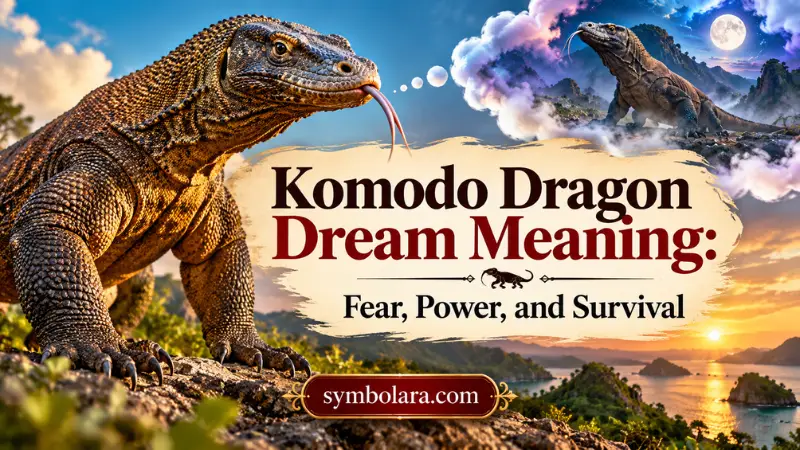
Imagine walking through a quiet forest when an enormous Komodo dragon suddenly appears. Its heavy body moves toward you, and you cannot tell whether it plans to attack or simply pass by. You wake up wondering what happened and why the animal appeared in your dream.
The Komodo dragon dream meaning often centers on possible themes of fear, personal strength, survival, and situations that feel difficult to control. However, a peaceful encounter with this powerful reptile may leave a very different impression from a frightening chase.
Komodo dragons are real animals known for their impressive size, hunting abilities, and unusual appearance. Their connection with danger and survival makes them striking dream characters, especially for people who rarely encounter them in everyday life.
Understanding the dream involves looking at its events, your emotions, and what has been happening in your waking life. Science can explain some aspects of dreaming, while symbolic interpretations offer personal ways to reflect on the experience.
Quick Answer
Dreaming about a Komodo dragon may symbolize fear, power, self-protection, or an overwhelming situation. A threatening dragon might reflect stress or feelings of vulnerability, while a calm one could represent confidence, curiosity, or respect for strength. These are possible personal interpretations, not scientifically established meanings, and the dream’s significance depends on your experiences and emotions.
TL;DR
- Komodo dragons may represent strength, danger, or survival.
- A chasing dragon can reflect feelings of pressure or avoidance.
- Peaceful encounters may suggest curiosity or growing confidence.
- Recent wildlife videos or experiences can influence dream imagery.
- Indonesian folklore offers cultural associations but no fixed dream interpretation.
- Personal emotions matter more than universal dream dictionaries.
What Does a Komodo Dragon Dream Usually Mean?
A Komodo dragon is an unusual animal to encounter, even in a dream. Its enormous size, powerful jaws, and slow, deliberate movements may create feelings of danger or fascination.
One possible symbolic interpretation involves facing something powerful that you cannot easily control. This might be an intimidating responsibility, a difficult conversation, or a major decision.
For example, someone preparing for an important job interview might dream of standing before a large reptile. The animal could reflect how overwhelming the upcoming experience feels rather than representing the interviewer.
Several possible meanings depend on the dream’s details.
Fear and Hidden Concerns
A threatening Komodo dragon may represent a worry that feels larger than expected.
The dream could reflect feelings about financial pressure, personal conflict, or an unfamiliar responsibility. However, frightening animals also appear in ordinary dreams without representing a particular problem.
Personal Power and Confidence
A calm or impressive dragon may suggest strength, determination, or the ability to handle difficult circumstances.
Someone who recently overcame a challenge might associate the animal with endurance rather than danger.
Survival and Self-Protection
Komodo dragons survive through physical adaptations and effective hunting behavior.
As a personal symbol, the animal might bring to mind resourcefulness, careful observation, or setting boundaries. These associations can be useful for reflection, although they are not established rules of dream interpretation.
Why You Might Dream About a Komodo Dragon
Dreams often include fragments of recent experiences mixed with older memories and unusual imagined situations.
A Komodo dragon may appear because you recently watched a wildlife documentary, visited a zoo, saw an animal video, or read about large reptiles.
Even brief exposure can leave memorable images.
Other possible influences include:
- Stressful experiences: Feeling overwhelmed may contribute to threatening dream situations.
- Recent entertainment: Wildlife programs, adventure films, and online videos can supply dream imagery.
- Curiosity: Interest in rare animals may make them memorable dream subjects.
- Personal memories: A previous experience with reptiles might influence your emotional response.
- Uncertainty: An unpredictable animal may fit a dream involving unfamiliar circumstances.
A person planning a trip to Indonesia might dream of a Komodo dragon simply because the animal has become part of their recent thoughts.
Likewise, someone who finds reptiles frightening may experience the same dream more intensely.
Not every unusual dream needs a complicated explanation. Sometimes the sleeping mind combines ordinary memories into surprising scenes.
Psychological Interpretations of Komodo Dragon Dreams
Psychology offers several ways to think about animal dreams, but no established psychological test can determine someone’s feelings from a Komodo dragon dream alone.
The Continuity Between Daily Life and Dreams
One research-based perspective suggests that dream content often reflects elements of waking experiences.
This does not mean dreams reproduce daily events exactly. They may mix familiar concerns with strange locations, characters, or animals.
For instance, a difficult workplace situation could appear in a dream as a threatening creature. This is one possible connection, not proof of a hidden psychological problem.
Jung’s Symbolic Perspective
Psychologist Carl Jung explored how dream images might represent personal experiences and broader symbolic patterns.
From a Jungian perspective, a powerful reptile could invite reflection on instinct, fear, or qualities a person finds difficult to acknowledge.
However, Jung’s approach is a historical psychological framework. Modern science has not established that dreaming of a Komodo dragon represents a specific unconscious conflict.
Freud’s Historical Perspective
Sigmund Freud emphasized unconscious wishes and conflicts in his theories about dreaming.
A Freudian interpretation might examine what the animal personally represents to the dreamer.
These ideas remain influential in the history of psychology, but they do not provide a scientifically verified meaning for individual dream symbols.
Modern approaches generally place greater value on emotional context, memories, and the dreamer’s own associations.
What Modern Dream Science Suggests
Scientists understand much more about sleep than they did a century ago, but the exact purpose of dreaming remains an active research question.
Dreams commonly occur during rapid eye movement, or REM, sleep. During this stage, brain activity supports vivid mental experiences, and dreams can include strong emotions and unusual combinations of images.
Dreaming also happens during non-REM sleep.
Research has found connections between sleep, memory processing, and emotional experiences. Some studies suggest dream content can reflect recent waking events, while others examine how dreams combine memories in new ways.
This helps explain how a wildlife image might appear in a dream alongside your childhood home, a coworker, or an unfamiliar landscape.
Why Threatening Animals Can Feel So Real
A large predator can create a convincing sense of danger in a dream.
Your sleeping brain may generate fear, movement, and detailed visual scenes without the threat actually existing.
Some researchers have proposed that threatening dreams may involve simulated danger. However, this does not mean every nightmare serves a survival-training purpose.
There is no established scientific evidence that Komodo dragon dreams have one specific psychological meaning.
Their possible meaning comes primarily from the dreamer’s personal associations and the circumstances surrounding the dream.
Common Komodo Dragon Dream Scenarios and Their Meanings
The events involving the dragon often influence how someone understands the dream.
A chase may feel very different from watching a quiet animal in the distance.
Here are seven realistic scenarios and their possible interpretations.
Dreaming About a Komodo Dragon Chasing You
Being chased by a Komodo dragon may feel terrifying, especially if the animal keeps getting closer.
One possible interpretation involves avoiding something uncomfortable in waking life.
Perhaps you have delayed a difficult discussion, ignored a deadline, or felt pressured by responsibilities.
The chase could reflect those feelings, but it might also come from watching predator footage or experiencing an ordinary fear-based dream.
Notice whether you escaped, hid, or stopped running. Your response may help you understand what made the experience memorable.
Dreaming About a Komodo Dragon Biting You
A Komodo dragon bite can make a dream feel especially threatening.
Symbolically, the bite might represent feeling hurt, exposed, or unable to prevent an unpleasant experience.
For example, someone dealing with a painful disagreement could associate the attack with emotional vulnerability.
However, the dream does not predict betrayal, illness, or physical injury.
The most useful detail is often how you reacted. Did you seek help, fight back, or wake immediately?
Those reactions may reveal more about your dream experience than the bite itself.
Dreaming About a Calm or Friendly Komodo Dragon
A peaceful Komodo dragon may feel strange but reassuring.
Instead of attacking, the animal might rest nearby or allow you to observe it.
This could suggest becoming more comfortable with something you once feared.
Someone who recently gained confidence in a challenging situation might connect the animal with personal growth.
For wildlife enthusiasts, the explanation may be simpler. Seeing a rare animal peacefully could represent curiosity, admiration, or enjoyment.
Dreaming About a Komodo Dragon Inside Your House
Finding a Komodo dragon in your bedroom, kitchen, or living room introduces danger into a familiar setting.
Homes in dreams may carry personal associations with privacy, comfort, and daily life.
An unexpected reptile entering that space could reflect a sense of intrusion or disruption.
For example, someone whose work responsibilities are interfering with family time might connect the scene with difficulty protecting personal boundaries.
Still, the house could simply be a familiar setting chosen by the dreaming mind.
Consider which room appeared and whether you felt frightened, annoyed, curious, or protective.
Dreaming About Multiple Komodo Dragons
Seeing several large reptiles together can create a stronger sense of danger than encountering one.
The scene might reflect feeling surrounded by competing responsibilities or several uncertain situations.
A person managing work deadlines, family needs, and financial decisions could connect the group of animals with feeling overwhelmed.
Alternatively, someone fascinated by wildlife might experience the scene as an exciting encounter.
The behavior of the animals matters. A group resting quietly produces a different emotional experience from several dragons approaching aggressively.
Dreaming About Escaping From a Komodo Dragon
Escaping a dangerous animal can create powerful feelings of relief.
Some people might interpret this as overcoming a difficult situation or finding a way to protect themselves.
Imagine dreaming that you climb onto a safe platform just before a dragon reaches you.
The escape might reflect your desire to find security or regain control.
However, a successful escape does not guarantee that a real-world problem will disappear.
It may simply be a satisfying ending to a suspenseful dream.
Dreaming About a Baby Komodo Dragon
A baby Komodo dragon can create a very different emotional response from a large adult.
You might find it interesting, harmless, or surprisingly vulnerable.
One possible interpretation involves something that seems small now but could become important later.
For example, the animal might remind you of a new responsibility or project that requires attention.
If you protect or care for the young dragon, the dream may feel connected to nurturing and responsibility.
If it frightens you, the scene might instead reflect uncertainty about something unfamiliar.
Komodo Dragon Dream Meaning by Scenario
| Dream Scenario | Possible Meaning | Emotional Association | Important Context |
| Dragon chasing you | Pressure or avoidance | Fear, urgency | Current responsibilities |
| Dragon biting you | Feeling exposed or hurt | Shock, vulnerability | Recent disagreements |
| Friendly dragon | Comfort with powerful things | Calm, confidence | Personal attitude toward reptiles |
| Dragon inside your house | Disrupted personal boundaries | Surprise, unease | Home and family concerns |
| Escaping a dragon | Seeking safety or relief | Hope, relief | How the escape happened |
| Baby Komodo dragon | New responsibility or curiosity | Care, uncertainty | Your behavior toward it |
These possibilities are starting points for reflection rather than fixed definitions.
Is a Komodo Dragon Dream Good or Bad?
A dream involving a Komodo dragon is not automatically positive or negative.
Its emotional tone makes an important difference.
Potentially positive interpretations include courage, patience, resourcefulness, and growing confidence.
For instance, calmly observing a large dragon without fear might remind someone of becoming more comfortable in unfamiliar situations.
Potentially uncomfortable interpretations include uncertainty, fear of confrontation, vulnerability, or feeling overwhelmed.
A dream in which the dragon attacks might be connected to those emotions, especially during a stressful period.
Yet the animal itself does not determine whether the dream is good or bad.
A wildlife photographer may consider a close encounter exciting. Someone afraid of reptiles may experience exactly the same scene as a nightmare.
A frightening dream also does not mean something bad is about to happen.
Spiritual and Cultural Meaning of Komodo Dragon Dreams
Komodo dragons have cultural significance in parts of Indonesia, especially around the islands where these animals live.
However, local cultural beliefs about the animal should not be confused with a universal system for interpreting dreams.
Indonesian Folklore and the Dragon Princess
A well-known story from Komodo Island tells of the Dragon Princess and her twin children.
One child is human, often named Gerong, while the other is a dragon called Ora.
In a familiar version of the legend, the human brother encounters the dragon while hunting. Their mother intervenes and reveals that they are siblings.
The story expresses a relationship of kinship between humans and Komodo dragons.
It offers a valuable example of how an animal that outsiders might view primarily as dangerous can also hold meanings connected to respect and belonging.
However, this folklore does not establish that dreaming about a Komodo dragon predicts family events or carries a specific spiritual instruction.
Christian and Biblical Perspectives
Komodo dragons are not assigned a specific dream meaning in the Bible.
Although biblical texts contain references to dragons and serpents, those images should not automatically be equated with the modern animal known as the Komodo dragon.
Christians who reflect on dreams may consider their personal faith, emotions, and circumstances, but there is no established biblical rule that this dream predicts danger or spiritual conflict.
Islamic Perspectives
Islamic teachings discuss different kinds of dreams, including meaningful dreams and dreams connected with ordinary thoughts or distress.
However, there is no established Islamic teaching assigning a fixed interpretation to dreaming about a Komodo dragon.
A Muslim who experiences a frightening dream may approach it through familiar religious practices without assuming the animal predicts harm.
In any tradition, personal spiritual reflection is different from scientific evidence.
How Americans Interpret Komodo Dragon Dreams Today
For many Americans, Komodo dragons are animals encountered through screens, museums, zoos, or educational programs rather than in the wild.
This shapes the associations they may bring into dreams.
Someone who recently watched a nature documentary may associate the animal with a dramatic hunt.
Another person who visited a reptile exhibit might remember its heavy movements, long claws, and impressive size.
These experiences can influence both the content and emotional tone of dreams.
Wildlife Media and Popular Culture
Komodo dragons can appear intimidating in wildlife footage.
Close-up shots of their teeth, powerful bodies, and hunting behavior may leave strong visual memories.
When these images become part of a dream, the brain may place the animal in an unrelated location, such as a school hallway or backyard.
That unusual combination does not necessarily indicate a psychological problem.
Online Dream Interpretations
People sometimes turn to social media or dream dictionaries for explanations.
Online interpretations may associate large reptiles with hidden enemies, danger, power, or transformation.
Such ideas can be interesting as symbols, but they are not scientifically verified meanings.
A more useful question is whether a particular interpretation fits your actual experiences.
Everyday Pressures and Relationships
American readers may also connect a threatening animal dream with work stress, relationship conflict, or financial worries.
These connections are possibilities, not facts about everyone who has the dream.
The animal becomes personally meaningful when its behavior resembles feelings or situations the dreamer recognizes.
How Personal Emotions Change the Dream’s Meaning
Two people can dream about the same Komodo dragon and remember entirely different experiences.
One might wake up frightened. The other might feel amazed.
That emotional difference can matter more than the animal’s appearance.
Consider these examples.
A reptile enthusiast dreams of watching a Komodo dragon move through its natural habitat. The experience feels peaceful and exciting.
Someone who fears large animals dreams of the same scene but becomes anxious because the dragon approaches.
Another person dreams of protecting a young Komodo dragon and remembers feeling responsible for its safety.
All three experiences involve the same species, yet their possible personal meanings are different.
Pay attention to the strongest feeling you remember.
Was it fear, curiosity, admiration, helplessness, or relief?
Your answer may help explain why this particular dream stayed in your memory.
Why Do Komodo Dragon Dreams Keep Happening?
Recurring dreams can feel especially meaningful because similar images or situations appear more than once.
Repeated Komodo dragon dreams might involve the same chase, location, or frightening encounter.
One possible explanation is that familiar concerns continue influencing your dreams.
For instance, ongoing workplace pressure might coincide with repeated dreams of escaping dangerous animals.
Other possible influences include repeated exposure to similar media, memorable past dreams, or disrupted sleep.
Sometimes remembering a frightening dream makes the image more noticeable when it appears again.
When Recurring Dreams Become Nightmares
A recurring Komodo dragon dream is not automatically a warning or a sign of a medical condition.
However, frequent nightmares deserve attention when they interfere with sleep or daily life.
If the dreams repeatedly wake you, make you afraid to sleep, or leave you distressed during the day, consider discussing them with a qualified health professional.
One treatment approach for persistent nightmares is imagery rehearsal therapy.
This involves practicing a less distressing version of a nightmare while awake, often with professional guidance.
The goal is to reduce distress rather than uncover a guaranteed hidden meaning.
Common Misunderstandings About Komodo Dragon Dreams
Several assumptions can make an unusual animal dream seem more alarming than necessary.
A Komodo Dragon Dream Predicts Danger
There is no scientific evidence that dreaming about a Komodo dragon predicts an attack, accident, or other future event.
Dreams can feel realistic without forecasting real experiences.
Every Dragon Represents an Enemy
A threatening animal does not automatically represent a dishonest friend or dangerous person.
That interpretation may sound dramatic, but it requires personal context and cannot be assumed.
Komodo Dragons and Mythical Dragons Have Identical Meanings
A Komodo dragon is a real monitor lizard, while mythical dragons differ across cultural traditions.
Their symbolic associations may overlap for some people, but they are not interchangeable.
Frightening Dreams Always Reveal Hidden Problems
Ordinary dreams can include frightening imagery without indicating an unresolved psychological issue.
A single nightmare does not establish a diagnosis or reveal someone’s personality.
How to Understand Your Own Komodo Dragon Dream
You do not need a complicated interpretation system to reflect on an unusual dream.
A few simple questions can help you identify what stood out.
1. Remember what the dragon was doing.
Was it chasing you, resting, eating, or simply watching? Describe the scene without immediately assigning a meaning.
2. Identify your strongest emotion.
Fear, curiosity, confidence, and surprise can lead to very different personal interpretations.
3. Think about recent experiences.
Consider whether you recently encountered wildlife content, visited a zoo, or experienced a stressful situation.
4. Notice your response to the animal.
Running away, approaching carefully, and observing peacefully suggest different emotional experiences within the dream.
5. Record recurring details.
A dream journal can help you notice repeated images, emotions, and waking experiences. However, it cannot prove that a particular symbol has a fixed meaning.
6. Avoid turning possibilities into predictions.
You can explore what the dream reminds you of without treating it as a warning about the future.
For example, if a Komodo dragon chased you through your workplace, you might consider whether the setting connects with current responsibilities.
If nothing seems relevant, that is also a reasonable conclusion.
Not every dream needs a symbolic explanation.
FAQs
Dreaming about a Komodo dragon may reflect personal associations with fear, strength, survival, or intimidating situations. Its possible meaning depends on the animal’s behavior, your feelings, and your recent experiences.
No scientific evidence shows that Komodo dragon dreams predict misfortune. Even a frightening dream may result from memories, emotions, or ordinary dream imagery rather than an approaching event.
An attacking dragon might reflect feelings of vulnerability, pressure, or fear. However, the scene could also be influenced by wildlife footage or other memorable experiences, so it should not be treated as proof of a real threat.
Some people may personally associate the animal with strength, survival, or respect for nature. Indonesian folklore includes stories about kinship between humans and Komodo dragons, but these stories do not establish a universal spiritual meaning for dreams.
A chase may reflect a feeling of urgency or avoidance, especially if you are dealing with something stressful. Chasing dreams can also occur without a clear connection to waking life.
A friendly dragon might represent curiosity, confidence, or becoming comfortable with something that once felt intimidating. For someone interested in reptiles, the dream may simply reflect admiration for an unusual animal.
Occasional nightmares are not usually a reason to assume something is wrong. If repeated dreams disrupt your sleep, cause significant distress, or affect daily functioning, a qualified health professional can help you explore ways to manage them.
Conclusion
The Komodo dragon dream meaning may involve fear, strength, self-protection, survival, or curiosity about something powerful and unfamiliar. A threatening encounter can feel connected to stress, while a peaceful experience might bring to mind confidence or admiration.
Dream psychology and sleep research suggest that emotions, memories, and waking experiences can influence dream content. Cultural stories may offer additional perspectives, but neither symbolic traditions nor psychological theories establish one universal interpretation for this animal.
The most useful clues are often simple: what the dragon did, how you felt, and whether the dream connects with anything you recently experienced. Those details can help you reflect on the dream without assuming it predicts what happens next.