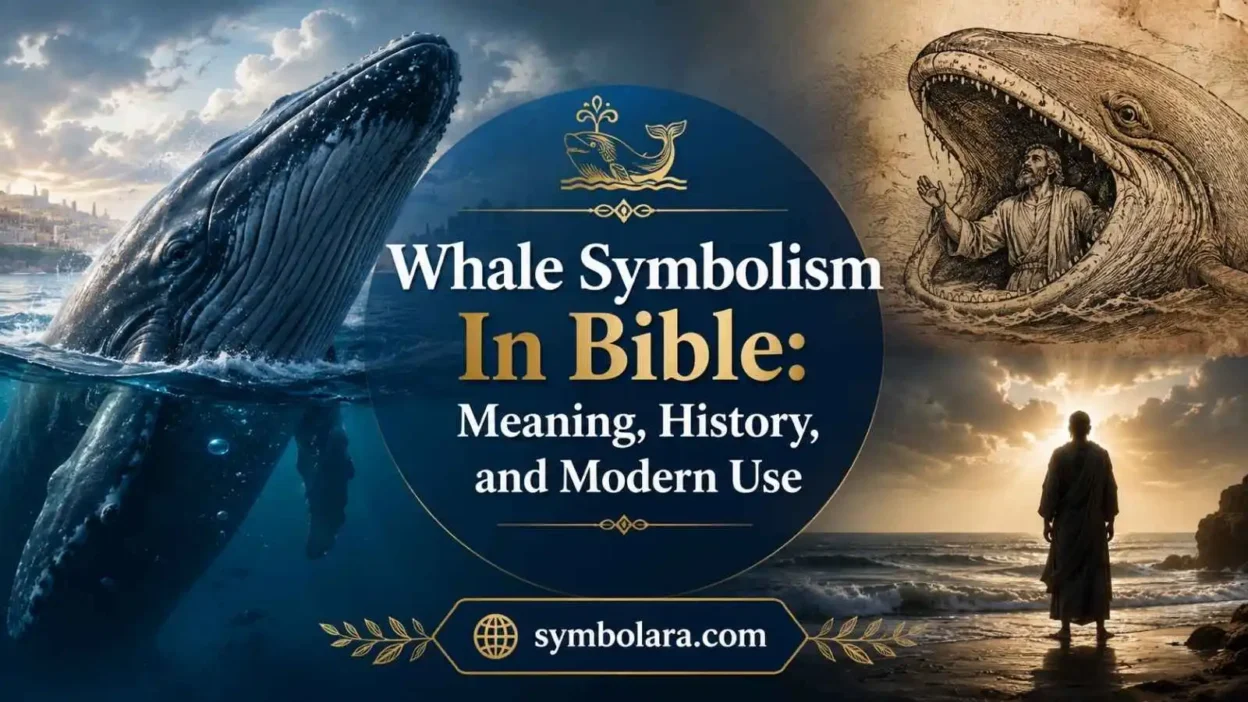
Whale Symbolism In Bible is usually understood through the story of Jonah, where a huge sea creature becomes a sign of judgment, mercy, rescue, and spiritual change. For many Americans, the whale in biblical symbolism immediately brings to mind Jonah in the belly of the fish, a familiar image from Sunday school, children’s Bibles, sermons, art, and Christian tattoos.
The Bible does not use the whale exactly the way modern people talk about whales today. In many passages, the creature is better understood as a great fish, sea monster, or huge sea animal rather than a scientifically identified whale. Still, the whale has become the common cultural image attached to Jonah’s story.
That makes the symbol meaningful in two ways. Biblically, it points to God’s authority over the sea, human disobedience, repentance, and deliverance. Culturally, especially in the United States, it often represents second chances, survival after darkness, and being brought back to purpose.
Quick Answer
Whale Symbolism In Bible commonly symbolizes repentance, rescue, divine control, and second chances in modern American Christian culture. Historically, it is tied most closely to Jonah’s great fish, biblical sea imagery, and the idea that God can use even frightening forces to preserve life and redirect a person.
TL;DR
- The whale is most linked to Jonah.
- It often symbolizes rescue after rebellion.
- Biblical “whale” may mean great sea creature.
- U.S. culture reads it as second-chance imagery.
- It can represent fear, mercy, and transformation.
- It is not mainly a lucky charm.
What the Whale Represents in Biblical Imagination
In biblical imagination, the whale is not simply a beautiful ocean animal. It belongs to a larger world of seas, storms, depths, and creatures too large for human control. The ancient sea often symbolized danger, uncertainty, and forces beyond ordinary human strength.
That background matters because Jonah’s sea creature is not presented as random wildlife. It appears after Jonah runs from God’s command, boards a ship, faces a storm, and is thrown into the sea. The creature becomes part of a turning point. It swallows Jonah, but it also keeps him from drowning.
For that reason, the whale-like creature carries a double meaning. It is frightening because it represents confinement and consequence. Yet it is also protective because it becomes the place where Jonah survives, prays, and begins to change.
Why Jonah Is Central to Whale Symbolism
The story of Jonah is the main reason whales have biblical meaning in American culture. Jonah is a prophet who tries to escape God’s call to preach to Nineveh. His flight leads him onto the sea, into a storm, and finally into the belly of a great fish.
Many English-speaking Christians call this creature “the whale,” even though many modern Bible translations say “great fish” or “huge fish.” The popular phrase “Jonah and the whale” became deeply rooted through older translations, children’s stories, church lessons, paintings, and everyday speech.
Symbolically, the creature marks the moment when Jonah can no longer run. Inside the belly, he is cut off from his old path. The dark interior becomes a place of prayer, honesty, and surrender. That is why the whale often stands for the painful pause before a person turns back toward God.
What Does Jonah’s Whale Teach About Faith and Obedience?
Jonah’s whale teaches a lesson about the relationship between human choices and divine purpose. Jonah tries to escape his responsibility, but the story shows that avoiding a calling does not remove its importance.
The great fish becomes the place where Jonah stops running. Away from distractions and unable to control his situation, he turns toward prayer. The experience shows that difficult moments can become opportunities for reflection and change.
The lesson is not simply that people should fear consequences. Jonah’s story also highlights patience and mercy. Although Jonah makes a serious mistake, he receives another opportunity to fulfill his mission.
For many modern readers, this makes the whale a symbol of spiritual redirection. It represents the moments when life forces someone to slow down, reconsider their choices, and move forward with greater understanding.
The Whale as a Symbol of Divine Rescue
One of the most important biblical meanings of the whale is rescue. Jonah’s situation looks like death: he is in the sea, separated from the ship, and unable to save himself. The great fish appears in a terrifying form, but its role is preservation.
This makes the symbol more complex than a simple monster. The creature does not destroy Jonah. It holds him until he is released. In that sense, the whale shows that rescue may not always feel gentle at first. Sometimes deliverance begins in a place that feels narrow, dark, and unwanted.
In American Christian teaching, this is why Jonah’s whale is often used as an image of mercy. Jonah experiences consequences for disobedience, but he is not abandoned. The creature becomes a sign that God’s correction can also contain protection.
The Whale as a Symbol of Repentance
The whale also symbolizes repentance because Jonah’s time inside the creature leads to prayer. He has avoided God, resisted his mission, and tried to distance himself from responsibility. In the belly of the fish, he finally faces the truth of his situation.
Repentance here does not mean quick regret. It means a turning point. Jonah’s physical descent into the sea reflects his spiritual descent into avoidance. His prayer from inside the creature marks the beginning of return.
For modern readers, especially in the United States, this symbolism often feels personal. People use Jonah’s story to talk about addiction recovery, moral failure, burnout, grief, or seasons when life forces them to stop running.
The Whale and the Meaning of the Deep
The whale belongs to the symbolic world of the deep sea. In the Bible, the sea can represent danger, chaos, distance, and the unknown. It is vast, moving, and beyond human command. Storms at sea often reveal human weakness and divine power.
When Jonah enters the water, he enters a place where he has no control. The whale-like creature rises from that world of depth. It is not a tame symbol. It carries the emotional weight of fear, silence, pressure, and isolation.
That is why the whale often represents the hidden places of life. It can symbolize depression, spiritual confusion, grief, guilt, or a season when a person feels swallowed by circumstances. Yet the biblical story does not end in the deep. The creature eventually releases Jonah, which turns the symbol toward survival and return.
Whale, Great Fish, or Sea Creature?
A careful reading should note that the Bible does not always mean “whale” in the modern biological sense. In Jonah, many translations use “great fish.” In other passages, older English translations sometimes use “whales” where newer ones may say “great sea creatures,” “sea monsters,” or “large sea creatures.”
This difference matters because ancient writers did not classify marine life the way modern science does. Their concern was not whether the creature was a sperm whale, shark, or another large sea animal. The point was its size, its connection to the sea, and God’s authority over it.
For symbolism, this means readers should avoid making the whale carry meanings the text does not clearly give it. The biblical symbol is less about whale biology and more about the sea creature as an instrument of divine purpose.
Whale Symbolism in Bible Verses and Their Meaning
The Bible does not provide a separate list of whale meanings, but several passages shape how people understand large sea creatures symbolically. The strongest connection comes from the Book of Jonah, where God appoints a great fish to preserve Jonah after he is thrown into the sea.
Important biblical references include:
- Jonah 1:17 — God provides a great fish that swallows Jonah. This passage connects the creature with divine intervention, protection, and a turning point.
- Jonah 2:1–10 — Jonah prays from inside the fish, making the creature a symbol of repentance, reflection, and spiritual renewal.
- Genesis 1:21 — God creates great sea creatures, showing that even the largest and most powerful creatures remain part of creation under divine authority.
- Matthew 12:40 — Jesus refers to Jonah’s time inside the fish when explaining the sign of Jonah, creating a connection with death, waiting, and return.
Together, these passages show that the biblical meaning of the whale-like creature is not about the animal itself. The focus is on what God does through it. The creature becomes a symbol of correction, mercy, transformation, and the possibility of a new beginning.
Context | Meaning in the USA | Common Associations | Notes |
|—|—|—|—|
| Jonah’s story | Second chances | Repentance, rescue, obedience | Most common biblical meaning |
| Church teaching | God’s mercy | Prayer, correction, return | Often used in sermons |
| Tattoos | Survival after darkness | Faith, recovery, transformation | Usually personal and devotional |
| Children’s Bible art | Memorable moral lesson | Jonah, whale, storm, Nineveh | Simplifies the original text |
| Sea imagery | Forces beyond control | Fear, chaos, divine power | Broader than whale symbolism |
Whale Symbolism in Genesis and Creation
The Bible’s first chapter describes God creating great sea creatures along with other living things in the waters. Older English readers may associate this verse with “great whales,” while many modern translations use broader language such as “great sea creatures.”
Symbolically, this places huge marine animals within creation rather than outside it. The sea may feel dangerous to humans, but it is not beyond God’s making. Large sea creatures are not rival gods, independent monsters, or accidental forces. They are part of the created order.
This is important for biblical symbolism. The whale-like creature can be frightening, but it is not equal to God. It may represent what humans cannot manage, yet it remains under divine authority. In that sense, the whale can symbolize both the wildness of creation and the Creator’s command over what feels untamable.
The Whale and Leviathan Imagery
When people talk about biblical sea creatures, they often connect whales with Leviathan. Leviathan is not the same as Jonah’s great fish, but both belong to the Bible’s larger sea-creature imagery. Leviathan appears as a terrifying creature associated with the sea, danger, and forces beyond human strength.
This connection can shape how readers understand whale symbolism. The Bible sometimes uses sea creatures to express awe, fear, political threat, or cosmic disorder. Yet these creatures never become equal powers against God. Their size only makes God’s authority appear greater.
In modern American interpretation, this can turn the whale into a symbol of overwhelming circumstances. A person may feel small beside grief, temptation, illness, or failure. The biblical pattern answers that feeling by showing that even the greatest creature is not outside God’s reach.
The Whale as a Sign of Death and Return
In Christian interpretation, Jonah’s time inside the great fish is often connected with death and return. The “three days and three nights” became especially meaningful because the New Testament compares Jonah’s experience to burial and resurrection imagery.
This does not mean the whale itself symbolizes resurrection in every biblical setting. More precisely, Jonah’s confinement inside the creature became a pattern of descent, waiting, and release. That pattern later shaped Christian reflection on Jesus’ death and resurrection.
Because of this, the whale can symbolize a passage through darkness before new life. It is not a cheerful symbol on the surface. It carries the seriousness of being brought low. But it also points toward return, renewal, and the possibility that the story is not finished.
What It Commonly Means in the United States
In the United States, biblical whale symbolism is most often understood through Christian storytelling. Many Americans first encounter it in children’s church, illustrated Bibles, cartoons, Sunday school crafts, or short moral lessons about obedience.
For adults, the meaning often becomes more personal. The whale may represent a crisis that forced reflection. It can also symbolize a second chance after a bad decision. Some people connect it with being protected during a season that looked like punishment.
American culture also tends to soften the image. Children’s versions often make the whale friendly or cartoon-like, while the biblical story is more severe. The original symbolism includes storm, fear, discipline, prayer, and mission. The modern version often keeps the hope while reducing the discomfort.
Emotional and Psychological Meaning
Emotionally, the whale in biblical symbolism speaks to feeling trapped, humbled, and hidden. Jonah is not in public when his change begins. He is alone, enclosed, and unable to control the timing of his release.
That makes the symbol meaningful for people who have gone through private struggles. The whale can represent a season no one else fully sees: grief after loss, guilt after a mistake, a crisis of faith, or a long period of waiting. It can also represent the pressure that forces a person to become honest.
Psychologically, the whale is a strong image because it combines fear and safety. Being swallowed sounds terrifying, yet Jonah survives there. The symbol captures a difficult truth: some painful limits can become the place where a person stops pretending and begins to heal.
Whale Symbolism in Tattoos and Personal Style
Biblical whale tattoos often draw from Jonah’s story. A person may choose a whale, a small figure inside a whale, waves, a storm, or a simple outline of a large sea creature to represent survival, faith, repentance, or a second chance.
These tattoos usually mean more than admiration for ocean animals. In a Christian context, they may point to being rescued from a destructive path. They may also represent a season of darkness that eventually led to spiritual return.
Jewelry, wall art, and personal designs sometimes use the same imagery. A whale beside waves can suggest trust during uncertainty. A whale with a small boat may suggest surrender. A Jonah-themed design may signal that a person identifies with being redirected after resistance.
Whale Symbolism in Church Art and Children’s Stories
Church art has played a major role in shaping how Americans picture the biblical whale. Children’s Bibles often show a large whale with Jonah inside or nearby. Vacation Bible school materials, nursery murals, coloring pages, and cartoons repeat the image so often that it becomes instantly recognizable.
These images make the story memorable, but they can also simplify it. A smiling whale may help children remember God’s rescue, but it may leave out Jonah’s fear, anger, and reluctance to show mercy to Nineveh. The full story is not only about being swallowed. It is also about obedience, compassion, and God’s concern for people Jonah disliked.
A mature reading keeps both sides together. The whale is memorable, but it is not the whole message. It is one dramatic part of a larger story about mercy.
Why Is Jonah and the Whale Still Popular in Modern Culture?
Jonah and the whale remains one of the most recognizable biblical stories because it combines adventure, danger, and hope. The image of a person surviving inside a huge sea creature is easy to remember, which has helped the story continue through art, books, films, and religious education.
In modern culture, the story often represents overcoming impossible situations. Many people connect with the idea of being in a difficult season but eventually finding a way forward.
The symbol also remains popular because it contains opposing emotions. The whale represents fear and uncertainty, but it also represents protection and survival. That contrast gives the image lasting meaning.
Today, Jonah’s whale appears in religious artwork, tattoos, educational materials, and personal reflections. While interpretations vary, the central themes of mercy, change, and second chances continue to make the symbol meaningful.
Cross-Cultural and Religious Connections
In Jewish interpretation, Jonah is often read with attention to repentance, divine mercy, and the moral seriousness of turning back to God. The story has special weight because it confronts both personal disobedience and the possibility that God may show mercy to outsiders.
In Christian interpretation, Jonah is often connected to Jesus’ reference to the “sign of Jonah.” That connection gives the sea creature a stronger association with death, burial, waiting, and return. It also makes the story part of Christian teaching about resurrection hope.
Outside biblical religion, whales can symbolize wisdom, emotion, migration, family bonds, or environmental concern. Those meanings may be meaningful today, but they should not be confused with the Bible’s main emphasis. Biblical whale symbolism centers more on divine command, danger, rescue, repentance, and release.
Difference Between Biblical Whale Symbolism and General Whale Symbolism
Biblical whale symbolism and general whale symbolism share some ideas but come from different traditions. In the Bible, the whale-like creature is mainly connected with Jonah, obedience, repentance, and divine authority.
General whale symbolism outside biblical traditions often focuses on different themes, such as wisdom, emotional depth, family bonds, ocean connection, and environmental awareness.
The difference comes from the source of the meaning. Biblical symbolism comes from a specific religious story, while broader whale symbolism develops from cultural traditions, observations of whales, and modern interpretations.
Understanding this difference helps readers avoid mixing separate meanings together. A whale image may represent peace or nature in one context, while a Jonah-inspired whale may represent transformation, mercy, and spiritual renewal in another.
Common Misunderstandings About Biblical Whale Symbolism
One common misunderstanding is that the whale is simply a symbol of punishment. Jonah does face consequences, but the creature also saves his life. The biblical image is correction mixed with mercy.
Another misunderstanding is that the whale represents evil. The sea creature may be frightening, but in Jonah’s story it obeys God’s purpose. It is not portrayed as a demonic force or independent enemy.
A third misunderstanding is treating the whale as a general symbol of luck, abundance, or peaceful ocean wisdom. Those meanings appear in broader modern symbolism, but they do not come directly from Jonah. In the Bible, the creature’s meaning is tied to a specific narrative of rebellion, prayer, preservation, and mission.
Controversies Around the Whale in the Bible
The biggest controversy is whether Jonah was swallowed by a whale, a fish, or some other sea creature. Some readers focus on biological possibility, while others focus on translation and theological meaning. The biblical text itself emphasizes that God appointed the creature; it does not ask the reader to identify a modern species.
Another debate concerns whether Jonah should be read as history, prophetic narrative, satire, parable, or theological story. Different religious communities answer that question differently. Even so, the symbolic meaning remains clear: Jonah runs, descends, is preserved, prays, and is sent again.
There is also a modern tendency to use Jonah’s whale as a cute decorative image while ignoring the harder themes of the book. That can flatten the symbol. The whale is hopeful, but its hope comes through confrontation, humility, and change.
How the Meaning Has Changed Over Time
Over time, the whale moved from a broad biblical sea-creature image into a more specific cultural picture. Older English usage helped attach the word “whale” to Jonah, and later children’s art made that image familiar to generations of Americans.
In modern culture, the symbol has become more personal and therapeutic. Many people now read Jonah’s whale as a metaphor for surviving depression, addiction, regret, or a difficult life reset. This is not exactly how ancient readers would have framed it, but it grows naturally from the story’s themes of descent, prayer, and release.
The biggest shift is emotional tone. Earlier readings often stressed obedience and divine authority. Modern American readings often stress recovery and second chances. A balanced interpretation includes both.
How to Interpret the Whale Symbol Today
To interpret the whale symbol well today, start with the biblical story before adding personal meaning. Ask what the creature does in the narrative. It interrupts Jonah’s flight, preserves his life, contains him long enough for prayer, and releases him toward his calling.
From there, the symbol can be applied carefully. It may represent a hard mercy, a forced pause, a hidden season, or a second chance. It may also remind people that avoidance has consequences and that restoration often requires honesty.
The best modern use of the symbol does not make the whale cute or magical. It lets the image stay serious. A biblical whale is not merely a sea animal. It is a sign that even the place that feels like the end can become the place where return begins.
FAQs
What does a whale symbolize in the Bible?
A whale in biblical symbolism usually represents divine rescue, repentance, and God’s authority over the sea. Most of this meaning comes from Jonah’s story, where the great fish both confines and preserves him.
Is the whale in Jonah actually called a whale?
In many modern translations, Jonah is swallowed by a “great fish” or “huge fish,” not specifically a whale. The word “whale” became common in English Christian culture because of older translation traditions and popular retellings.
Is whale symbolism in the Bible positive or negative?
It is both serious and hopeful. The whale-like creature represents consequence and confinement, but it also represents mercy because Jonah survives and receives another chance.
What does a whale tattoo mean in a biblical sense?
A biblical whale tattoo often represents survival, repentance, faith, or a second chance after a hard season. If it refers to Jonah, it usually points to being rescued or redirected rather than simply loving the ocean.
Does the whale symbolize Jesus in Christianity?
The whale itself does not directly symbolize Jesus, but Jonah’s three days inside the great fish are often linked to Jesus’ death, burial, and resurrection.
How do Americans usually understand Jonah and the whale?
Many Americans understand Jonah and the whale as a story about obedience, mercy, and second chances. Children often learn it as a simple rescue story, while adults may see deeper themes of failure, prayer, and personal transformation.
Conclusion
The biblical whale is not mainly a symbol of ocean beauty or gentle wisdom. Its meaning begins in the world of Jonah, the storm, the sea, and the great creature that swallows but does not destroy. That makes it a symbol of consequence, mercy, repentance, and rescue.
Whale Symbolism In Bible also speaks strongly to modern readers because it names an experience many people recognize: being stopped, humbled, hidden, and eventually released with a clearer sense of purpose.
At its best, the symbol reminds us that a dark place is not always the end of the story. Sometimes it becomes the place where return begins.
A whale in biblical symbolism usually represents divine rescue, repentance, and God’s authority over the sea. Most of this meaning comes from Jonah’s story, where the great fish both confines and preserves him.
In many modern translations, Jonah is swallowed by a “great fish” or “huge fish,” not specifically a whale. The word “whale” became common in English Christian culture because of older translation traditions and popular retellings.
It is both serious and hopeful. The whale-like creature represents consequence and confinement, but it also represents mercy because Jonah survives and receives another chance.
A biblical whale tattoo often represents survival, repentance, faith, or a second chance after a hard season. If it refers to Jonah, it usually points to being rescued or redirected rather than simply loving the ocean.
The whale itself does not directly symbolize Jesus, but Jonah’s three days inside the great fish are often linked to Jesus’ death, burial, and resurrection.
Many Americans understand Jonah and the whale as a story about obedience, mercy, and second chances. Children often learn it as a simple rescue story, while adults may see deeper themes of failure, prayer, and personal transformation.