
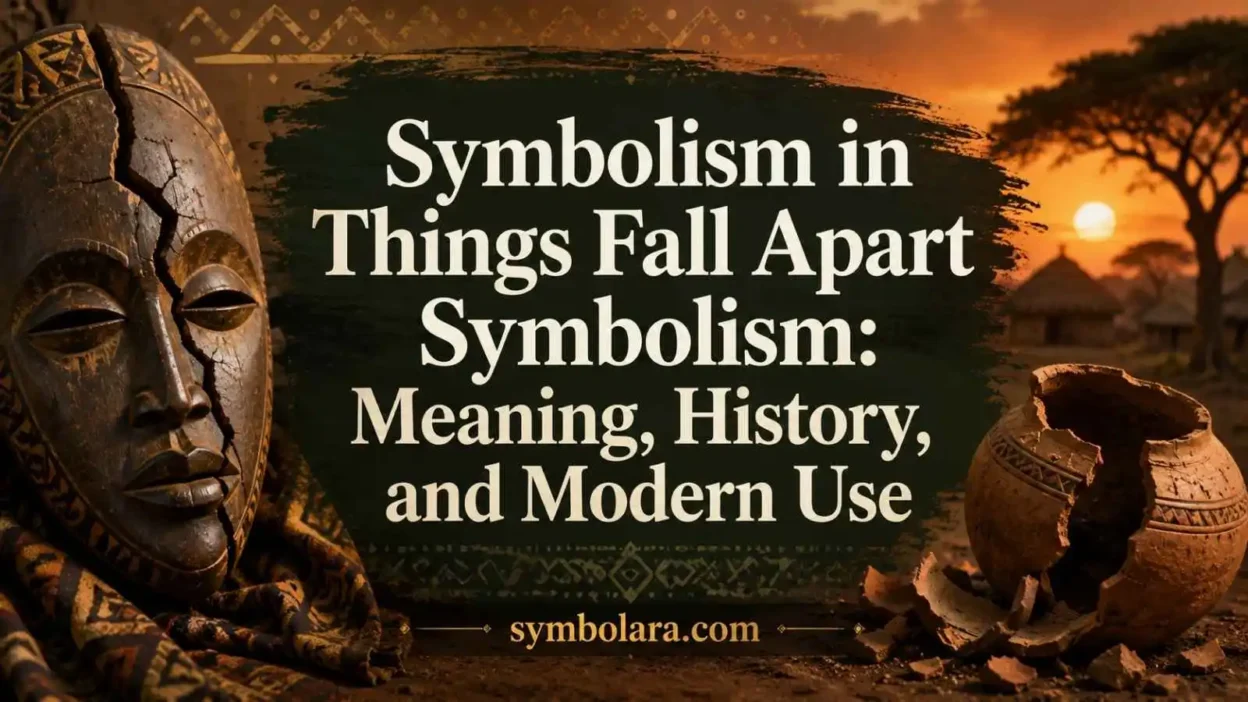
Things Fall Apart is a novel rich with layered symbolism that reflects cultural change, personal identity, and the clash of traditions. In this story of an Igbo community facing internal tensions and external forces, symbols stand in for larger ideas about stability, honor, family, and transformation. Americans encounter this symbolism in classrooms, book clubs, and conversations about culture and power.
In discussing Symbolism in Things Fall Apart, we explore how Chinua Achebe used everyday objects, customs, and events to carry meaning beyond their surface. These symbolic elements give readers insight into the heart of a society in transition and invite readers to reflect on how symbols shape understanding in any culture.
Scholars and readers alike care about these symbols because they reveal emotional and historical truths that inform both the novel’s original context and its lasting impact. For many American readers, the symbols in the book also resonate with broader themes of cultural collision, resilience, and loss.
Quick Answer
In Things Fall Apart, symbols like the yam, the locusts, fire, and the egwugwu represent cultural values, identity, change, and conflict. Most symbols reflect traditional Igbo beliefs and the community’s encounter with colonial forces, highlighting tensions between stability and upheaval.
TL;DR
- Yams symbolize strength, success, and social status.
- Locusts represent fleeting change and looming external impact.
- Fire reflects the protagonist’s spirit and destructive consequences.
- The egwugwu embody ancestral authority and tradition.
- Colonial religion and law symbolize deep cultural disruption.
What Symbolism Means in Things Fall Apart
In literature, a symbol is something—an object, character, event, or practice—that stands for a broader idea. In Things Fall Apart, symbols help readers see how the Igbo community understands itself and what happens as that understanding is challenged. These literary devices are not themes themselves but tools Achebe uses to explore the dynamics of culture, power, and human experience.
Unlike allegory, where characters or events map fully to a fixed idea, symbols in Achebe’s novel retain complexity. A yam isn’t just “wealth” in a simple way; it is tied to age, gender roles, survival, and community cohesion. Symbols in the novel carry layered meanings that shift as the story changes.
Yams: The Heart of Masculine Identity
One of the most prevalent symbols in Things Fall Apart is the yam. For the Igbo society depicted in the novel, yams are more than crops—they are a measure of a man’s worth. Prosperity in yam farming brings respect, status, and the ability to provide for one’s family.
The yam symbolizes:
- Masculine achievement: Men are judged by their success with yams, reflecting rugged labor and resourcefulness.
- Community stability: A good yam harvest supports feasting, marriages, and ceremonies.
- Traditional way of life: Yams anchor the narrative’s sense of rhythm and seasonal labor.
In American classrooms, students often discuss how the symbolic importance of yams parallels how modern societies value specific markers of success, like wealth or professional achievement, but within a distinct cultural logic.
The Locusts: Change Arriving in Swarms
When locusts descend on the land, villagers initially celebrate them as a rare treat. Yet their arrival foreshadows an overwhelming force that alters life in the community. Locusts symbolize:
- Ephemeral temptation: Their sweetness masks a deeper threat to stability.
- External forces: They arrive from beyond the community’s control, much like colonial influence later in the story.
- Transformational danger: What seems benign at first becomes a harbinger of disruption.
In the American context, locusts generate conversation about how seemingly small cultural influences can grow into transformative pressures—whether through technology, media, or political change.
Fire: Okonkwo’s Spirit and Cultural Fury
Okonkwo, the novel’s central character, is often associated with fire. He is described using fire imagery—he burns like it and destroys like it. The fire symbolizes:
- Passion and energy: Okonkwo’s drive to prove himself.
- Destruction: Fire in the book burns fields and homes, reflecting the harm that comes from unchecked pride.
- Transformation: Fire changes what it touches, just as Okonkwo’s actions change his community.
Fire’s symbolism helps readers see how personal passion and cultural rigidity can both drive and devastate a society. In American conversation, fire as a symbol often evokes passion turning into conflict, a useful parallel when teaching about identity struggles.
The Egwugwu: Ancestral Authority Made Visible
The egwugwu are masked elders who represent ancestral spirits during judicial and ceremonial functions. Their presence symbolizes:
- Tradition and continuity: They embody the voices of the past in decisions affecting the present.
- Collective identity: The community’s shared values are given shape through ritual.
- Cultural legitimacy: Decisions by the egwugwu carry moral and legal weight.
In U.S. discussions, the egwugwu encourage thinking about how societies use ritual and representation to give authority to norms and laws.
Colonial Religion and Law: Disruption and Displacement
The arrival of European missionaries and law represents something new and intrusive. Christianity and colonial courts symbolize:
- Cultural disruption: They offer alternatives to long-standing beliefs and practices.
- Power and persuasion: They attract converts by addressing grievances but also weaken shared identity.
- New authority structures: Colonial law challenges indigenous legal systems and reshapes governance.
This contrast prompts readers—especially in multicultural American settings—to reflect on how legal and religious systems influence community cohesion and individual choices.
Language and Proverbs: Oral Tradition as Symbol
Throughout the novel, proverbs and oral storytelling are symbolic of collective wisdom. They represent:
- Cultural memory: Passed down, they capture values and norms.
- Communication style: Language embodies how the Igbo see the world.
- Resistance to erasure: Proverbs preserve identity amid change.
For American readers, this highlights the power of language to carry culture and resist homogenization.
Gender Roles and Symbolic Labor
Gender is symbolized through daily tasks and social expectations. Men and women engage in different forms of labor—each symbolic of social order:
- Men and yams: Responsibility, strength, public life.
- Women and crops like cocoyams: Nurturing, domestic authority, continuity of household.
These symbols open discussions about how work and identity intertwine in any society.
Feast and Festival: Celebration as Identity Marker
Feasts and festivals are recurring symbolic spaces where social bonds are reaffirmed. They symbolize:
- Collective affirmation of values (e.g., harvest success).
- Social rhythm: Life structured by celebrations tied to agriculture.
- Integration: They include music, dance, law, marriage, and myth.
Americans often see parallels in seasonal celebrations that shape local and national identities.
The Title Itself: “Things Fall Apart”
The title phrase becomes symbolic near the novel’s end, capturing:
- Social breakdown: Under pressures internal and external.
- Personal collapse: Okonkwo’s life mirrors the community’s unraveling.
- Historical shift: Traditional structures losing coherence.
In U.S. classrooms, this phrase often enters discussions about modern societal change and the fragility of systems we take for granted.
Symbolism Across Cultures: Universal and Particular
While the symbols in Things Fall Apart are rooted in Igbo culture, many resonate broadly. Yams as a measure of success evoke other societies’ markers of prosperity. Fire as passion and destruction appears in global mythologies and literature. The conflict between traditions and new influences is a universal human story, though the specifics in Achebe’s novel remain culturally particular.
Emotional and Psychological Resonance
Symbols in Things Fall Apart convey emotional states as well as cultural ideas:
- Yams and pride reflect personal ambition.
- Fire and fear capture volatility.
- Egwugwu and communal trust reveal psychological anchoring in shared narratives.
These emotional layers help readers connect with characters not as exotic others, but as people grappling with forces familiar across cultures.
Symbolism in Modern Usage
In the United States, symbols from the novel appear in:
- Academic discourse: Essays about identity, colonialism, and narrative voice.
- High school curricula: Teaching cross-cultural understanding.
- Public conversations: Discussions about cultural change and heritage.
Because Things Fall Apart is widely read in schools, its symbolic language shapes how many Americans first encounter African literature and non-Western worldviews.
Misunderstandings and Controversies
Some readers mistakenly interpret symbols in Things Fall Apart through rigid binaries—good vs. bad, tradition vs. change—without appreciating nuance. For example:
- Viewing colonial religion solely negatively ignores why individuals chose conversion.
- Interpreting symbols as static rather than dynamic misses the story’s complexity.
Careful engagement requires attention to context and character agency.
Symbolism Compared: Things Fall Apart and Other Works
| Symbol in Things Fall Apart | Comparable Symbol in Western Literature | Shared Themes |
| Yam | Wheat/Harvest in The Grapes of Wrath | Sustenance, labor, identity |
| Fire | Fire in Fahrenheit 451 | Destruction, transformation |
| Locusts | Plague motifs in The Decameron | External disruption |
| Egwugwu | Chorus in Greek tragedy | Collective voice, tradition |
| Title motif (falling apart) | “Winter” in The Waste Land | Cultural disintegration |
This comparison shows how symbols function across traditions to explore human experience.
How Symbols Evolve Over Time
Symbols are not fixed; their meanings shift as readers bring new perspectives. When Things Fall Apart was first published, Western audiences were less familiar with African literary symbolism. Today, readers are more likely to see the novel’s symbols in light of postcolonial studies, multicultural awareness, and global history.
FAQs
The yam symbolizes wealth and success but also community values tied to labor and provision. It reflects how social status in the Igbo society is earned and recognized.
Locusts symbolize a change that seems welcome but foreshadows disruption, much like outside influences that arrive in the community.
The egwugwu embody ancestral authority and continuity, representing communal decision-making and cultural memory in physical form.
Colonial religion symbolizes disruption to established beliefs, offering new identities while challenging traditional authority and social order.
Yes. Themes of identity, change, labor, authority, and cultural conflict echo in American literature, history, and social discourse, making the symbols broadly relatable.
Okonkwo’s behavior symbolizes resistance to change and fear of weakness, reflecting personal and cultural stress under shifting conditions.
Absolutely. “Things fall apart” frames the novel’s arc, symbolizing fragmentation in society and within individual lives.
Conclusion
The Symbolism in Things Fall Apart offers readers a way to understand the emotional, social, and cultural forces at play in Achebe’s narrative. Objects like yams, events like locust swarms, and figures like the egwugwu serve as lenses into an Igbo world confronting transformation. For American readers, these symbols open avenues to think about how communities hold on to what matters as everything around them changes. Symbols in the novel do more than decorate the story—they invite readers into the depth of human experience and the complexity of cultural life.
[…] strength of the novel’s symbolism comes from its simplicity. Everyday things become meaningful because they represent larger human […]
[…] See also Symbolism in Things Fall Apart Symbolism: Meaning, History, and Modern Use […]