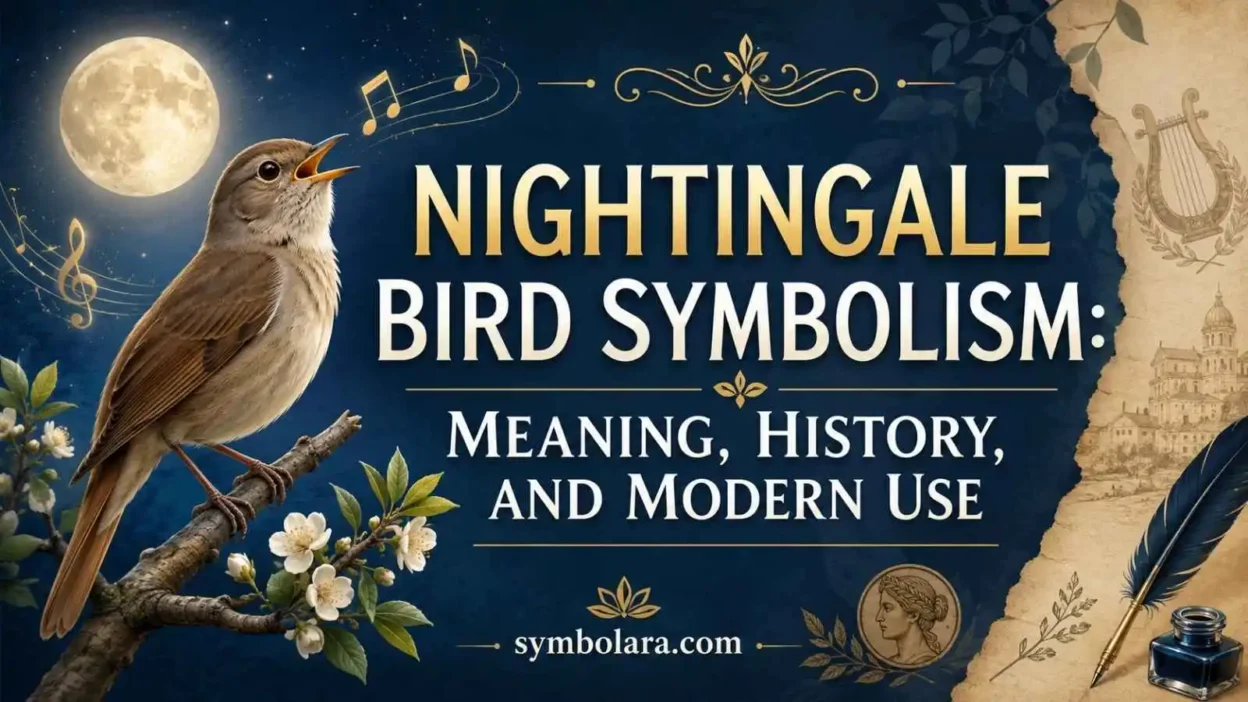
The nightingale is a small, plain-looking songbird with a reputation much larger than its body. Nightingale Bird Symbolism usually centers on voice, love, longing, hope, poetry, and emotional expression, especially because the bird is famous for singing at night.
For American readers, the nightingale is often more literary than local. The common nightingale is an Old World bird, not a familiar backyard species across the United States. Most Americans encounter it through poetry, music, fairy tales, nursing history, tattoos, jewelry, and symbolic art rather than through direct experience in nature.
That distance is part of the bird’s appeal. A nightingale often represents something heard more than seen: a voice in darkness, a feeling that cannot be said plainly, or beauty that arrives when life is quiet, lonely, or uncertain.
Quick Answer
Nightingale Bird Symbolism commonly represents love, hope, healing, and the courage to express emotion, especially in modern American culture. Historically, the nightingale has also symbolized poetic inspiration, grief, longing, spring, and the voice that continues singing through darkness.
TL;DR
- Nightingales symbolize voice, love, hope, and longing.
- Their night song connects them with darkness and resilience.
- Greek myth links them with grief and silenced speech.
- Persian tradition connects them with the rose and desire.
- Americans often know them through literature and nursing.
- Modern designs use them for tattoos, art, and personal meaning.
What the Nightingale Is and Why Its Song Matters
The common nightingale is a small brown bird known less for its appearance than for its remarkable song. It has warm brown upper feathers, a lighter underside, a broad tail, and a modest shape that does not immediately explain its fame. The contrast between its plain body and extraordinary voice is one reason it became such a lasting symbol.
Its song can be heard during the day, but its name comes from the idea of singing at night. In nature, male nightingales are especially associated with night song during the breeding season. This detail shaped centuries of symbolism: people imagined the bird as a singer in darkness, a hidden presence, or a messenger from the emotional world.
Because the bird is often heard before it is seen, it became a natural symbol for invisible feeling. Love, grief, memory, prayer, creativity, and longing all fit the pattern. The nightingale does not need bright color to matter. Its meaning comes from sound, timing, and emotional atmosphere.
What It Commonly Means in the United States
In the United States, the nightingale most often symbolizes emotional expression. It suggests a voice that remains gentle but persistent, especially during difficult moments. People use it to represent hope after sadness, beauty in solitude, and the need to speak or sing honestly.
The bird also carries romantic meaning. A nightingale can stand for devotion, yearning, and love that is tender rather than loud. In poems, wedding imagery, and personal designs, it often appears as a softer alternative to symbols like roses, doves, or swans.
Because Americans are less likely to see actual nightingales in daily life, the symbol often feels artistic or old-world. It belongs to books, songs, gardens, vintage illustrations, and poetic language. That makes it appealing for people who want a symbol that feels thoughtful, literary, and emotionally restrained.
Why the Night Song Became So Symbolic
Night changes how sound feels. A bird singing in daylight may seem cheerful or ordinary, but a bird singing after dark feels different. It can seem braver, lonelier, more intimate, or more surprising.
That is the foundation of nightingale symbolism. The bird’s song appears when the world is quiet. Because of that, it has come to represent feelings people often keep private: grief, love, longing, prayer, and creative thought. It is not a symbol of noise or display. It is a symbol of expression when few others are listening.
This is why the nightingale is often connected with endurance. It does not erase darkness; it sings within it. In modern emotional symbolism, that makes the bird a fitting image for people who have gone through loss, isolation, heartbreak, or personal change but still want to keep their voice.
Ancient Greek Myth and the Sorrowful Voice
One of the strongest historical roots of nightingale symbolism comes from Greek and Roman myth, especially the story of Philomela, Procne, and Tereus. The story has different versions, but later literary tradition often connects Philomela with the nightingale.
The myth is violent and should not be softened into a simple “sad bird” story. Philomela is harmed, silenced, and then finds another way to reveal the truth. In later interpretations, her transformation into a bird gave the nightingale a meaning tied to grief, testimony, and the voice of someone who was denied ordinary speech.
This history explains why the nightingale’s song is not always interpreted as happy. In Western literature, it can sound beautiful and mournful at the same time. The bird became a symbol of art made from suffering, not because suffering is good, but because expression can survive after harm.
For modern readers, this meaning should be handled carefully. The nightingale can symbolize recovery of voice, but it should not romanticize trauma. Its strongest meaning is not pain itself. It is the refusal of silence.
Love, Longing, and the Rose
In Persian and related poetic traditions, the nightingale is closely connected with the rose. The rose often represents beauty, the beloved, or spiritual perfection. The nightingale represents the lover, the poet, or the soul longing for union.
This pairing gives the bird a different emotional tone from the Greek tradition. Instead of focusing mainly on grief, it emphasizes desire, devotion, admiration, and the ache of separation. The nightingale sings to the rose, but the rose remains distant, beautiful, and protected by thorns.
That image became influential across Persian, Urdu, Turkish, and other literary traditions. It also helps explain why nightingales appear in ornamental art, garden imagery, and love poetry. The bird is not just “romantic” in a simple sense. It represents love that is eloquent, patient, and sometimes unanswered.
In American symbolism, this rose-and-nightingale pairing is less commonly understood than the dove or heart, but it still appears in art, tattoos, textiles, and literary references. When used thoughtfully, it can suggest refined love, poetic devotion, or longing for something beautiful but difficult to reach.
Nightingales in Poetry, Music, and Literature
The nightingale has long been treated as a poet’s bird. Writers have used it to represent the artist, the singer, the muse, or the voice of nature. Its song feels spontaneous, but also skilled; hidden, but unforgettable.
In English literary tradition, the nightingale often appears in poems about mortality, beauty, imagination, spring, and sorrow. John Keats’s “Ode to a Nightingale” helped shape the modern image of the bird as a voice that seems to outlast individual human life. The bird in that poem is not just an animal; it becomes a way to think about art, death, and escape.
Hans Christian Andersen’s tale “The Nightingale” added another layer. In that story, the living bird is valued less than a glittering mechanical imitation until the real song proves its worth. For modern readers, the tale makes the nightingale a symbol of natural art, sincerity, and the limits of imitation.
This is why the bird still works well in modern design and storytelling. It suggests authenticity. A real voice, even if imperfect, matters more than a polished copy without life behind it.
Florence Nightingale and the Symbol of Care
In the United States, the word “Nightingale” also carries a strong association with Florence Nightingale, the nineteenth-century nursing reformer. Although her surname is not bird symbolism in the biological sense, it changed how many English-speaking people emotionally hear the word.
Because of her legacy, “nightingale” can suggest care, service, discipline, and healing. National Nurses Week in the United States ends on May 12, Florence Nightingale’s birthday, which keeps her name visible in public life and health care culture.
This association can overlap with the bird’s older meanings. A nightingale already suggested a comforting presence in darkness. Florence Nightingale’s image as a caregiver moving through suffering with a lamp reinforced the emotional connection between night, compassion, and human care.
Still, the two meanings should not be confused. The bird symbolizes song, voice, longing, and beauty. Florence Nightingale adds a separate cultural layer of nursing, reform, and service.
Emotional and Psychological Meaning
Psychologically, the nightingale often represents the private self. It is the part of a person that speaks most honestly when the noise of the day has faded. That is why people connect the bird with journaling, music, poetry, grief work, and quiet forms of healing.
The nightingale can also symbolize emotional courage. It does not look dramatic, but it is known for what it releases into the air. As a personal symbol, it may suggest that someone does not need to be loud, glamorous, or dominant to be meaningful.
For people dealing with loss, the bird can represent memory. A song heard in darkness can feel like a connection to someone absent. For artists, it can represent creative instinct. For people recovering from emotional silence, it can stand for the return of voice.
Its emotional meaning is usually gentle, but not weak. The nightingale is a symbol of softness with endurance.
Nightingale Symbolism by Context
| Context | Meaning in the USA | Common Associations | Notes |
| Literature | Poetic voice and imagination | Keats, myth, romantic poetry | Often carries beauty and sadness together |
| Tattoos | Personal voice, healing, love | Songbird, branch, moon, rose | Meaning depends heavily on design details |
| Nursing culture | Care, service, compassion | Florence Nightingale, lamp, health care | More tied to her surname than the bird itself |
| Jewelry and decor | Grace, tenderness, quiet beauty | Vintage birds, florals, garden themes | Often used for subtle romantic symbolism |
| Spiritual use | Hope in darkness, prayerful voice | Night, dawn, music, renewal | Best kept grounded, not treated as a fixed omen |
| Cross-cultural art | Longing and devotion | Rose-and-nightingale motif | Especially strong in Persian-influenced traditions |
Nightingale Symbolism Compared With Other Songbirds
The symbolism of the nightingale shares some similarities with other songbirds, but it carries a unique emotional focus. This bird is often connected with love, longing, creativity, and personal expression because of its beautiful and meaningful song. Unlike some other songbirds that mainly represent happiness, freedom, or nature, the nightingale is strongly associated with deeper emotions and artistic inspiration.
However, the nightingale carries a more emotional meaning because its song has long been associated with love, longing, creativity, and quiet reflection. While birds like robins, sparrows, and bluebirds often symbolize hope, happiness, or everyday joy, the nightingale is especially connected with deep feelings and artistic expression.Unlike symbols that mainly represent freedom or peace, the nightingale is strongly connected with voice, longing, and hidden beauty.
A robin is often associated with renewal and seasonal change. A dove commonly represents peace and harmony. A sparrow may symbolize simplicity, community, and everyday resilience. The nightingale stands apart because its identity comes almost entirely from its song.
This difference explains why writers and artists continue to choose the nightingale when they want to express deeper emotions. The bird represents something that cannot always be seen but can still be felt and heard.
For modern Americans, the nightingale works as a symbol of inner expression. It suggests that quiet or unseen qualities can still have a powerful impact.
How Americans Use the Nightingale Today
Today, Americans use the nightingale mostly as a symbolic and aesthetic image. It appears in tattoos, book titles, song lyrics, handmade jewelry, literary gifts, nursery art, garden decor, and social media captions about healing or self-expression.
The bird is especially common in designs that combine natural and emotional imagery. A nightingale paired with a moon can suggest hope during loneliness. When shown beside a rose, it often points to romantic longing or devotion. Perched on a branch, the bird may represent song, patience, or a quiet return to life.
In digital culture, the word often feels poetic. People may use it in usernames, brand names, poems, or captions when they want to suggest beauty, music, sensitivity, or resilience. It is less direct than “phoenix” and less common than “dove,” which can make it feel more personal.
Its modern use works best when the meaning stays specific. A nightingale is not just a generic “pretty bird.” It is a symbol of voice, song, longing, and light carried through darkness.
What Does a Nightingale Symbolize in Art and Design?
In art and design, the nightingale often represents beauty expressed through simplicity. Artists use the bird to show emotion, nature, imagination, and the relationship between sound and memory.
Traditional artwork may pair the nightingale with roses, flowers, moonlight, or gardens. These combinations often create themes of romance, longing, and quiet beauty. The rose-and-nightingale image especially connects with Persian artistic traditions, where the bird represents the devoted lover.
Modern designs may use the nightingale in a more personal way. A minimalist bird illustration can represent creativity, healing, or finding one’s voice. Jewelry and home decor often use the image because it feels elegant without being overly dramatic.
The meaning of a nightingale in art depends on the surrounding elements. A moon may suggest reflection, a rose may suggest love, and musical imagery may highlight creativity or emotional expression.
Nightingale Tattoos and Personal Style
A nightingale tattoo usually represents voice, healing, creativity, or love. It can mark a person’s decision to speak after being silent, to keep creating after hardship, or to honor music and poetry as part of identity.
Design details change the meaning. A singing nightingale may emphasize self-expression. A nightingale placed near a moon may suggest hope during depression, grief, or solitude. When paired with a rose, the bird often points to romantic longing, devotion, or love that feels beautiful but difficult to reach. If the design shows a nightingale breaking from a cage, it can symbolize freedom from control, emotional confinement, or a period of silence.
Placement also matters. A tattoo near the throat can emphasize voice. A chest or rib design may point to personal emotion. A wrist or forearm design may feel more visible, like a daily reminder to keep speaking honestly.
Because the nightingale is tied to serious myths and literary traditions, it is worth choosing the design carefully. The best nightingale tattoos feel personal rather than decorative alone.
Spiritual and Religious Interpretations
The nightingale is not one single religious symbol with one fixed meaning. Its spiritual meanings vary by tradition, region, and artistic context.
In some Christian-influenced readings, the nightingale can suggest praise in darkness, hope before dawn, or the soul turning sorrow into song. These meanings are interpretive rather than universal. The bird is not as central to Christian symbolism as the dove, lamb, or eagle.
In Persian mystical poetry, the nightingale’s longing for the rose can become a metaphor for the soul’s longing for divine beauty. In that context, the bird’s song is not merely romantic; it becomes spiritual desire expressed through poetic language.
For modern American readers, the safest spiritual interpretation is this: the nightingale symbolizes a voice that continues in darkness. That can fit prayer, hope, grief, or creative faith without forcing the bird into a rigid religious category.
Nightingale Symbolism in Dreams: Common Interpretations
Dreams about nightingales are often interpreted as symbols of communication, emotional release, creativity, or a message that needs attention. Because the bird is famous for singing in darkness, many people connect it with finding clarity during uncertain times.
A singing nightingale in a dream may represent confidence, self-expression, or the desire to share something that has been kept private. It can also reflect artistic inspiration, especially for people connected with music, writing, or creative work.
A silent or hidden nightingale may suggest feelings that have not been expressed yet. In some personal interpretations, it can point toward grief, memories, or the need to reconnect with an important part of yourself.
Dream symbolism is highly personal and depends on the dreamer’s experiences. A nightingale does not have one universal meaning, but its traditional associations with voice, emotion, and hope often shape modern interpretations.
Spring, Renewal, and the Return of Life
The nightingale is also connected with spring. In places where the bird migrates and breeds, its song is associated with warmer weather, new growth, mating season, and the return of life after winter.
This seasonal meaning softens the bird’s mournful side. The nightingale may sing at night, but it often belongs symbolically to springtime. That creates a meaningful contrast: darkness and renewal at once.
In American design, this shows up through flowers, fresh leaves, garden scenes, and soft seasonal imagery. A nightingale in spring artwork can suggest emotional thawing, recovery after grief, or the beginning of a new creative period.
This is one reason the bird works well for wedding symbolism. It can suggest love, voice, and renewal without becoming overly sentimental.
Common Misunderstandings About the Nightingale
One common misunderstanding is that the nightingale is a familiar American bird. In everyday U.S. nature, people are far more likely to hear mockingbirds, thrushes, cardinals, or nightjars. Some North American birds have been nicknamed “nightingales” because of their songs, but they are not the common nightingale.
Another misunderstanding is that the nightingale always symbolizes happiness. Its song is beautiful, but literary tradition often treats it as sorrowful, longing, or bittersweet. The bird can represent joy, but rarely simple cheerfulness.
A third misunderstanding is that all nightingale symbolism is romantic. Romance is important, but the bird also represents grief, artistic voice, secrecy, healing, and spiritual longing.
Finally, some modern “omen” interpretations go too far. The nightingale is sometimes described online as a guaranteed sign of luck, destiny, or supernatural guidance. That may be meaningful in a personal belief system, but it is not the main historical meaning of the bird.
Controversies, Misuse, and Careful Interpretation
The nightingale’s symbolism can be misused when people flatten it into a vague emblem of beauty. Its history includes difficult themes: violence in myth, mourning in literature, and emotional suffering transformed into expression. Treating the bird only as “cute” or “magical” misses much of its cultural weight.
The Philomela tradition requires special care. Because that story involves sexual violence and silencing, writers and artists should avoid using it as decorative tragedy. A more respectful interpretation focuses on voice, testimony, survival, and the refusal to let harm erase truth.
There is also a gender misconception in older literature. Many historical writers imagined the singing nightingale as female, partly because of the Philomela association. In the actual bird, the famous song is primarily associated with males. Symbolism does not have to follow biology exactly, but knowing the difference prevents confusion.
The strongest modern use of the nightingale keeps both sides in view: the natural bird and the cultural bird. One sings for mating and territory; the other sings in human imagination about love, grief, and meaning.
How the Meaning Has Changed Over Time
The nightingale’s meaning has shifted from seasonal bird to mythic mourner, from lover’s singer to poetic muse, from literary symbol to modern personal emblem. Each period added something.
Ancient traditions emphasized lament, transformation, and voice after suffering. Persian and related poetic traditions developed the bird as a lover singing to the rose. European poets turned it into a figure for the artist and the imagination. Fairy tales used it to contrast living beauty with artificial imitation.
In modern American culture, the nightingale has become more personal. People use it less as a shared public emblem and more as a chosen symbol for identity, grief, love, creativity, or healing. It is especially meaningful for people who value quiet strength rather than obvious display.
That evolution makes sense. The bird has always been heard more than seen. Its symbolism naturally belongs to the inner life.
FAQs
A nightingale symbolizes voice, love, longing, hope, creativity, and emotional expression. It often represents a beautiful song that continues through darkness or sadness.
It is mostly positive, but it is often bittersweet. The bird can symbolize hope and love, but it can also carry meanings of grief, longing, and painful memory.
A nightingale tattoo often means personal voice, healing, artistic identity, or love. When paired with a moon, rose, cage, or branch, the meaning may shift toward hope, romance, freedom, or recovery.
In love symbolism, the nightingale represents devotion, yearning, and the emotional voice of the lover. In rose-and-nightingale imagery, the bird often sings for a beloved who is beautiful but difficult to reach.
The nightingale is not a single fixed religious symbol, but it can carry spiritual meaning. It may represent praise in darkness, the soul’s longing for divine beauty, or hope before renewal.
The sadness comes partly from ancient myth and partly from the emotional sound of a hidden bird singing at night. Literature often treats the song as beautiful but mournful, especially when connected with loss or longing.
The common nightingale is not a native American backyard bird. Americans usually encounter the symbol through literature, music, nursing history, art, tattoos, and decorative design.
The nightingale is important in literature because writers use it to explore themes like love, imagination, mortality, grief, and artistic expression. Its song allows authors to represent emotions that are difficult to explain directly.
Conclusion
The nightingale’s central meaning is voice: the voice of love, grief, hope, memory, and creative expression. Its plain appearance and unforgettable song make it a symbol of inner life rather than outward show.
Nightingale Bird Symbolism remains meaningful because it does not pretend darkness disappears. Instead, the bird represents what can still be expressed within it. That is why it continues to appear in poems, tattoos, music, jewelry, and personal symbols of healing.
The nightingale reminds us that a soft voice can still carry far.