
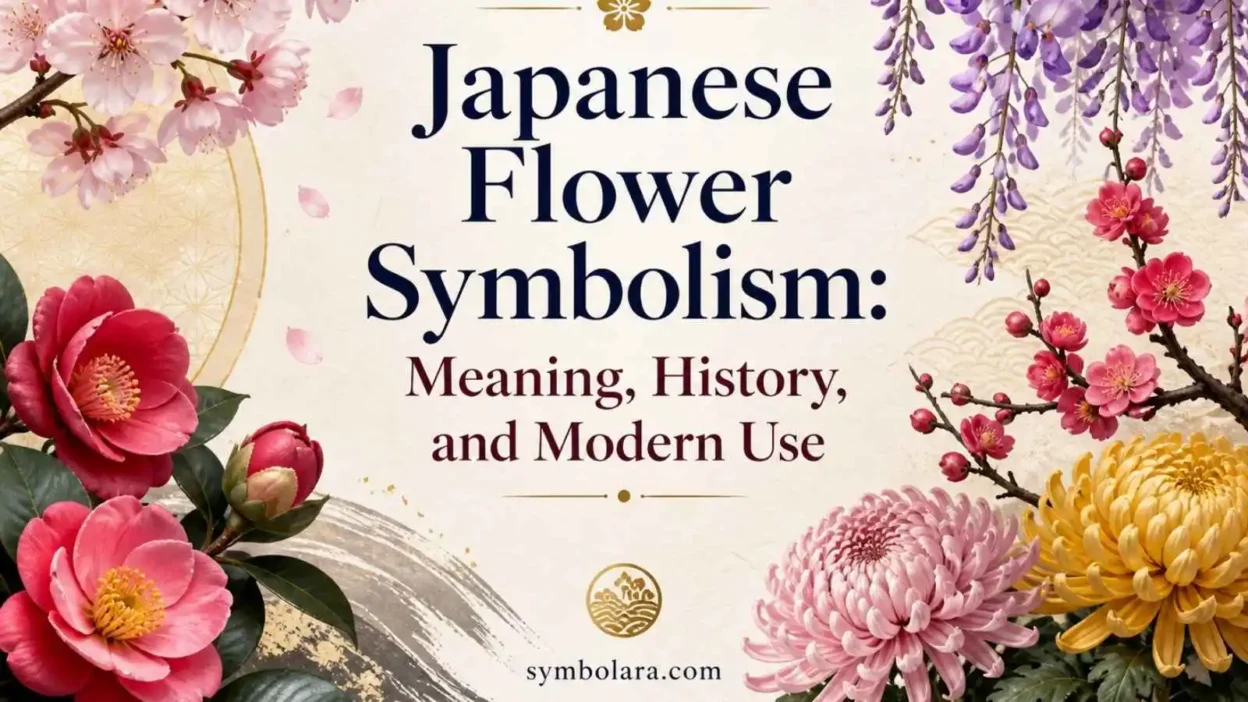
Japanese flower symbolism usually points first to seasonality, beauty that does not last forever, and the close relationship between nature and daily life. In modern American understanding, it is most strongly associated with cherry blossoms and ideas like renewal, fleeting beauty, grace, and cultural refinement, while in Japan the meanings are broader and vary by flower, season, and setting.
Flowers matter in Japan not only because they are beautiful, but because they are woven into festivals, poetry, design, family crests, religion, and gift-giving. A flower can signal the time of year, a mood, a social occasion, or a hoped-for quality such as courage, loyalty, purity, or long life.
For American readers, this topic matters because Japanese flower imagery shows up everywhere now: spring festivals, tattoos, stationery, interior decor, anime-inspired design, wedding styling, and social media aesthetics. Yet many people know sakura without realizing that chrysanthemum, plum blossom, camellia, iris, lotus, and wisteria each carry their own distinct emotional and cultural meanings.
Quick Answer
Japanese Flower Symbolism most commonly symbolizes renewal, seasonal beauty, elegance, and the fleeting nature of life in modern U.S. culture, especially through cherry blossom imagery. Historically and within Japan itself, different flowers also carry more specific meanings such as imperial continuity, courage, loyalty, protection, purity, and long life.
TL;DR
• Sakura often represents renewal and life’s brief beauty.
• Chrysanthemum is tied to imperial symbolism and longevity.
• Plum blossom suggests courage, endurance, and early spring.
• Wisteria is linked with loyalty, welcome, and lasting affection.
• In the United States, Japanese flowers often signal beauty and cultural appreciation.
What Japanese flower symbolism refers to
When people talk about Japanese flower symbolism, they are usually talking about two overlapping traditions. One is the broader Japanese habit of attaching meaning to seasonal plants through poetry, celebration, religion, clothing, and design. The other is hanakotoba, often translated as the Japanese language of flowers, in which individual flowers are assigned recognized meanings.
This means a flower in Japan is rarely just a flower. It may mark the start of spring, hint at personal character, serve as a family emblem, appear in a shrine or Buddhist setting, or carry a coded message in a bouquet or artwork. That layered use is one reason flower symbolism in Japan feels more social and situational than a simple one-word definition.
Why flowers carry so much meaning in Japan
A major reason is Japan’s strong seasonal consciousness. Japanese cultural life has long emphasized noticing small shifts in weather, bloom time, and landscape, so flowers became natural markers of time, memory, and social ritual.
Flowers also became meaningful because they entered formal arts and religious practice. Ikebana grew from flower offerings in Buddhist settings and later became a disciplined art form, while floral motifs spread into kimono, lacquerware, screens, ceramics, and crests. Over time, flowers came to communicate rank, refinement, ceremony, and season all at once.
Japanese Flower Symbolism in Art, Fashion, and Everyday Life
Japanese flowers have influenced visual culture for centuries. Their meanings appear not only in gardens and ceremonies but also in paintings, clothing, architecture, and everyday objects.
Traditional Japanese art frequently uses flowers to show seasons and emotions. A painting of plum blossoms may suggest endurance during difficult times, while cherry blossoms may represent the beauty of a passing moment. Artists use flowers as visual storytelling tools rather than simple decoration.
Floral patterns also appear in kimono, ceramics, fans, and household designs. The chosen flower can communicate elegance, celebration, family identity, or seasonal awareness. For example, autumn flowers may appear during seasonal events, while spring blossoms often represent renewal.
Modern fashion and interior design continue this tradition. Japanese floral patterns now appear worldwide on clothing, wallpapers, jewelry, and stationery. In many cases, people choose these designs because they express calmness, beauty, and a connection to nature.
The flower most Americans think of first: sakura
For most Americans, Japanese flower symbolism begins with sakura, or cherry blossoms. That association is understandable because sakura is widely presented as one of Japan’s most recognizable national symbols, and it is the flower most visible in U.S. public culture through Washington, D.C.’s cherry blossoms and related festivals.
In Japanese tradition, cherry blossoms are associated with the passing nature of beauty and life, but also with spring, fresh beginnings, and hopeful renewal. Because the bloom is brief, sakura often expresses a bittersweet feeling: joy in the present mixed with awareness that the moment will not last.
That combination explains why sakura works so well in American design and personal symbolism. In the United States, people often use cherry blossom imagery to signal femininity, softness, emotional growth, memorial feeling, or a graceful new chapter, even when they do not know the full Japanese history behind it. The symbol has become a bridge between Japanese seasonal meaning and modern American self-expression.
Other major flowers and what they commonly symbolize
Japanese flower symbolism is much richer than sakura alone. Chrysanthemum is commonly connected with nobility, longevity, autumn, and the Japanese imperial household. Plum blossom often suggests patience, courage, elegance, and the ability to endure winter before spring arrives. Wisteria is associated with kindness, welcome, loyalty, and long-lasting love.
Camellia usually carries ideas of elegance and understated beauty, but it also has a more complicated reputation because the whole flower can drop at once, which led at times to unlucky or death-related associations in some settings. Iris is linked with protection and the warding off of misfortune, especially through seasonal customs. Lotus, in Buddhist contexts, stands for purity and spiritual awakening emerging from muddy water.
A quick comparison of common meanings
| Flower | Meaning in the USA | Common Associations | Notes |
| Cherry blossom (sakura) | Renewal, beauty, spring | Fleeting life, fresh starts, friendship | The best-known Japanese flower in the U.S. |
| Chrysanthemum (kiku) | Elegance, tradition | Imperial symbol, longevity, autumn | Strong official and ceremonial associations in Japan. |
| Plum blossom (ume) | Resilience, hope | Courage, endurance, early spring | Often tied to New Year and auspicious imagery. |
| Wisteria (fuji) | Romance, grace | Loyalty, kindness, lasting love | Also appears in crests, literature, and theater. |
| Camellia (tsubaki) | Classic beauty | Pride, refinement, winter bloom | Sometimes read as unlucky because the bloom drops whole. |
Japanese Flower Symbolism Chart: Meanings of Popular Flowers
Japanese flower symbolism becomes easier to understand when the meanings are compared side by side. While each flower can change meaning depending on the situation, these common associations help explain why certain flowers appear so often in Japanese art, traditions, and modern design.
| FlowerJapanese NameCommon Symbolic Meaning | ||
|---|---|---|
| Cherry Blossom | Sakura | Renewal, beauty, impermanence, new beginnings |
| Chrysanthemum | Kiku | Longevity, dignity, royalty, tradition |
| Plum Blossom | Ume | Strength, resilience, hope, endurance |
| Wisteria | Fuji | Loyalty, elegance, affection, connection |
| Lotus | Hasu | Purity, wisdom, spiritual growth |
| Iris | Ayame | Protection, courage, overcoming challenges |
| Peony | Botan | Honor, prosperity, beauty, good fortune |
| Red Spider Lily | Higanbana | Separation, memory, transformation |
These meanings are not strict rules. Instead, they act as cultural associations that developed through literature, religion, seasonal celebrations, and artistic traditions. The same flower can communicate different ideas depending on whether it appears in a tattoo, ceremony, painting, garden, or personal gift.
Historical roots and how meanings developed
Some meanings grew from how the flowers actually behave in nature. Cherry blossoms bloom dramatically and disappear quickly, so they naturally became linked with impermanence. Plum blossoms arrive while winter still lingers, so they came to stand for endurance and bravery. Wisteria’s long hanging vines and soft motion encouraged meanings tied to welcome, grace, and lasting attachment.
Other meanings developed through institutions. Chrysanthemum became bound up with imperial identity and official symbolism, while iris entered protective seasonal customs. Still others came through Buddhism, where lotus imagery became central because the flower rises clean from mud and therefore offered a vivid image of purity and awakening.
The language of flowers itself was shaped later as well. Modern discussions of hanakotoba often describe it as gaining form in Japan in the late nineteenth century, which means not every flower meaning is ancient in exactly the same way. Some meanings are older and rooted in religion or court culture; others were refined, popularized, or reorganized more recently.
Symbolism in the United States
In the United States, Japanese flower symbolism is usually interpreted through three main lenses: beauty, Japan-inspired aesthetics, and cultural friendship. The clearest public example is Washington’s cherry blossom tradition, which remains explicitly tied to friendship between Japan and the United States.
American use is usually less coded than Japanese use. A person in the U.S. may choose cherry blossoms for a wedding invitation, a tattoo, or a bedroom print because they look delicate and meaningful, not because they are carefully following hanakotoba. Even so, the choices still tend to cluster around renewal, grace, remembrance, femininity, and a calm, seasonal beauty.
That difference matters. In Japan, the exact flower, bloom season, and context can shift the meaning. In the U.S., the broader emotional impression often matters more than the precise traditional code.
Japanese Flower Symbolism vs Western Flower Meanings
Japanese flower symbolism and Western flower meanings share some similarities, but they often developed from different cultural ideas.
In Western traditions, flowers are frequently connected with personal messages, emotions, and relationships. Roses, for example, are commonly associated with love, while lilies may represent purity or remembrance.
Japanese flower symbolism often places greater emphasis on seasons, impermanence, harmony with nature, and social context. A cherry blossom does not only represent beauty; it also reflects the idea that beautiful moments are temporary.
This difference explains why the same flower may create different impressions across cultures. A lotus may symbolize spiritual awakening in Japanese Buddhist traditions while also carrying broader ideas of peace and personal growth in modern global culture.
Understanding both perspectives allows people to appreciate Japanese flowers without forcing them into a completely Western symbolic system.
What these flowers communicate emotionally
Emotionally, Japanese flower symbolism often works by balancing beauty with restraint. Cherry blossoms express joy touched by loss. Plum blossoms suggest steadiness under pressure. Chrysanthemums often communicate dignity and continuity. Wisteria feels affectionate and welcoming. Camellia can read as polished and self-possessed.
Psychologically, that makes these flowers useful identity symbols. People choose them when they want to say something about how they move through life: graceful but strong, soft but disciplined, rooted in tradition, or aware that good moments are temporary and worth noticing. That helps explain why Japanese floral symbols appear so often in modern personal style.
Where Japanese flower symbolism appears today
Today these meanings show up in tattoos, jewelry, ceramics, stationery, fragrance branding, seasonal menus, clothing prints, anime and game visuals, and home decor. Floral meaning also remains active in ikebana, festival culture, and travel promotion, where flowers still mark the seasons and shape how places are experienced.
In tattoo culture, cherry blossoms are especially common because they combine beauty with a clear emotional story. Chrysanthemum and peony motifs also appear in Japanese-inspired tattoo traditions, while lotus is widely used when the person wants a more spiritual meaning. In decor and fashion, floral motifs usually communicate seasonality, elegance, and a connection to Japanese visual culture rather than a rigid symbolic dictionary.
Japanese Flower Symbolism in Tattoos: Meanings and Popular Designs
Japanese flower tattoos are popular because they combine visual beauty with personal meaning. Many people choose these designs because flowers can represent important life experiences, personal values, memories, or emotional growth.
Cherry blossom tattoos are among the most recognizable Japanese-inspired floral designs. They often represent new beginnings, appreciating the present moment, and the temporary nature of life. Because cherry blossoms bloom for a short time, they can remind people to value meaningful experiences.
Chrysanthemum tattoos are often connected with strength, dignity, tradition, and endurance. In Japanese-inspired tattoo art, the flower may appear with detailed petals and bold colors to create a powerful symbol of resilience.
Lotus tattoos usually represent transformation, purity, and personal growth. The image of a lotus rising from muddy water has made it a widely recognized symbol of overcoming difficulties and becoming stronger.
However, choosing a Japanese flower tattoo requires cultural awareness. A design may have different meanings in Japan compared with how it is interpreted in Western tattoo culture. Understanding the flower’s history helps people choose symbols with greater respect and appreciation.
Religion, ritual, and ceremonial meaning
Not all Japanese flower meanings are secular. Buddhist influence is especially important for lotus, which represents purity and enlightenment, and for floral offerings more broadly. Ikebana itself grew in part from flower offerings in Buddhist contexts before developing into a highly formal aesthetic practice.
Seasonal ritual matters too. Iris is used in Boys’ Day traditions and protective baths meant to ward off illness or misfortune. Plum branches appear in New Year decoration alongside pine and bamboo, where they carry auspicious meaning connected with endurance and prosperity. These examples show that flower symbolism in Japan is not just poetic language; it is also embedded in lived custom.
When meanings become more complicated
Japanese flower symbolism is not always uniformly positive. Camellia is a good example. Its beauty made it admired in gardens and art, but because the flower can fall whole rather than petal by petal, it sometimes developed uneasy associations, especially in relation to samurai culture and death imagery.
Red spider lily offers another example of how symbolism can turn darker depending on setting. In Japan it is strongly associated with the autumn equinox season and often appears near graves, roadsides, and rice fields. Because of those visual and ritual associations, it is often read in popular culture as a sign of death, separation, or the afterlife rather than a casual gift flower.
These cases matter because they show why “Japanese flower symbolism” should not be flattened into a single cheerful message. Meaning depends on the exact flower, the season, and whether the context is everyday, artistic, religious, or memorial.
How meanings changed over time
Meanings evolved as flowers moved through different cultural systems. A flower might begin as a seasonal sign, then become a poetic image, then enter court symbolism, then appear in kimono or family crests, and finally become a modern design motif or social media aesthetic.
That is especially clear with sakura. In Japan, it has old ties to harvest divination, seasonal awareness, and impermanence. In the modern United States, it also stands for diplomacy, spring tourism, lifestyle beauty, and soft self-expression. The symbol did not lose its older meanings, but it picked up new ones as it crossed cultures.
How to read Japanese flower symbolism more accurately
The safest way to understand these symbols is to ask three questions. First, which flower is it? Second, where is it appearing: religion, fashion, tattooing, festival, home decor, or public ceremony? Third, is the meaning being used in a Japanese context, an American context, or a mixed global one?
That approach prevents common mistakes, such as assuming all Japanese flowers mean the same thing, treating every floral motif as ancient, or importing a Western flower meaning directly into a Japanese setting. The symbolism is real, but it works best when read with context rather than as a one-size-fits-all codebook.
How to Choose a Japanese Flower Symbol for Personal Meaning
Choosing a Japanese flower symbol works best when you consider both the flower’s traditional meaning and your personal connection to it.
Start by thinking about the message you want the flower to express. Someone looking for a symbol of change may connect with cherry blossoms, while a person focused on resilience may prefer plum blossoms. Those seeking spiritual growth may find meaning in lotus imagery.
The setting also matters. A flower chosen for a tattoo may represent personal identity, while a flower used in home decoration may simply create a feeling of peace, elegance, or seasonal beauty.
The most meaningful symbol is usually one that connects cultural understanding with personal experience. Japanese flower symbolism becomes more powerful when people appreciate both the history behind the flower and the reason it speaks to them.
Frequently Asked Questions
What does Japanese flower symbolism usually mean?
In modern American usage, it usually suggests beauty, renewal, seasonal awareness, and refined Japanese-inspired design. In Japanese culture, the meaning is more specific and depends on the flower, the season, and the setting.
Which flower is the strongest symbol of Japan?
Cherry blossom is the flower most widely recognized as a symbol of Japan in global culture. Chrysanthemum is also extremely important, especially in official and imperial symbolism.
What does a Japanese flower tattoo usually symbolize?
It depends on the flower. Sakura often points to fleeting beauty and new beginnings, lotus to purity or spiritual growth, and chrysanthemum to dignity, endurance, or tradition.
Is Japanese flower symbolism religious?
Sometimes, but not always. Lotus and flower offerings have strong Buddhist associations, while other flowers may be more seasonal, poetic, decorative, or ceremonial than religious.
Are all Japanese flower meanings positive?
No. Some flowers carry mixed or context-dependent meanings. Camellia can be admired for elegance yet also read as unlucky in some contexts, and red spider lily is often linked with death, separation, or the afterlife.
Why do Americans mostly associate Japanese flowers with cherry blossoms?
Because cherry blossoms are the most visible Japanese floral symbol in U.S. public life, especially through Washington’s long-running cherry blossom tradition and its friendship story. That public presence made sakura the dominant American shorthand for Japanese floral meaning.
What Japanese flower should I choose for a tattoo?
The best choice depends on the meaning you want. Cherry blossoms can represent change and renewal, lotus flowers can represent growth and transformation, and chrysanthemums can symbolize strength and tradition.
Are Japanese flower meanings the same everywhere?
No. Japanese flower meanings can change depending on location, history, religion, and context. A flower used in a tattoo, festival, artwork, or ceremony may carry different interpretations.
Conclusion
Japanese flower symbolism is best understood as a cultural language of season, feeling, and context rather than a fixed list of definitions. Sakura may be the most familiar example in the United States, but the broader tradition also includes imperial chrysanthemum, resilient plum blossom, loyal wisteria, elegant camellia, protective iris, and spiritually charged lotus.
What makes Japanese Flower Symbolism so enduring is that it joins visual beauty to lived meaning. These flowers do not only decorate life. They mark seasons, carry memory, express values, and help people say something subtle about change, identity, and what matters while a moment is still in bloom.
[…] tattoos are among the most recognizable forms of flower symbolism because they allow people to express personal stories through a familiar image. While many people […]
[…] can be used in mourning because it is soothing without being stark. White flowers often symbolize innocence, red flowers may feel too romantic, and bright flowers can seem too celebratory. Lavender […]