
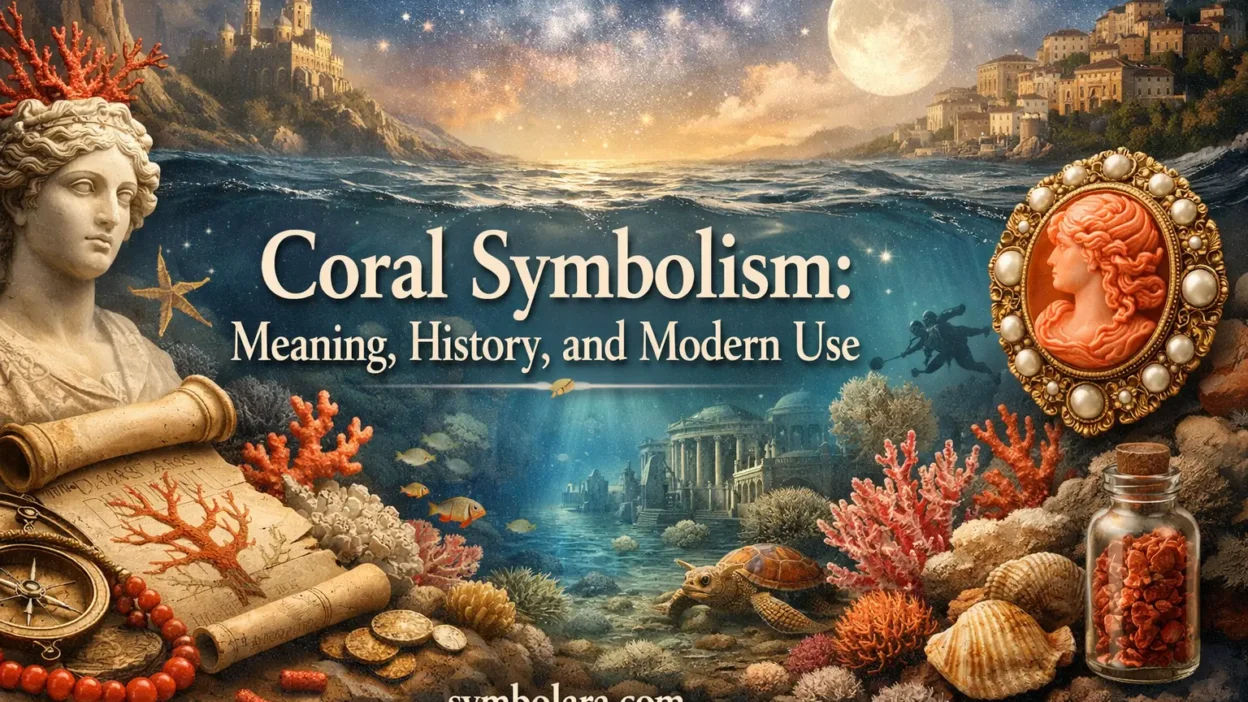
Coral is one of those symbols that seems simple at first glance and layered the longer you look at it. In modern American culture, Coral Symbolism usually points to ocean life, natural beauty, warmth, protection, and fragility. People encounter coral as a sea organism, as a branchlike material used historically in jewelry, and as a color name that suggests softness mixed with energy.
That mix helps explain why coral still attracts so much interest. It can suggest life and growth because it is part of a reef ecosystem, but it can also suggest preservation, memory, and vulnerability because coral can bleach, break, and disappear. Americans today often read it through both lenses at once: as something beautiful and as something worth protecting.
Historically, coral also carried meanings that had little to do with environmental awareness. In Mediterranean and European traditions, especially around red coral, it was treated as an amulet material associated with protection, luck, children, vitality, and defense against harm. Those older ideas still echo in jewelry, gift culture, and tattoo design, even when people no longer know the original stories behind them.
Quick Answer
Coral Symbolism most commonly represents protection, vitality, natural beauty, and a close connection to the sea in modern U.S. culture. Historically, especially in Mediterranean and European traditions, coral was also associated with amulets, children, blood, good fortune, and the power to ward off danger.
TL;DR
- Coral often stands for ocean life and protection.
- Red coral carried old amulet meanings.
- In the U.S., it also suggests coastal style.
- Its color reads as warm, social, and lively.
- Reef loss adds a conservation meaning today.
- Tattoos often use coral for resilience and place.
What Coral Is and Why People Read Meaning Into It
Coral is unusual because it sits at the edge of several categories in the human imagination. It is marine life, but it can look like stone. It grows in branching forms, but it has long been polished and worn like a gem. That physical ambiguity helps explain why people have treated it as more than a beach object or reef material. It feels alive, mineral, delicate, and durable at the same time.
Its appearance also matters. Branching coral looks like underwater antlers, roots, or small leafless trees. Red and pink coral especially invite symbolic readings because they resemble blood, flesh, dawn colors, and flowering branches all at once. Symbols often grow from what people notice first, and coral’s shape and color make it easy to connect with life, growth, protection, and the body.
What It Commonly Means in the United States
In the United States today, coral is often associated with four key themes: marine beauty, warmth, vitality, and vulnerability. In coastal design and fashion, the color and material evoke images of sunlit beaches, ocean reefs, and a relaxed yet sophisticated seaside lifestyle. As a personal symbol, coral can represent a deep connection to the ocean, a love for exploration and travel, or an appreciation for self-expression that feels both peaceful and full of energy. At the same time, its connection to fragile coral reefs has given it a modern meaning tied to environmental awareness and the protection of natural ecosystems.
There is also a newer layer to its meaning. Because coral reefs are now widely discussed in relation to bleaching, climate pressure, and habitat loss, coral can symbolize endangered beauty or a threatened natural world. In that sense, it has moved beyond ornament. For many Americans, coral now stands not just for the ocean’s richness, but for the urgency of caring for fragile ecosystems.
Ancient Roots and Early Protective Meaning
Some of coral’s oldest symbolic uses center on protection. In the ancient Mediterranean world and in later European practice, red coral was commonly treated as an apotropaic material, meaning it was believed to turn away harm. It appeared in amulets, devotional objects, and children’s ornaments because people thought it could guard the body and the home from danger, bad luck, or hostile forces.
That protective role helps explain why coral shows up so often in historical jewelry. It was not used only because it was beautiful. It was also used because it was thought to do something. When a material is believed to shield, bless, or steady a person, it gains emotional weight beyond decoration. That is one reason coral has remained symbolically charged even after many older folk beliefs faded.
Coral in Greek and Roman Imagination
Greek and Roman stories helped deepen coral’s symbolic profile. One influential myth connected coral to Perseus and Medusa: after Medusa’s head touched sea plants or reeds by the shore, they hardened into coral. Whether people took that literally mattered less than the image itself. The story tied coral to transformation, danger turned into beauty, and life emerging from violence.
Roman writers and later European traditions also linked coral with children’s protection and household safety. That combination of myth and practical amulet use gave coral a double identity. It could symbolize both dramatic transformation in story and everyday defense in ordinary life. Few natural materials carried both meanings so visibly.
Why Red Coral Became Such a Strong Symbol
Not all coral symbolism is the same, and color makes a major difference. Red coral became especially important because red already carried strong meanings in many cultures: blood, life force, fertility, courage, danger, sacrifice, and protection. Coral inherited some of that symbolism because it shared the color while also coming from the sea, which gave it an added sense of rarity and wonder.
That helps explain why red coral could symbolize both health and threat, both childhood protection and adult passion. Red is rarely a neutral color, and coral is not a neutral material. Even today, when people choose coral jewelry or coral-inspired art, they often respond to that same balance: it feels softer than bright red, but more alive than beige or pink.
Coral Symbolism in Different Colors: Red, Pink, White, and Black Coral Meanings
Coral symbolism changes depending on its color. Throughout history, different coral shades have developed their own associations because color strongly influences how people interpret symbols.
Red coral is the most historically significant type. Its deep color connects it with life, blood, energy, courage, and protection. Many Mediterranean traditions valued red coral as a protective charm, especially for children and families.
Pink coral often represents gentleness, affection, compassion, and emotional warmth. In modern jewelry and design, pink coral carries a softer meaning than red coral while still maintaining a connection to natural beauty and the ocean.
White coral is commonly associated with purity, peace, simplicity, and spiritual reflection. Because white often represents clarity and calmness, this coral color can feel more peaceful and minimal.
Black coral carries a stronger and more mysterious symbolism. It is often connected with strength, protection, depth, and resilience. In some cultures, black coral has been valued as a rare material with special significance.
These color meanings are modern interpretations rather than fixed rules. A person’s culture, experience, and personal connection with coral can influence what each shade represents.
Christian and Religious Associations
In parts of Christian art and symbolism, coral took on meanings tied to suffering, protection, and the blood of Christ. This was especially true when red coral appeared in devotional objects or in imagery involving the Christ child. The color invited a connection between innocence and future sacrifice, which gave coral a very different religious tone from its older pagan amulet role.
At the same time, other traditions attached different values to coral. In South Asian gem traditions, coral has long been treated as symbolically potent rather than merely decorative. In parts of East Asia, it has also been linked with status, longevity, and prosperity. These meanings are not identical, but they show a pattern: coral has repeatedly been treated as a material that carries force, rank, blessing, or protection.
Cross-Cultural Meanings Beyond the United States
Across cultures, coral often symbolizes one of three things: protection, status, or life. Mediterranean traditions emphasized protection against evil or misfortune. In some Asian contexts, coral came to signal prestige, auspiciousness, and longevity. In West African royal contexts, coral beads have also carried meanings tied to authority, vitality, and sacred power.
What unites these different traditions is not one universal message, but a shared instinct that coral is more than decorative matter. People repeatedly treated it as a material with social or spiritual charge. That is why coral symbolism is best understood as a family of meanings rather than a single definition.
Coral Symbolism in Native and Indigenous Traditions
Coral has appeared in many indigenous and traditional cultures as a valued natural material connected with trade, identity, and social meaning. Coastal communities often developed strong relationships with coral because it came directly from the marine environment that shaped their lives.
In some Pacific and island cultures, coral has been connected with ancestry, ocean relationships, craftsmanship, and ceremonial objects. Its presence in traditional art and adornment often reflects respect for the sea and the resources it provides.
Across parts of Africa, coral beads have historically represented wealth, leadership, status, and social identity. They were sometimes used in royal clothing and important ceremonies because their rarity and beauty made them valuable symbols.
These traditions show that coral has never been only a decorative object. Communities around the world have used it to express belonging, power, heritage, and connection with nature.
Modern discussions of coral symbolism benefit from recognizing these cultural meanings while also respecting the environmental importance of protecting living coral ecosystems.
Emotional and Psychological Meaning
Emotionally, coral often reads as reassuring but alive. It does not usually carry the severity of black, the purity language of white, or the urgency of bright scarlet. Instead, it lands somewhere between comfort and animation. That is part of why coral tones are so common in interiors, clothing, and beauty palettes aimed at creating warmth and approachability.
Psychologically, people often use coral to signal friendliness, optimism, sociability, and emotional warmth. When tied to natural coral rather than the color alone, it can also suggest rootedness, coastal memory, and personal resilience. The branching structure invites comparison to networks, families, reefs, and communities, so coral can quietly symbolize interdependence as much as individuality. This newer reading fits especially well with modern ecological thinking.
Coral Symbolism in Dreams: Common Meanings and Interpretations
Dreams about coral often connect with themes of emotional protection, personal growth, relationships, and hidden strength. Because coral comes from the ocean, it can represent feelings, memories, and parts of life that exist beneath the surface.
Seeing healthy coral in a dream may suggest growth, creativity, emotional balance, or a strong connection with nature. A colorful coral reef can symbolize abundance, community, and the importance of supportive relationships because reefs survive through complex connections between many forms of life.
Broken or damaged coral may carry a different message. It can represent disappointment, emotional wounds, change, or concern about something valuable that needs care. This interpretation connects with modern views of coral as a symbol of environmental vulnerability.
Dreaming about wearing coral jewelry may point toward protection, confidence, heritage, or a desire for emotional security. Since coral has a long history as an amulet material, the image may reflect a wish for safety or reassurance.
Dream symbolism is personal, so coral does not have one universal meaning. The dream’s emotions, setting, and details usually provide the strongest clues about what the symbol represents for the individual.
Why It Appears in Jewelry, Tattoos, and Personal Style
In jewelry, coral has historically suggested both beauty and safeguarding. Vintage coral pieces often carry traces of older beliefs about luck, fertility, or defense from harm, even when modern buyers simply see them as elegant or coastal. In the United States, coral jewelry today is often read less as a magical object and more as a statement of natural beauty, heritage style, or connection to the sea.
In tattoos, coral tends to symbolize resilience, marine identity, environmental concern, or a complicated kind of growth. Because coral is living, branching, and easily damaged, it works well for people who want a symbol that combines beauty with endurance. It can also mark love of diving, island life, Florida or Hawaii memories, or grief transformed into care for something larger than oneself. Those readings are modern and personal rather than traditional, but they fit coral’s long history of layered meaning.
Coral in Home Decor, Fashion, and Color Culture
In American decor, coral often functions less as a marine specimen and more as a color story. Coral shades can make a room feel sunnier, softer, and more social than pure red or orange. In fashion, coral often signals energy without aggression, making it popular in spring and summer palettes, resort wear, wedding accents, and coastal-inspired branding.
This is where symbolism shifts from object to atmosphere. A coral-colored room does not usually mean “protection” in the old amulet sense. It more often suggests warmth, welcome, freshness, and a polished version of natural ease. That modern color meaning is one reason the word coral remains culturally active even for people who never think about reef organisms or antique jewelry.
How Conservation Changed the Meaning
One of the biggest changes in recent decades is that coral now carries environmental meaning in mainstream American culture. News coverage, school materials, aquariums, and documentaries have made coral reefs familiar symbols of biodiversity, coastal protection, and ecological fragility. Reefs are widely recognized as habitats that support marine life and help protect shorelines, which gives coral a public meaning far beyond ornament.
That shift matters symbolically. A person using coral imagery today may be signaling not only beauty or tropical escape, but also stewardship, grief for damaged ecosystems, or concern about environmental loss. In that sense, coral has joined a group of modern symbols that carry both aesthetic appeal and ethical urgency.
Meanings at a Glance
| Context | Meaning in the USA | Common Associations | Notes |
| Natural coral reefs | Fragility, biodiversity, ocean life | Sea, habitat, conservation | Strong modern environmental reading |
| Antique coral jewelry | Protection, luck, vitality | Heirlooms, amulets, red coral | Draws on older Mediterranean beliefs |
| Coral color in decor | Warmth, friendliness, energy | Summer, welcome, coastal interiors | More atmospheric than religious |
| Tattoos | Resilience, marine identity, memory | Diving, home waters, healing | Usually personal rather than traditional |
| Religious or historical art | Sacrifice, innocence, protection | Christ child, blood symbolism | Mostly historical, not mainstream now |
Common Misunderstandings About Coral Symbolism
A common mistake is treating coral as if it has one fixed meaning everywhere. It does not. Some traditions emphasize protection, some status, some sacred force, and some beauty. Modern American usage often adds environmental concern, which is much newer than the amulet traditions associated with red coral.
Another misunderstanding is confusing natural coral with the coral color. They overlap, but they are not identical symbols. The color usually suggests warmth, sociability, and freshness, while the natural material brings in older ideas about the sea, luck, life, and vulnerability. People often blend those meanings without realizing they come from different symbolic layers.
Ethical Questions and Misuse
Coral symbolism also has an ethical side now. Because many coral species and reef systems face serious stress, using real coral casually can raise questions about sourcing, harvesting, and environmental impact. That does not erase coral’s history in art and jewelry, but it does change the way many Americans think about owning or displaying it. Ethical concerns have become part of the symbol itself.
There is also a softer form of misuse: flattening coral into generic “beach vibes” and stripping away its cultural and ecological weight. When that happens, coral becomes decorative shorthand with no sense of history. A better reading holds both truths together: coral is beautiful, and that beauty has always been tied to beliefs, trade, status, danger, and now environmental responsibility.
How Its Meaning Has Evolved Over Time
Coral’s symbolic journey reveals a rich evolution across cultures and centuries. In ancient Mediterranean and European traditions, coral was valued as a protective and sometimes sacred material, believed to carry spiritual significance and offer safety. Within religious artwork, it often represented sacrifice, purity, and deeper spiritual themes. As coral moved through global trade networks and royal courts, it became associated with wealth, status, and refinement. Today, especially in modern American culture, coral symbolizes coastal beauty, positive energy, emotional warmth, and a growing awareness of the delicate balance between nature and environmental preservation.
That evolution shows how symbols change without fully losing their past. Coral no longer functions in everyday U.S. life as a standard child’s amulet or household defense against evil. But the old sense of protection has not vanished entirely. It has partly migrated into emotional language: people still choose coral when they want something that feels life-giving, sheltering, vivid, and worth preserving.
Coral as a Symbol of Protection and Resilience Today
Today, coral continues to represent protection, but the meaning has changed from traditional beliefs about physical safety toward broader ideas of emotional strength and preservation.
For many people, coral symbolizes resilience because coral reefs survive through cooperation and adaptation. A reef is not a single isolated organism; it represents a connected ecosystem where many forms of life depend on each other.
This idea makes coral a powerful modern symbol for community, endurance, and recovery. People may choose coral imagery to represent overcoming challenges, protecting what matters, or maintaining strength during difficult periods.
Coral also represents responsibility. As awareness grows about reef conservation, coral has become a symbol of caring for fragile systems. It reminds people that beauty requires protection and that even small actions can help preserve something valuable.
FAQs
What does coral usually symbolize today?
Today, coral usually symbolizes ocean life, natural beauty, warmth, and vulnerability. In the United States, it also often carries a conservation meaning because coral reefs are widely seen as fragile ecosystems worth protecting.
Is coral a positive or negative symbol?
Coral is mostly a positive symbol, especially when it stands for vitality, beauty, protection, or connection to the sea. It can take on sadder meanings when people use it to represent reef loss, environmental damage, or something precious that is at risk.
What does coral symbolize in tattoos?
In tattoos, coral often symbolizes resilience, marine identity, healing, memory, or care for the ocean. Because coral is both living and fragile, it appeals to people who want a design that suggests strength without hardness.
Does coral have religious meaning?
Yes. In some Christian artistic traditions, red coral was linked with the blood of Christ, innocence, and sacrifice. In other cultural and religious traditions, coral has also been treated as auspicious, protective, or spiritually potent rather than merely ornamental.
Why was red coral used as a protective symbol?
Red coral was often seen as protective because its color suggested life and blood, while its rarity and sea origin gave it a special status. In Mediterranean traditions, it was widely used in amulets and children’s ornaments to ward off danger and misfortune.
Is coral symbolism the same as the symbolism of the color coral?
Not exactly. The color coral usually suggests warmth, friendliness, and lively softness, while natural coral carries additional meanings tied to reefs, amulets, history, and ecological fragility. The two overlap, but the material has a broader symbolic history than the color alone.
What does coral symbolize in love?
Coral can symbolize warmth, affection, emotional connection, and lasting relationships. Pink and red coral especially are often linked with love because their colors suggest care, passion, and vitality.
Conclusion
At its core, coral brings together several ideas that do not usually live in one symbol: beauty and danger, life and hardness, memory and change. It has meant protection, vitality, rank, sacrifice, and luck in different times and places, and those meanings still shape how people respond to it now.
In modern American life, Coral Symbolism most often lands somewhere between coastal beauty and living fragility. That balance is probably why it remains compelling: coral does not just decorate the world; it reminds people that some of the most beautiful things are also the most vulnerable.


[…] Modern U.S. symbolism tends to be less religious than older European art, but the old meanings still appear in churches, museums, wedding imagery, and tattoos. […]
[…] and sea salt share many symbolic meanings, but sea salt often adds stronger connections to nature, travel, and emotional […]