
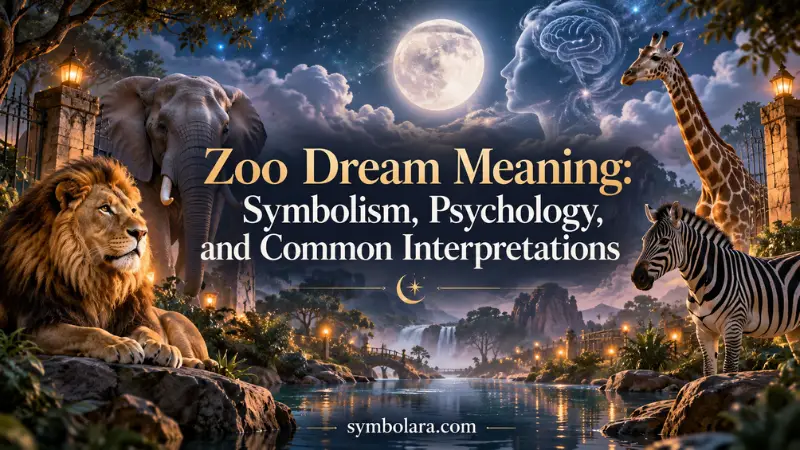
Imagine walking through a zoo in your dream. Lions rest behind glass walls, monkeys swing between branches, and colorful birds fill the air with sound. Suddenly, you notice an open enclosure, or perhaps you find yourself trapped inside one. The zoo dream meaning can feel especially interesting when an ordinary visit turns into something unexpected.
A zoo brings together wild animals, enclosed spaces, visitors, and carefully managed environments. These details may remind you of freedom, responsibility, curiosity, or situations where you feel watched or restricted.
For many Americans, zoos also connect with childhood trips, family outings, wildlife documentaries, and conversations about animal welfare. Your memories and feelings can influence how you understand this dream.
Although people often associate zoo dreams with control and freedom, no scientific evidence shows that a zoo has one fixed dream meaning. The most useful interpretation starts with your experience.
Quick Answer
Zoo dream meaning commonly involves possible themes of freedom, restrictions, responsibility, curiosity, and emotional control. A peaceful zoo may reflect enjoyment or stability, while trapped animals or frightening encounters might connect with feelings of pressure or limited choices. These are symbolic possibilities, not scientifically proven meanings, and the interpretation depends on your emotions, memories, and current circumstances.
TL;DR
- Zoo dreams may symbolize freedom, boundaries, curiosity, or responsibility.
- Peaceful animal encounters can feel reassuring or exciting.
- Frightening enclosures may resemble stressful waking experiences.
- Sleep research connects dream content with memories and emotions.
- Religious traditions offer no universal zoo dream interpretation.
- Consider your feelings before assigning meaning to any animal.
What Does a Zoo Dream Usually Mean?
Dreaming about a zoo may reflect how you experience boundaries, freedom, and responsibility in everyday life.
A zoo contains animals that would normally live in the wild, yet their movements occur within managed spaces. Because of this contrast, someone might associate the dream with personal freedom or restrictions.
However, a zoo can also represent safety, learning, enjoyment, and care.
Several possible interpretations deserve attention.
Freedom and limitations: Seeing animals behind barriers may remind you of rules or responsibilities that restrict your choices.
Organization and control: Orderly animal enclosures could resemble the way you manage different parts of your life.
Curiosity and exploration: Walking through unfamiliar exhibits may connect with your interest in new experiences.
Protection and responsibility: Caring for animals might reflect concerns about looking after someone or something important.
Conflicting emotions: Different animals in separate spaces may offer a personal metaphor for managing competing feelings.
For example, someone who feels overwhelmed by a demanding job might dream about watching a tiger pace inside a small enclosure. They could interpret the scene as reflecting frustration.
Another person might experience the same dream after an enjoyable family outing and feel nothing negative about it.
Neither interpretation can be proven from the animal or setting alone.
Why You Might Dream About a Zoo
Zoo dreams can develop from ordinary experiences rather than hidden emotional conflicts.
Your sleeping brain draws on memories, recent events, familiar locations, and personal concerns. A zoo provides many visual details that can appear in unusual combinations.
Recent Experiences
A recent zoo visit may influence your dream, especially if something memorable happened.
Perhaps you watched an elephant playing, heard a lion roar, or spent an afternoon exploring exhibits with your children.
Dreams can reuse these experiences without recreating them exactly.
Wildlife Entertainment
Animal documentaries, social media videos, movies, and television programs may also contribute to dream imagery.
Watching a video about rescued wildlife before bed could make animals and enclosures more familiar in your recent memories.
This does not mean every animal video will cause a zoo dream.
Daily Responsibilities
Sometimes the setting feels personally relevant because it resembles your current situation.
A person balancing work, family, and financial responsibilities might associate separated enclosures with different obligations.
Still, the connection remains a possible personal interpretation rather than an established cause.
Childhood Memories
For some people, zoos bring back memories of school trips, family vacations, or exciting childhood discoveries.
A dream might combine an old zoo memory with people and situations from the present.
Such mixtures are common features of dreaming.
Psychological Interpretations of Zoo Dreams
Psychological approaches offer several ways to think about zoo dreams, although none can determine their meaning with certainty.
Freud’s Historical Perspective
Sigmund Freud viewed dreams as possible expressions of wishes and conflicts that were not fully recognized during waking life.
From a Freudian perspective, someone might interpret a wild animal behind bars as representing a desire or impulse that feels restricted.
For instance, an angry lion could become a personal symbol of frustration.
However, Freud’s approach is a historical theory. Research has not established that caged animals reliably represent suppressed emotions.
Jung’s Symbolic Approach
Carl Jung emphasized symbols, personal experiences, and recurring themes in dreams.
His approach might encourage someone to explore the contrast between wild animals and controlled surroundings.
A person could associate a zoo with the tension between natural impulses and social expectations.
Jung’s ideas can provide a framework for reflection, but they do not offer scientifically verified interpretations of individual dream images.
Modern Psychological Perspectives
Modern dream research often examines how dream content relates to waking experiences.
One influential idea is the continuity hypothesis, which suggests that dreams can reflect aspects of everyday concerns, memories, and activities.
Someone worried about losing independence might experience dream situations involving barriers or restricted movement.
Yet dream imagery does not always have a clear connection to a specific waking concern.
A zoo dream may simply combine remembered animals, familiar environments, and ordinary emotions.
What Modern Dream Science Suggests
Sleep science provides useful information about how dreams happen, even though it cannot assign a fixed meaning to a zoo.
REM Sleep and Dream Imagery
Many vivid dreams occur during rapid eye movement, or REM, sleep.
During this stage, brain activity supports complex mental experiences that can include movement, strong feelings, and unusual situations.
Dreaming also occurs during non-REM sleep.
A zoo dream might therefore arise during different sleep stages, although its exact content cannot identify the stage.
Memory and Emotional Experiences
Research shows that waking experiences can influence dream content.
Sleep also plays an important role in memory processing, although researchers continue studying how dreaming relates to those processes.
A dream might combine a zoo visited years ago with a conversation from yesterday.
This helps explain why dream settings can feel familiar while their events seem impossible.
Why Dream Stories Become Strange
Dreams frequently combine unrelated memories and change familiar places.
A zoo might suddenly become your workplace. An elephant could speak, or a familiar friend might appear as a zookeeper.
Such transformations are normal features of dream experiences.
Importantly, scientists have not established that dreaming about a zoo predicts a particular event, personality trait, or emotional condition.
Common Zoo Dream Scenarios and Their Possible Meanings
The details of your dream can change how you understand it. Consider what happened, which animals appeared, and how you felt.
Dreaming About Visiting a Zoo
Walking through a zoo peacefully may bring feelings of curiosity, relaxation, or enjoyment.
You might associate the experience with learning something new or enjoying a break from daily responsibilities.
If you recently planned a family outing, the dream could simply reflect anticipation.
An unfamiliar zoo may also resemble the excitement of entering an environment you do not know well.
Dreaming About Animals Escaping From a Zoo
Escaping animals can create an intense dream, especially when visitors begin running.
One possible interpretation involves uncertainty or a situation that feels difficult to manage.
For example, someone facing unexpected changes at work may connect the escaping animals with concerns about losing control.
However, the same dream might feel exciting to someone who enjoys adventure stories.
The emotional response matters more than the escape itself.
Dreaming About Being Trapped Inside a Zoo Cage
Finding yourself inside an animal enclosure may feel uncomfortable or frightening.
Some people might associate this dream with restricted choices, unwanted attention, or pressure from others.
A student facing strict expectations could recognize similarities between the dream and school-related stress.
If the enclosure feels safe, however, the dream may carry a different personal meaning, such as wanting privacy or protection.
Dreaming About Feeding Zoo Animals
Feeding animals often involves attention, responsibility, and care.
You might interpret this experience as reflecting your role in supporting family members, caring for pets, or managing important duties.
The behavior of the animals adds context.
Calm animals may create a satisfying experience, while aggressive animals might resemble the feeling that your efforts are not enough.
Dreaming About Dangerous Animals at a Zoo
Lions, tigers, bears, and other powerful animals can make zoo dreams especially memorable.
If a dangerous animal approaches you, the experience might connect with fear, uncertainty, or respect for something powerful.
Someone preparing for a difficult conversation could associate the animal with that situation.
However, a person who admires big cats might experience excitement rather than fear.
Seeing a lion does not automatically mean danger is approaching.
Dreaming About an Abandoned Zoo
An empty or neglected zoo may create feelings of loneliness, sadness, or unease.
Broken fences, unused paths, and empty exhibits might remind someone of neglected responsibilities or places that have changed.
For another person, an abandoned zoo could feel peaceful because the crowds have disappeared.
The dream may also reflect memories of abandoned buildings shown in movies or games.
Dreaming About Working as a Zookeeper
Working at a zoo may involve cleaning enclosures, feeding animals, or protecting visitors.
This dream could connect with responsibilities, problem-solving, and caring for others.
If the work feels satisfying, you may associate the experience with confidence and usefulness.
If every animal needs help at once, the dream might resemble the pressure of handling too many tasks.
Dreaming About a Zoo Full of Happy Animals
Watching healthy animals play or rest in spacious habitats can create a pleasant dream.
Someone might associate this scene with comfort, cooperation, or feeling that important needs are being met.
A nature lover may simply enjoy seeing animals.
The dream does not prove that your life is perfectly balanced, but your positive reaction may reveal what feels reassuring to you.
Zoo Dream Meaning at a Glance
| Dream Scenario | Possible Meaning | Emotional Association | Important Context |
| Visiting a peaceful zoo | Discovery or recreation | Happiness, curiosity | Recent outings or memories |
| Animals escaping | Unexpected change | Fear, excitement | Current uncertainty |
| Being inside a cage | Restricted choices | Frustration, vulnerability | Personal boundaries |
| Feeding animals | Caring for others | Affection, responsibility | Family or work duties |
| Seeing an abandoned zoo | Change or loss | Sadness, solitude | Past experiences |
These examples describe possible associations, not universal interpretations.
Is Dreaming About a Zoo Good or Bad?
A zoo dream is not automatically positive or negative.
The experience may feel pleasant, unsettling, or emotionally neutral.
Positive experiences might include watching playful animals, enjoying nature, or exploring the zoo with loved ones. These scenes may connect with happy memories, curiosity, and a sense of security.
Negative experiences might involve injured animals, broken cages, aggressive behavior, or being unable to escape. Such scenes could resemble concerns about responsibility, safety, or limited control.
Some dreams contain both feelings.
For example, you might enjoy seeing a beautiful tiger but feel sad because it cannot leave its enclosure.
That combination may reflect your personal views about animals rather than a conflict in your own life.
The emotion you remember often provides more useful context than labeling the dream a good or bad sign.
Spiritual and Religious Perspectives on Zoo Dreams
Religious and spiritual interpretations depend on the tradition, the individual, and the particular dream.
There is no widely established religious teaching that assigns one fixed meaning to dreaming about a modern zoo.
Christian Perspectives
Christian scripture includes many important animal images.
Stories involving Noah’s ark and Daniel among lions show animals in religious narratives, but they do not establish a specific interpretation for zoo dreams.
Some Christians may reflect on themes of care, responsibility, or stewardship when dreaming about animals.
Such reflections are personal applications of religious ideas, not guaranteed messages about future events.
Islamic Perspectives
Islamic traditions contain discussions about different kinds of dreams and how believers may respond to them.
However, there is no standard Quranic teaching that states a particular outcome will follow a dream about visiting a zoo.
A Muslim dreamer may consider the dream’s emotional tone and personal circumstances while remaining cautious about unsupported interpretations.
Personal Spiritual Interpretations
Some people view a zoo as a metaphor for balancing freedom with responsibility.
Others may associate the animals with compassion, protection, or respect for nature.
These interpretations can be meaningful within someone’s spiritual outlook, but they should not be confused with scientific findings or established religious rules.
Historical and Cultural Associations With Zoo Dreams
The modern zoo is different from the animal collections people encountered in earlier centuries.
Royal menageries once displayed unusual animals as signs of wealth, influence, and status. During the nineteenth century, public zoological gardens expanded in Europe and the United States.
Over time, many zoos placed greater emphasis on education, research, conservation, and animal care.
The Smithsonian’s National Zoological Park, established in Washington, D.C., in 1889, provides an American example of this development.
These changes influence what a zoo might represent to a modern dreamer.
For some people, zoos suggest discovery and wildlife protection. For others, they raise questions about captivity and animal welfare.
Earlier dream traditions sometimes assigned symbolic meanings to individual animals, but those beliefs should not be treated as historical interpretations of modern zoo dreams.
A lion in an older symbolic tradition and a lion behind glass in a modern dream are not automatically equivalent.
Cultural meanings also vary according to personal experiences and community attitudes toward wildlife.
How Americans Interpret Zoo Dreams Today
In American life, zoos can represent several different experiences at once.
A parent may remember taking children to see giraffes. A conservation volunteer may think about endangered species. Someone concerned about animal welfare might focus on captivity.
These associations can shape how a dream feels.
Family Experiences and Nostalgia
Zoo visits are familiar activities for many American families.
Dreaming about walking through exhibits with parents, children, or childhood friends may connect with memories of shared experiences.
The people accompanying you might matter more than the animals.
Work, School, and Social Pressure
Modern responsibilities can also influence personal interpretations.
Someone working under close supervision might connect enclosed animals with limited independence.
A teacher managing a busy classroom could dream about trying to organize a crowded zoo.
These are examples of possible associations, not evidence that specific occupations cause zoo dreams.
Movies, Social Media, and Online Discussions
Wildlife videos, animated animal movies, zoo rescue stories, and online discussions can introduce memorable images.
Popular dream interpretation websites sometimes present animal encounters as signs of success, danger, or major life changes.
Such claims may be interesting, but they rarely provide scientific evidence for the predicted outcome.
Online discussions are most useful when they encourage comparison and reflection rather than insisting on one correct meaning.
Why Personal Memories and Emotions Matter
Two people can experience nearly identical zoo dreams and understand them very differently.
Imagine one person who loved visiting zoos with a grandparent. A dream about walking past elephant enclosures might feel comforting and nostalgic.
Another person who dislikes keeping wild animals in captivity may experience sadness while seeing the same elephants.
The physical setting remains similar, but the emotional meaning changes.
Your relationship with particular animals also matters.
Someone who works with wildlife may understand animal behavior differently from someone who fears large predators.
When interpreting a zoo dream, consider whether the strongest feeling came from the animals, the people nearby, or the environment itself.
Sometimes the most meaningful detail is not the zoo but a familiar person standing beside you.
What Does It Mean to Keep Dreaming About a Zoo?
Recurring zoo dreams may be connected with repeated experiences, familiar memories, or ongoing concerns.
For example, someone who frequently feels responsible for others might repeatedly dream about caring for zoo animals.
Another person may revisit the same dream setting because it holds a strong childhood memory.
Recurring dreams do not necessarily indicate an unresolved psychological problem.
Dream content can repeat without a clear explanation.
When the Dream Changes
Notice whether the repeated dream develops differently.
Perhaps you initially watch animals from outside their enclosures, but later dreams place you inside one.
The changing scene may give you a useful way to reflect on your feelings, even though it does not prove a particular emotional change.
When Recurring Zoo Dreams Become Distressing
Repeated nightmares can affect sleep quality and daily well-being.
If frightening zoo dreams frequently wake you, make you afraid to sleep, or leave you exhausted, consider discussing them with a qualified healthcare professional.
Treatments are available for persistent nightmares, including approaches that help people practice less frightening versions of recurring dream stories.
You do not need to solve a symbolic puzzle before seeking help with disrupted sleep.
Common Misunderstandings and How to Understand Your Zoo Dream
Zoo dream interpretations can become misleading when people treat possibilities as facts.
Several assumptions deserve caution.
A zoo dream always means you feel trapped. Not necessarily. It may reflect enjoyment, recent memories, curiosity, or ordinary dream imagery.
Escaping animals predict chaos in your life. Dreams cannot reliably predict future events. An escape scene may simply create an exciting story.
Every animal has a fixed meaning. Animal associations differ across individuals, cultures, and experiences.
A frightening zoo dream proves something is wrong. An unpleasant dream alone does not establish a mental health condition.
Spiritual symbolism is scientifically verified. Personal and religious interpretations belong to different forms of understanding than experimental sleep research.
A Practical Way to Reflect on Your Dream
You can examine your dream without assuming it requires a hidden explanation.
- Record the setting. Was the zoo crowded, peaceful, neglected, or unfamiliar?
- Remember the animals. Which animals stood out, and what were they doing?
- Identify your emotions. Did you feel happy, frightened, frustrated, or concerned?
- Consider recent experiences. Have you visited a zoo, watched wildlife videos, or faced unusual responsibilities?
- Notice repeated details. If the dream returns, look for similarities and differences.
- Avoid fixed predictions. Treat symbolic explanations as ideas you can consider rather than facts you must accept.
A simple dream journal can help you remember details and notice possible patterns.
However, recording dreams cannot prove that a particular symbol represents one specific emotion.
FAQs
Dreaming about being in a zoo may connect with curiosity, responsibility, freedom, or personal boundaries. Your interpretation depends on whether you enjoyed the visit, felt restricted, or experienced something frightening.
Escaping zoo animals might resemble feelings about unexpected changes or situations that seem difficult to control. However, an exciting wildlife movie or recent animal-related experience could also influence the dream.
A pleasant zoo dream can feel positive, especially when it includes healthy animals, beautiful surroundings, or happy memories. Still, dream research does not establish that seeing a zoo predicts good fortune.
Caged animals may remind some people of restrictions, protection, or responsibilities. Someone concerned about wildlife welfare might instead focus on the animals’ living conditions rather than personal freedom.
Some people interpret zoo dreams through personal spiritual beliefs involving care, freedom, or responsibility. No universally accepted spiritual interpretation applies to everyone, and these beliefs are not scientifically proven.
A recurring zoo setting may be connected with a memorable place, repeated concerns, or familiar dream imagery. If the dreams are upsetting or interfere with sleep, a qualified healthcare professional can help you address the distress.
There is no reliable scientific evidence that zoo dreams predict future events. Dreams may reflect memories, emotions, and waking experiences, but their content does not establish what will happen next.
Conclusion
The zoo dream meaning may involve freedom, responsibility, curiosity, personal boundaries, or memories connected with animals. A peaceful visit can feel comforting, while escaping animals or frightening enclosures may invite reflection on uncertainty or pressure.
Modern sleep science helps explain how memories and emotions can influence dreams, but it does not establish fixed meanings for zoo imagery. Religious beliefs, historical symbolism, and personal interpretations provide different perspectives that should not be confused with scientific evidence.
The most useful place to begin is with what actually happened in your dream, how you felt, and whether those details connect naturally with your waking experiences.
[…] common interpretations […]