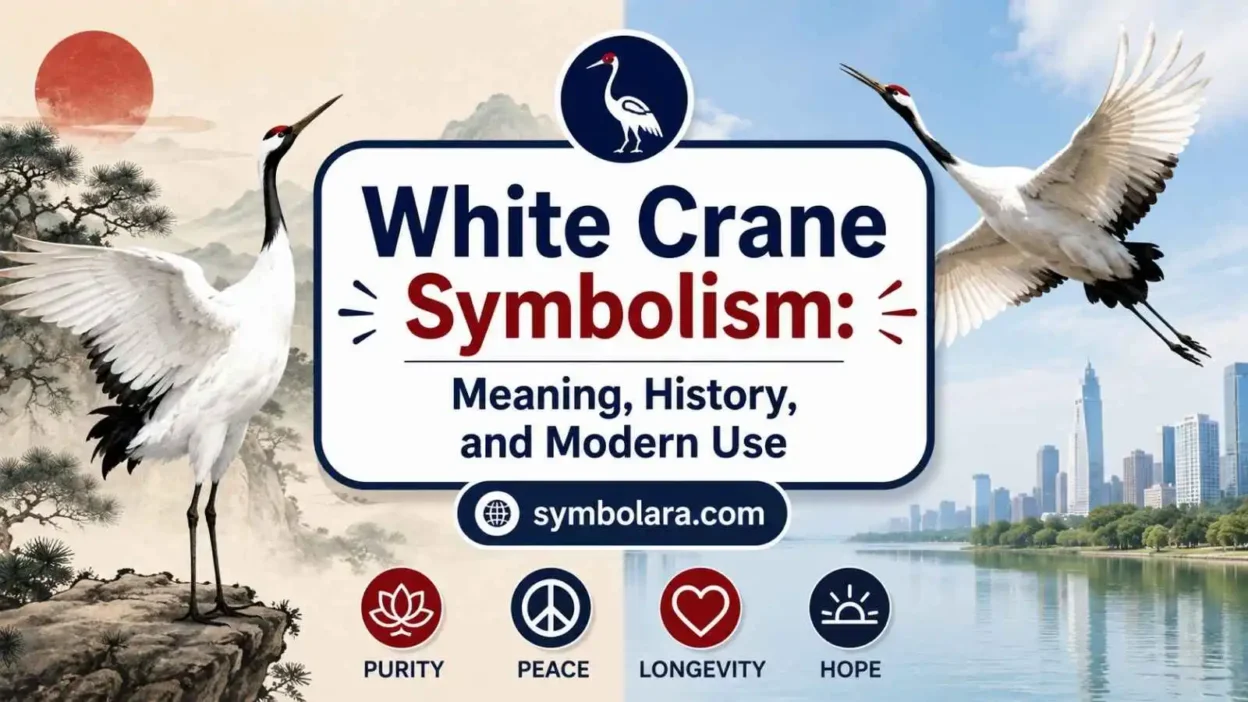
The white crane is a tall bird known for its bright feathers, long legs, graceful movements, and distinctive calls. In many cultures, cranes have been connected with ideas such as peace, balance, longevity, and careful movement. Because of its elegant appearance and long association with human traditions, the bird often appears in artwork, clothing designs, tattoos, and decorative objects.
People search for White Crane Symbolism because they want to understand why this bird appears in paintings, spiritual traditions, martial arts, and personal designs. In the United States, the white crane is often viewed as a symbol of calmness, independence, patience, and respect for nature.
Quick Answer
White Crane Symbolism commonly represents peace, longevity, grace, wisdom, and personal growth in modern American interpretations. These meanings developed from long-standing cultural associations in East Asian art, literature, and traditions where cranes were linked with long life and noble qualities.
TL;DR
- White cranes often represent peace, patience, and graceful movement.
- East Asian traditions connected cranes with long life.
- The bird appears in art, tattoos, and decorative designs.
- American interpretations often focus on calmness and nature.
- Crane meanings vary between cultures and personal beliefs.
What Does a White Crane Look Like and Where Is It Found?
White cranes are large birds with mostly white feathers, long necks, long legs, and wide wings. Several crane species have white coloring, including the well-known Siberian crane and other white or mostly white crane varieties. Their tall shape and slow, controlled movements make them visually different from many other birds.
Cranes usually live near wetlands, grasslands, rivers, and open landscapes. They depend on healthy ecosystems because they feed in areas with shallow water and natural vegetation. Their migration patterns also make them symbols of movement and seasonal change.
The bird’s appearance plays an important role in its symbolism. White feathers are often associated with cleanliness, simplicity, and peace in many societies. The crane’s upright posture and careful steps have also influenced how people describe qualities such as dignity and patience.
Why Do People Associate White Cranes With Peace and Grace?
The white crane is often connected with peaceful qualities because of the way it moves. Unlike birds known for speed or aggression, cranes appear slow, deliberate, and balanced. Their quiet presence in wetlands has led many people to associate them with calm environments.
Grace is another common association. A crane’s long neck, extended wings, and careful walking style have inspired artists for centuries. In paintings and sculptures, cranes are often shown standing alone or in pairs to represent harmony and balance.
In modern American culture, people may choose crane images because they want artwork that reflects calmness rather than strength or competition. A crane design can communicate a preference for patience, reflection, and a connection with the natural world.
How Did White Crane Symbolism Begin Historically?
The earliest documented crane symbolism is strongly connected with East Asian traditions, especially Chinese and Japanese art. In Chinese culture, cranes appeared in paintings, poetry, and decorative objects for many centuries. They were often associated with long life and respected qualities.
During different periods of Chinese history, artists used cranes as symbols connected with scholars, officials, and noble character. Some paintings showed cranes alongside pine trees, another image connected with endurance and long life.
In Japan, cranes became associated with good fortune and long life. The bird became especially recognized through the tradition of folding paper cranes, which grew from older Japanese beliefs about cranes and later became connected with wishes for peace.
The exact origin of every crane meaning is difficult to identify because symbolism developed gradually through art, stories, and customs rather than from one single source.
White Crane Symbolism in Chinese and Japanese Traditions
Chinese traditions often viewed cranes as birds connected with longevity and elevated character. In traditional artwork, a crane could represent a person who lived with discipline, wisdom, and dignity.
Japanese culture also gave cranes an important place in visual art and folklore. The Japanese crane, especially the red-crowned crane, became a well-known national symbol. Although not always white, its appearance helped shape broader crane symbolism around beauty, endurance, and good fortune.
The paper crane tradition added another layer to modern understanding. Folding 1,000 paper cranes became associated with making wishes and hoping for peace. This practice is connected with Japanese folklore and later became widely recognized internationally.
How Americans Understand White Crane Symbolism Today
In the United States, white cranes are usually interpreted through a combination of nature appreciation, artistic traditions, and personal meaning. Many Americans encounter crane imagery through wildlife photography, environmental awareness, tattoos, and home decoration.
Some people connect the bird with peaceful living or personal change. Others appreciate its connection to wetlands and conservation. For bird lovers, the crane can represent respect for wildlife and the importance of protecting natural habitats.
The meaning can also depend on where someone sees the image. A crane painting in a home may suggest calm decoration, while a crane tattoo may represent a personal journey or a connection to another culture.
How White Cranes Appear in American Art and Personal Expression
White cranes appear in many forms of American creative expression. Artists may use cranes in paintings, wall designs, and nature-inspired artwork because the bird creates a strong visual shape.
Tattoo designs are another common use. A person may choose a white crane tattoo to represent patience, freedom, renewal, or a meaningful connection to Japanese or Chinese artistic traditions.
Home decor is also a place where crane imagery appears. Wall art, ceramic pieces, and textile patterns may feature cranes because their appearance fits styles that emphasize nature, simplicity, and balance.
The meaning is personal in many cases. A crane image does not automatically communicate one fixed message; its meaning depends on the person, design, and cultural background.
Emotional Meaning: Why People Connect With White Cranes
Many people connect with white cranes because the bird represents qualities they admire. Its slow movements may remind people to be patient, while its ability to travel long distances may represent endurance.
For some, the crane reflects a desire for a calmer lifestyle. In a busy society, images of quiet landscapes and wildlife can serve as reminders to slow down and pay attention to nature.
Others connect with cranes because of life transitions. A crane flying across an open sky may represent leaving one stage of life and moving toward another.
These interpretations are personal rather than universal. A crane can hold different meanings depending on someone’s experiences and beliefs.
White Crane Symbolism in Tattoos, Fashion, and Design
Crane tattoos are popular among people who appreciate Asian-inspired artwork, bird symbolism, or nature designs. Artists often combine cranes with elements such as flowers, waves, mountains, or clouds.
A white crane tattoo may represent:
- Peace after a difficult period
- Personal growth
- Respect for nature
- Long-term goals
- Connection with cultural traditions
In fashion and design, crane patterns appear on clothing, accessories, and decorative items. Designers often use the bird because its shape creates a balanced and elegant visual pattern.
However, using crane imagery from another culture requires respect. Understanding the original background helps avoid reducing a meaningful symbol to only a decoration.
Common Misunderstandings About White Crane Meaning
One common misunderstanding is that every crane symbol has the same meaning everywhere. In reality, crane symbolism changes between cultures, time periods, and personal uses.
Another misunderstanding is that cranes always represent spiritual ideas. While some traditions connect cranes with spiritual beliefs, many people appreciate them simply as beautiful birds or symbols of nature.
Some modern uses also remove the cultural background completely. A crane design may be chosen only because someone likes its appearance. That does not make the choice wrong, but it creates a different meaning from traditional interpretations.
Understanding the difference between historical meaning and personal meaning helps people appreciate crane imagery more accurately.
How White Crane Meanings Changed Across Generations
Older traditions often emphasized ideas such as longevity, wisdom, and respected character. These meanings developed through literature, artwork, and cultural practices.
Modern interpretations have expanded. Many people today connect cranes with environmental awareness, peaceful living, personal reflection, and artistic expression.
The growth of global communication has also changed how symbols travel. Images that once belonged mainly to specific regions are now seen worldwide through museums, movies, social media, and international design.
The crane’s meaning has not replaced older traditions; instead, new interpretations have been added alongside them.
White Crane Symbolism Compared Across Different Uses
| Context | Meaning in USA | Common Associations | Notes |
| Tattoo design | Personal growth and peace | Change, patience, identity | Meaning depends on the wearer |
| Home decoration | Calm natural beauty | Balance, wildlife, elegance | Often chosen for visual style |
| Wildlife conservation | Respect for nature | Wetlands, protection, ecosystems | Focuses on the actual bird |
| Asian-inspired art | Cultural appreciation | Longevity, harmony, tradition | Requires understanding of origins |
| Jewelry designs | Personal reminder | Grace, calmness, beauty | Often carries private meaning |
Why Are White Cranes Important in Nature and Conservation?
Beyond symbolism, cranes are important parts of natural ecosystems. Many crane species depend on wetlands, which are habitats that support many plants and animals.
In America, conservation groups and wildlife organizations have worked to protect crane populations and their environments. The whooping crane, a rare North American crane species, has become an example of efforts to protect endangered wildlife.
This connection adds another modern meaning to crane imagery. For some people, the bird represents the need to protect natural places and maintain healthy ecosystems.
FAQs
White crane meanings are generally positive in many cultures. People often associate cranes with peace, patience, longevity, and beauty, although interpretations can vary.
Some traditions connect cranes with spiritual ideas, but the bird also has nonreligious meanings. Many people view cranes through art, nature, or cultural history rather than religion.
A white crane tattoo can represent different ideas, including personal growth, peace, patience, or appreciation for Asian-inspired artwork. The meaning usually depends on the individual.
The connection comes largely from East Asian traditions where cranes became linked with longevity. This association developed through art, stories, and cultural symbolism.
Not always. “White crane” can describe birds with white coloring, while the Japanese crane often refers to the red-crowned crane. They share some symbolic associations but are different birds.
A flying crane is often interpreted as movement, freedom, transition, or progress. These meanings come from the bird’s ability to travel long distances and move across landscapes.
Yes, people can use crane imagery in art, design, and personal expression. Learning about its cultural background helps people use the symbol respectfully.
Conclusion
White Crane Symbolism represents ideas such as peace, patience, longevity, and connection with nature. Its meanings developed through centuries of artwork, cultural traditions, and observations of the bird itself.
Today, the white crane appears in tattoos, decorations, conservation discussions, and creative designs across the United States. Whether someone chooses the image for cultural appreciation, personal reflection, or simple beauty, the crane remains a reminder of balance, careful movement, and respect for the natural world.