
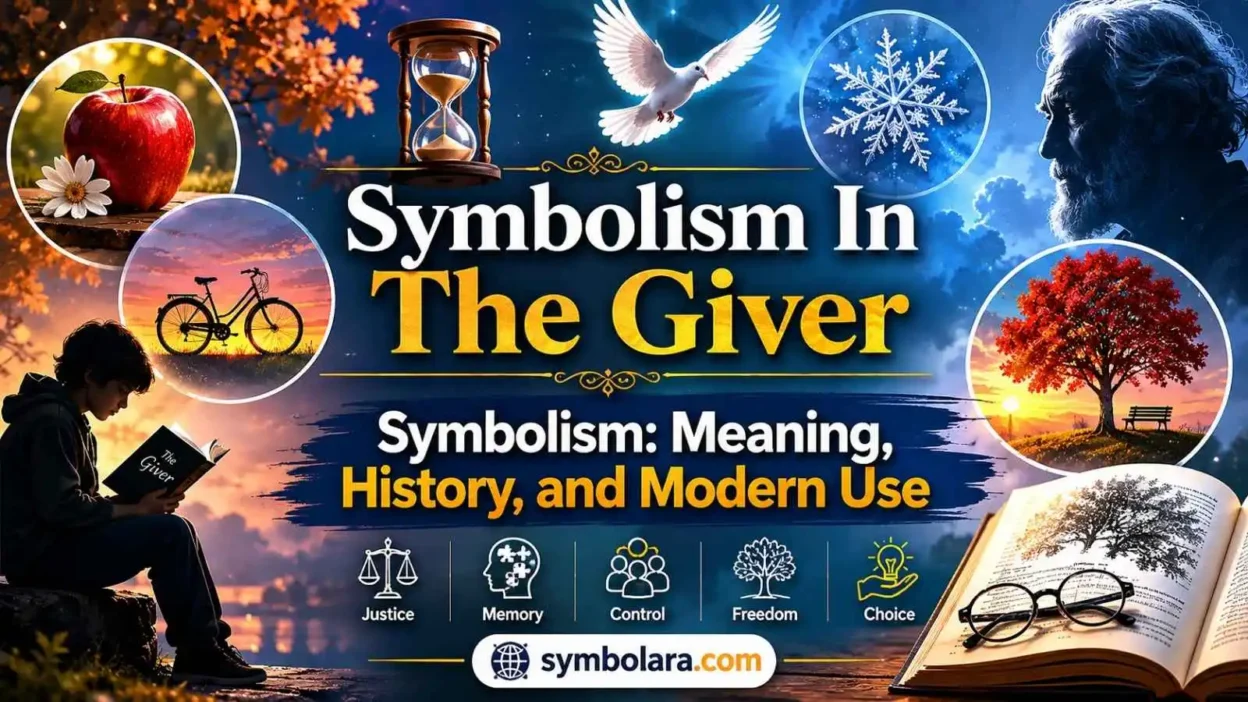
Symbolism In The Giver shapes how readers understand control, memory, and individuality in Lois Lowry’s novel The Giver. The story builds meaning through everyday elements like emotion, color, and memory instead of traditional fantasy symbols.
Readers connect with these symbols because they reflect real questions about human life: what we gain and lose when a society removes pain, choice, and emotional depth. The novel presents a world that looks stable on the surface but reveals deeper emotional restrictions underneath.
In American classrooms and discussions, the story often serves as a tool for exploring ethics, identity, and freedom.
Quick Answer
Symbolism In The Giver represents how a controlled society removes emotional depth and personal memory in exchange for stability. In modern American interpretation, it highlights the importance of individuality, emotional awareness, and lived experience. In the story’s framework, it also shows how systems can suppress choice and reshape human identity.
TL;DR
- Society removes emotion to maintain control and order
- Memory defines identity and human understanding
- Color signals emotional and perceptual awakening
- “Release” hides ethical consequences behind language
- Jonas represents growing awareness and individuality
- The story critiques extreme social conformity
Controlled World and Its Rules
The community in The Giver operates through strict rules that remove unpredictability from life. Leaders assign jobs, control language, and regulate relationships to maintain order.
People follow routines instead of making personal choices. This structure creates stability, but it also removes individuality. The system values predictability over emotional depth, shaping every part of daily life.
This controlled environment becomes a symbol of what happens when societies prioritize order above human experience.
The Symbolism of Sameness in The Giver
Sameness is one of the most important symbols in The Giver because it represents the loss of individuality in exchange for security. The community removes differences in appearance, emotions, choices, and experiences to create a predictable society.
At first, Sameness appears peaceful because it eliminates conflict and inequality. However, the novel shows that removing all differences also removes personal freedom, creativity, and meaningful human experiences.
Through Sameness, Lois Lowry explores the balance between safety and independence. The symbol asks readers whether a perfect society can truly exist if people must give up the ability to choose and feel deeply.
For modern American readers, Sameness connects to discussions about conformity and personal identity. The symbol encourages people to think about how much control a society should have over individual choices.
Core Meaning of the Symbolic System
The novel builds its symbolism around a central idea: a society can eliminate suffering only by removing emotional complexity. This trade-off defines the entire world of the story.
Instead of allowing full human experience, the system limits emotional intensity. People live without deep joy, grief, or conflict, which flattens their understanding of life.
This structure shows how control can reshape not just behavior but perception itself.
Memory and Identity
Memory functions as the foundation of identity in the novel. Only the Receiver of Memory holds access to the community’s emotional and historical past.
Jonas gains memories that reveal both beauty and pain, and this changes how he understands the world. Without memory, citizens cannot fully grasp what they have lost.
The story treats memory as active human experience, not just information from the past.
Emotional Control and Its Cost
The community controls emotion through training and suppression methods. Citizens avoid strong feelings to maintain social harmony.
This emotional restriction reduces conflict, but it also weakens relationships. People interact without experiencing deep emotional connection.
The novel shows that emotional control does not remove feeling—it only limits how people express and understand it.
Color and Perception
Most citizens in the community do not see color. Their world appears in muted tones, which reflects their limited perception.
As Jonas receives memories, he begins to see color. This shift signals his growing awareness of emotional and sensory depth.
Color becomes a sign of expanded understanding and a break from controlled perception.
Symbolism of the Apple in The Giver
The apple in The Giver symbolizes change, curiosity, and Jonas’s growing awareness. When Jonas notices something unusual about the apple, it becomes an early sign that he can perceive aspects of reality that others cannot.
The apple’s importance comes from its connection to Jonas’s awakening. It represents the beginning of his journey from acceptance to questioning. Before he understands the meaning behind what he sees, the apple creates curiosity and shows that his perception is changing.
Some readers also connect the apple to broader literary traditions where apples represent knowledge, discovery, or transformation. In the context of The Giver, the symbol focuses mainly on Jonas recognizing that his world contains hidden truths.
Jonas Awakens Awareness
Jonas starts as an ordinary member of the community, but his training as Receiver changes him. He begins to see beyond the limits of his society.
As he learns from memories, he questions the rules he once accepted. His awareness grows gradually, not suddenly.
Jonas represents how knowledge changes perception and creates internal conflict within controlled systems.
The Giver and the Burden of Memory
The Giver carries the emotional and historical memory of the entire community. He experiences both joy and suffering that others never feel.
This role isolates him from society. While others live without emotional weight, he bears the full complexity of human experience.
The story uses The Giver to show how knowledge can create separation instead of connection.
Release and Ethical Questions
The community uses the term “release” for a process that appears routine. However, its true meaning reveals a far more serious reality.
The system hides ethical consequences behind neutral language. This creates a gap between words and truth.
The novel uses this symbol to show how language can shape moral perception and reduce emotional accountability.
Family Units and Social Design
The community assigns family units instead of allowing natural family formation. Leaders structure these units to maintain balance and predictability.
Parents and children follow defined roles. Emotional bonds exist but remain controlled within system guidelines.
This structure removes personal choice from family life and reinforces social stability over personal connection.
Nature as Freedom Symbol
Natural elements like snow, sunlight, and rivers appear through Jonas’s memories. These experiences contrast sharply with the controlled environment of the community.
Snow introduces physical sensation and variation that citizens cannot experience in daily life. Rivers suggest movement and uncertainty beyond control.
Nature symbolizes freedom and emotional richness outside structured society.
Symbolic Elements Overview
| Symbol | Meaning in Society | Deeper Interpretation | Reader Impact |
| Memory | Restricted access to past | Core of identity | Awareness of human depth |
| Color | Not perceived | Emotional awakening | Expanded perception |
| Release | Official procedure | Ethical concealment | Moral questioning |
| Family Units | Assigned roles | Controlled relationships | Contrast with real families |
| The Giver | Memory keeper | Emotional burden | Isolation through knowledge |
| Jonas | Receiver trainee | Awareness growth | Individual transformation |
U.S. Education Interpretation
American classrooms often use the novel to explore questions about individuality and social structure. Students analyze how systems influence decision-making and emotional development.
Teachers focus on how symbolism connects to real-world ideas like conformity and freedom. This helps students reflect on how communities shape identity.
The story remains widely used because it encourages discussion rather than offering simple answers.
Why Symbols Matter in The Giver
Symbols in The Giver help readers understand ideas that are larger than the events of the story. Instead of directly explaining every theme, Lois Lowry uses objects, rules, and experiences to reveal deeper messages about humanity.
The symbols make abstract ideas easier to understand. Memory shows the importance of history, color represents awareness, and release raises questions about language and morality.
For students and readers, these symbols create connections between the fictional community and real-world issues. They encourage questions about freedom, responsibility, emotions, and the choices societies make.
The strength of the novel’s symbolism comes from its simplicity. Everyday things become meaningful because they represent larger human experiences.
Psychological Meaning and Reader Experience
Readers often connect Jonas’s experience to personal emotional growth. His journey reflects how awareness develops through exposure to complex emotions.
The suppression of feeling in the community resembles emotional avoidance in real life. Jonas’s transformation shows what happens when someone begins to confront deeper emotional truth.
This psychological layer gives the symbolism personal relevance for many readers.
Evolution of Meaning
Interpretations of the novel have shifted over time. Early readings focused on its dystopian setting and control systems.
Modern readers often emphasize emotional intelligence and psychological awareness. The symbolism now extends beyond society into personal development and emotional understanding.
The meaning continues to evolve as new generations read the story.
FAQs
Why does memory matter so much in the story?
Memory gives people access to emotion, history, and identity. Without it, individuals cannot fully understand their lives or choices.
What does color represent in The Giver?
Color represents expanded awareness and emotional depth. Jonas’s ability to see color signals his growing understanding of reality.
Why does the story use the term “release”?
The term “release” hides the true nature of a serious ethical act. The language reduces emotional impact and masks reality.
Is Jonas a symbol of rebellion?
Jonas represents awareness more than rebellion. His understanding grows until he can no longer accept the limits of his society.
Why do schools teach this novel so often?
Educators use the novel to help students explore ethics, identity, and social control. Its symbolism supports open discussion.
What does the river symbolize in The Giver?
The river symbolizes movement, change, and uncertainty. It contrasts with the controlled community by representing a natural force that cannot be completely managed.
Conclusion
The story builds its meaning through systems of control, memory, and emotional awareness. Each symbol shows how a society can shape human experience by limiting perception and choice.
Symbolism In The Giver ultimately centers on how memory and emotion define identity. Jonas’s journey reveals what happens when awareness breaks through controlled systems and expands human understanding.
The novel remains relevant because it connects structured society with personal experience in a clear and direct way.

[…] Symbolism suggests meaning through individual symbols. […]
[…] gifts, snapdragons can express encouragement, admiration, or friendship. Their meaning depends on the relationship between the giver and receiver as well as the chosen […]