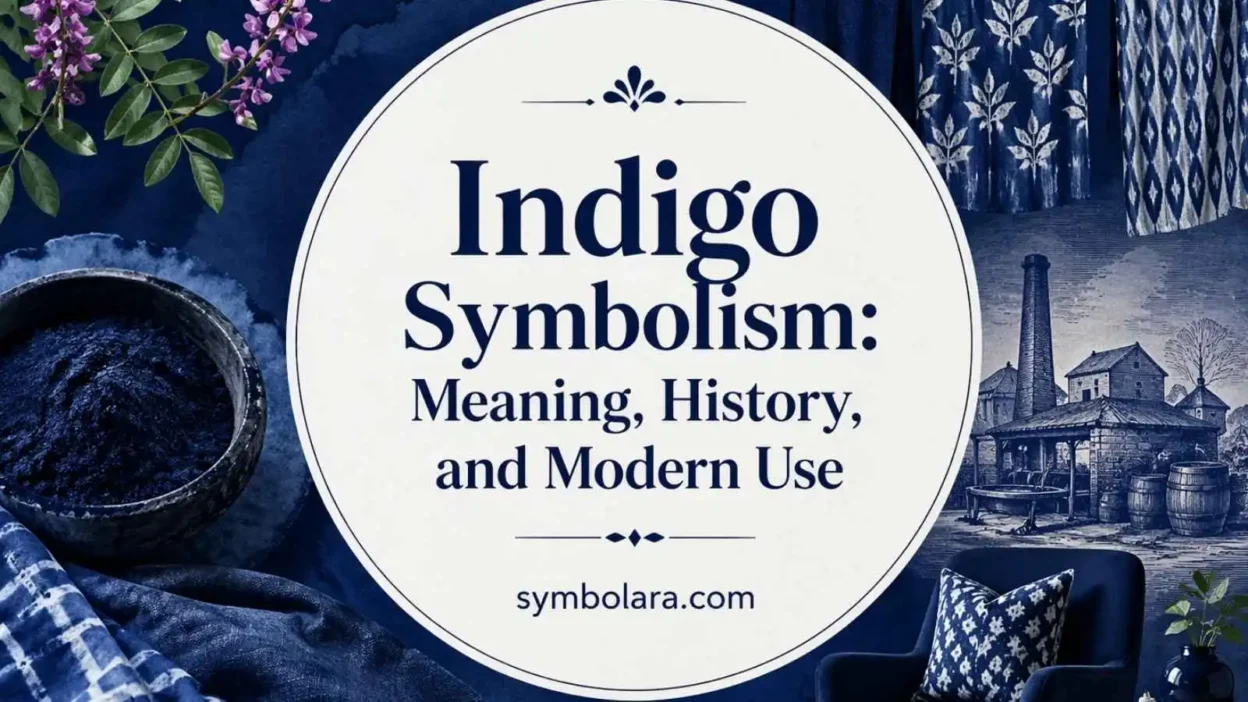
Indigo symbolism sits at an interesting crossroads of color, material history, and modern identity. In American culture, indigo often suggests calm intelligence, depth, authenticity, and personal reflection, but that meaning did not appear out of nowhere. It grew out of centuries of dyeing traditions, global trade, status signaling, spiritual interpretation, and the everyday familiarity of blue jeans.
People care about indigo because it feels more specific than plain blue. It is darker, moodier, and often more intentional. In design, fashion, wellness culture, and personal style, it can suggest seriousness without feeling cold and creativity without looking loud.
That combination helps explain why indigo keeps showing up in tattoos, home decor, clothing, brand palettes, and spiritual language. It carries both visual beauty and cultural baggage, which makes it worth understanding with some care.
Quick Answer
Indigo Symbolism commonly represents insight, calm self-possession, sincerity, and depth in modern American culture, especially in fashion, decor, and wellness spaces. Historically, it has also been associated with valuable dyed cloth, skilled craftsmanship, social status, and, in some traditions, spiritual perception or mourning.
TL;DR
- Indigo often signals depth, calm, and authenticity.
- Its meaning began in dye traditions, not abstract mysticism.
- In the U.S., denim strongly shapes its symbolism.
- Wellness culture links indigo to intuition and the “third eye.”
- Other cultures connect indigo with status, protection, or grief.
- Modern use mixes craft heritage with personal style.
What Indigo Is and What People Mean by It
Indigo is a deep blue-violet color, darker than royal blue and less purple than violet. In everyday life, Americans most often encounter it in denim, hand-dyed textiles, ink-dark interiors, clothing, ceramics, and branding.
That matters because color symbolism usually starts with repeated experience. Indigo is not just a color name on a chart. It is a shade people connect with washed jeans, artisan goods, twilight skies, and subdued luxury. Because of that, it often feels grounded and thoughtful rather than flashy.
It also has a material history. For much of human history, indigo was not just a color concept but a dye that had to be cultivated, extracted, traded, and skillfully applied. That practical past still shapes how the color feels today.
What Indigo Commonly Symbolizes in the United States
In the United States, indigo usually symbolizes four things at once: depth, reliability, individuality, and restraint. It has the steadiness people associate with blue, but it also feels more inward and more cultivated.
In personal style, indigo often suggests someone who values substance over display. A bright red outfit can announce itself. Indigo tends to imply confidence without performance. That is one reason it works so well in clothing, bedrooms, journals, and branding aimed at trust or reflection.
Americans also read indigo through denim. Because jeans are so ordinary and so personal, indigo has absorbed meanings like honesty, durability, informality, and self-definition. It can feel democratic because nearly everyone wears it, but it can also feel intimate because no two worn indigo garments age in quite the same way.
How Indigo Became Symbolic in the First Place
Indigo first gained importance because blue dyes were historically rare and valuable. Many societies had access to reds, yellows, and browns from local plants or minerals, but a strong, lasting blue took more work. That scarcity gave indigo prestige.
Its very name points to trade history. The word entered European languages through terms meaning “from India,” reflecting how strongly the dye was linked to Indian production and export. Over time, indigo became part of long-distance commerce connecting South Asia, the Middle East, Africa, Europe, and the Americas.
When a color must be cultivated, processed, transported, and protected as a commodity, people do not experience it as neutral. They experience it as important. That is how indigo came to symbolize wealth, skill, and social meaning long before modern color psychology ever tried to describe it.
Indigo as a Dye, Craft, and Status Marker
For centuries, indigo-dyed cloth could signal prestige. In some places it was associated with nobility or costly imported textiles. In others, it showed the expertise of dyers and the value of the finished fabric.
That craft dimension still matters. Indigo is unusual because the dye process itself feels almost symbolic. Cloth goes into the vat looking greenish and then turns blue as it oxidizes in air. Even people who know the chemistry often describe the transformation as dramatic or memorable. That repeated visual change has helped indigo develop a reputation for transformation, patience, and skilled making.
Unlike colors that mainly live in paint or digital screens, indigo has long been tied to touch: cloth, thread, garments, wraps, workwear, quilts. That physical history makes its symbolism feel less abstract and more lived-in.
The Complicated History Behind Indigo and Colonial Trade
Indigo’s history is not only beautiful. It is also tied to exploitation. Demand for the dye fueled plantation economies, coerced labor, and extractive colonial systems in several parts of the world.
That history matters when people speak too casually about indigo as a purely peaceful or spiritual color. The same dye that produced admired textiles also moved through systems of empire and profit. In the Americas, indigo cultivation was entangled with slavery and plantation wealth. In South Asia, indigo production became closely associated with colonial pressure and resistance.
So indigo can symbolize craftsmanship and beauty, but it can also remind us that color history is often labor history. That tension is part of what gives the color its seriousness.
Why Denim Changed Indigo’s Meaning in America
No force has shaped indigo’s American symbolism more than denim. Once indigo became central to workwear and jeans, its meaning shifted from luxury dye to everyday identity.
First, indigo denim suggested labor. It was linked to miners, ranch work, railroad work, and durable clothing built for use rather than display. Then it gained another layer: rebellion. By the mid-20th century, jeans came to symbolize youth, refusal, and a challenge to dress codes and polite expectations.
Later still, indigo denim became mainstream, which added a third meaning: democracy. When a garment is worn by workers, movie stars, students, activists, designers, and suburban families, the color attached to it starts to signal broad belonging. That is why indigo in the U.S. can mean both independence and familiarity at the same time.
Indigo and American Ideas of Authenticity
Indigo often stands for authenticity in the American imagination. Part of that comes from visible wear. Indigo-dyed denim fades with use, so it records time on the fabric. Knees soften, seams lighten, pockets mark habits. The garment tells a life story.
That is different from colors that stay flat and unchanged. Indigo often looks better once it has been used. Because of that, it became connected with honesty, endurance, and the appeal of things that show age rather than hide it.
This is one reason indigo remains popular in heritage fashion, raw denim culture, handcrafted home goods, and “lived-in” interiors. It gives objects a sense of history, even when they are new.
The Emotional and Psychological Meaning of Indigo
Emotionally, indigo sits between blue’s calm and violet’s introspection. People often read it as thoughtful, steady, private, and slightly serious. It can feel restful without becoming cheerful, and dramatic without becoming aggressive.
That makes it useful in spaces where people want concentration or reflection. An indigo notebook feels more private than a bright blue one. An indigo wall can create a cocooning effect that feels more mature than pastel tones. In clothing, the color often communicates self-control and confidence.
There is also a shadow side. Too much indigo can feel withdrawn, heavy, or emotionally distant. That is why the color often works best when balanced with natural textures, white, brass, wood, or softer blues.
Indigo Symbolism in Dreams: What Does Seeing Indigo Mean?
Dream interpretations involving indigo often focus on reflection, awareness, and emotional depth. Because the color sits between blue and violet, many people associate it with both calm thinking and imagination.
Seeing indigo in a dream may represent a period of personal growth, careful decision-making, or a desire to understand something more deeply. An indigo sky, ocean, or room may suggest a need for quiet time, emotional balance, or creative thinking.
Dreams about indigo clothing can carry a different meaning. They may represent confidence, individuality, or the desire to express a more thoughtful side of yourself. An indigo garment may symbolize how you want others to see you: calm, mature, and self-aware.
However, dream symbolism is personal. The meaning depends on the dream’s setting, emotions, and the dreamer’s own experiences. A color that feels peaceful to one person may feel mysterious or serious to another.
Rather than treating indigo dreams as predictions, many psychologists and cultural researchers view them as reflections of memories, emotions, and personal associations. The strongest interpretation usually comes from understanding what indigo represents in your own life.
Why Wellness Culture Connects Indigo With Intuition
In modern U.S. wellness culture, indigo is often linked to intuition, inner vision, and the so-called third eye. This association comes from modern color-coding of chakra systems, where indigo is commonly assigned to the sixth chakra.
For many Americans, this is now one of the first meanings that comes to mind. You see it in yoga studios, oracle decks, journals, meditation apps, crystal branding, and social media language about insight or awakening.
Still, it helps to keep this in perspective. That association is modern, selective, and often simplified for Western audiences. It is real as a current cultural meaning, but it is not the single ancient truth of indigo. Treating it as the whole story flattens a much older and more varied history.
Cross-Cultural Meanings Beyond the United States
Indigo holds diverse meanings across cultures, and its symbolism is not always interpreted in the same way. In West African textile traditions, indigo has long been associated with wealth, craftsmanship, prestige, and social identity, reflecting the skill and cultural importance behind its creation. In Japanese dye traditions, the color represents artistry, practicality, beauty, and a respected heritage of textile craftsmanship.
Throughout history, indigo and blue-dyed fabrics have also carried meanings connected to protection, everyday life, and community belonging in various regions. In some Middle Eastern traditions, indigo has been linked with mourning and expressions of grief. This wide range of interpretations shows that indigo is not universally defined as only spiritual or calming; its meaning depends on the culture, context, and personal experience surrounding it.
Across cultures, one pattern does repeat: indigo tends to matter most where people have lived with it as cloth, labor, and tradition, not just as a swatch.
Indigo in Religion, Ritual, and Symbolic Thought
Indigo has never had one fixed religious meaning across the world, but it often appears where color is used to mark seriousness, contemplation, distinction, or transition. In modern spiritual language, it is frequently associated with wisdom and perception. In older traditions, its meaning often depended more on the textile itself than on abstract color theory.
That difference is worth noticing. A modern American might see indigo and think “intuition.” A historical community might have seen dyed cloth and thought “status,” “mourning,” “protection,” or “ceremonial dress.”
Color meaning changes when a society moves from handmade cloth to digital palettes. Indigo’s symbolism today includes both worlds, and sometimes people confuse them.
Where Americans Use Indigo Today
Indigo appears almost everywhere in American visual life, but rarely in exactly the same way.
In fashion, indigo continues to represent timeless style, lasting quality, and a sense of understated elegance. When used in jewelry and accessories, the color often carries an artistic, creative, or bohemian appeal. In home decor, indigo can create a calm and thoughtful atmosphere, especially when combined with natural materials such as linen, oak, clay, or soft white tones. In tattoo art, indigo is typically chosen less for direct cultural symbolism and more for the feelings it evokes, including introspection, nighttime reflection, memory, cosmic wonder, and inner peace.
On social media, indigo often appears in aesthetics built around slow living, creative work, astrology, spirituality, or handmade goods. It signals curation. It says someone chose this shade on purpose.
Indigo Color Meaning in Branding and Design
In branding and design, indigo often communicates trust, intelligence, creativity, and sophistication. Companies frequently use darker blue shades because people commonly connect them with reliability, but indigo adds a more distinctive and artistic quality.
Unlike traditional navy, which can feel corporate and formal, indigo often feels more human and imaginative. Designers use it when they want a brand to appear thoughtful, innovative, or connected to creativity.
Technology companies, educational brands, wellness businesses, and luxury products sometimes use indigo because it balances professionalism with personality. It can suggest expertise without appearing cold.
Indigo also works well in digital design because it creates strong contrast while maintaining a calm visual atmosphere. When paired with lighter colors, natural textures, or warm accents, it can create a feeling of balance and trust.
However, color alone does not create brand identity. The meaning of indigo depends on the company’s message, audience, and overall design choices. A thoughtful brand uses color as one part of a larger story.
Indigo in Pop Culture, Identity, and Public Meaning
Indigo also appears in American identity language. The original eight-color rainbow Pride flag assigned indigo the meaning of harmony, though later versions replaced it with blue for practical production reasons. That detail shows how colors can carry symbolic intentions and still shift under real-world constraints.
Elsewhere in pop culture, indigo often functions as a mood color. Album art, perfume packaging, book covers, and film posters use it to suggest reflection, mystery, nighttime, seriousness, or emotional complexity. It is especially common when creators want something richer than blue but less ornate than purple.
That flexibility keeps indigo culturally active. It can feel handmade, rebellious, spiritual, elegant, or melancholic depending on the setting.
Indigo Symbolism in Tattoos: Meaning and Popular Designs
Indigo tattoos often appeal to people who want a design that feels meaningful without being overly obvious. Unlike brighter colors that immediately attract attention, indigo creates a quieter and more personal impression.
Many people choose indigo tattoo designs to represent introspection, creativity, emotional strength, or a connection with nature. The color’s links to oceans, night skies, and deep thought make it popular for designs involving waves, stars, flowers, eyes, butterflies, and abstract artwork.
In modern tattoo culture, indigo can also represent transformation. This connection comes partly from the traditional dye process, where fabric changes through careful preparation and exposure to air. For some people, that transformation reflects personal growth or important life changes.
The meaning of an indigo tattoo depends greatly on the person wearing it. A flower in indigo may represent beauty and individuality, while an indigo animal may represent mystery, instinct, or personal power. The color adds emotional tone rather than creating one universal definition.
Because indigo has connections to craft, history, and personal expression, it works especially well for tattoos that tell a story rather than simply follow a trend.
Common Misunderstandings About Indigo
One common mistake is treating indigo as simply another word for dark blue. In ordinary speech that overlap happens, but symbolically people usually choose “indigo” when they want more nuance than standard blue provides.
Another mistake is pretending its meaning is purely ancient and mystical. Much of what Americans now say about indigo comes from modern design language, wellness culture, color psychology, and fashion history. Those meanings are real, but they are not timeless laws.
A third misunderstanding is forgetting the labor and colonial history behind the color. Indigo is beautiful, but beauty is not the whole story.
When Indigo Symbolism Gets Distorted or Commercialized
Indigo is easily romanticized. Brands often use it to imply depth, healing, artisanal quality, or spiritual intelligence whether or not those claims have much substance behind them.
The most obvious example is the “indigo children” idea, which turned the color into a label for supposedly special or spiritually advanced children. That concept became popular in New Age circles, but it is widely criticized as pseudoscientific and can distract from children’s real needs by replacing careful understanding with flattering myth.
This is a good reminder that color symbolism can be meaningful without being magical. Indigo does not need exaggeration to matter.
How Indigo Symbolism Has Evolved Over Time
The meaning of indigo has shifted from rarity to routine, from trade luxury to mass clothing, and from dyed fabric to symbolic language. Earlier societies often valued it because blue dye was hard to make and culturally important. Modern Americans often value it because it feels authentic, thoughtful, and stylish.
That evolution is why indigo can hold several meanings at once. It still carries traces of status and craftsmanship. It now also carries the democratic everyday meaning of jeans. Add in spiritual branding and digital aesthetics, and the color becomes even more layered.
The result is not confusion so much as accumulation. Indigo means what history, labor, art, and modern taste have all taught people to see in it.
Indigo Symbolism at a Glance
| Context | Meaning in the USA | Common Associations | Notes |
| Denim and clothing | Authenticity, durability, individuality | Jeans, workwear, fading, rebellion | Strongest everyday American association |
| Home decor | Calm focus, maturity, depth | Bedrooms, textiles, ceramics, accent walls | Feels quieter than bright blue |
| Wellness culture | Intuition, insight, reflection | Third eye, meditation, journals | Modern and often simplified |
| Artisanal craft | Skill, tradition, handmade value | Natural dye, textiles, slow design | Connects color to labor and process |
| Pop culture and design | Mood, seriousness, creative identity | Album covers, branding, night imagery | Often used instead of plain navy |
Frequently Asked Questions
What does indigo symbolize most commonly?
In modern American use, indigo most commonly symbolizes depth, calm confidence, and authenticity. It often feels more personal and reflective than ordinary blue, especially in clothing and interior design.
Is indigo a positive or negative symbol?
Usually it is positive, but not in a cheerful way. Indigo tends to suggest seriousness, introspection, and trust; in some contexts, though, it can also feel heavy, distant, or mournful.
What does indigo symbolize in tattoos?
In tattoos, indigo often represents inner life, memory, spiritual curiosity, or emotional calm. The meaning usually comes less from one fixed tradition and more from the wearer’s connection to night, water, sky, or introspection.
Does indigo have a religious meaning?
Sometimes, but not one universal meaning across religions. In current U.S. spiritual culture it is often linked to intuition and the third eye, while in historical traditions its significance more often came from dyed cloth, ritual dress, or social context.
Why is indigo connected to jeans?
Because indigo dye became central to denim, and denim became central to American life. Once jeans came to symbolize work, rebellion, and everyday identity, indigo absorbed those same meanings.
Is indigo different from blue in symbolism?
Yes. Blue often suggests calm, trust, and openness, while indigo feels deeper, more inward, and more intentional. People usually choose indigo when they want a mood that is quieter, darker, and more self-possessed.
What is the controversy around indigo symbolism?
The main issues are oversimplification and commercialization. People often flatten indigo into vague “spiritual” language and ignore its colonial, labor, and plantation history, or use it in pseudoscientific ideas like “indigo children.”
What does an indigo aura symbolize?
In aura-related spiritual beliefs, indigo is often linked with intuition, imagination, and emotional awareness. These interpretations are part of modern spiritual practices and are not scientifically proven.
What does indigo represent in art?
In art, indigo often represents mystery, emotion, depth, and atmosphere. Artists use it to create feelings connected with night, water, contemplation, and dramatic contrast.
Conclusion
Indigo is one of those colors whose symbolism makes more sense once you know its history. It came to stand for value because blue dye was hard to produce, for skill because dyeing required expertise, and for identity because cloth carries social meaning. In the United States, those older layers now mix with the everyday symbolism of denim, making indigo feel both reflective and familiar.
That is why Indigo Symbolism still feels so alive. It can suggest honesty, self-possession, craft, mood, and even spiritual searching, but its meaning is strongest when we remember that it was shaped by real people, real labor, and changing cultural use.
[…] planting, and the movement of species from tropical America into broader garden use. Their symbolic meanings grew out of their actual form, bloom behavior, and everyday […]