
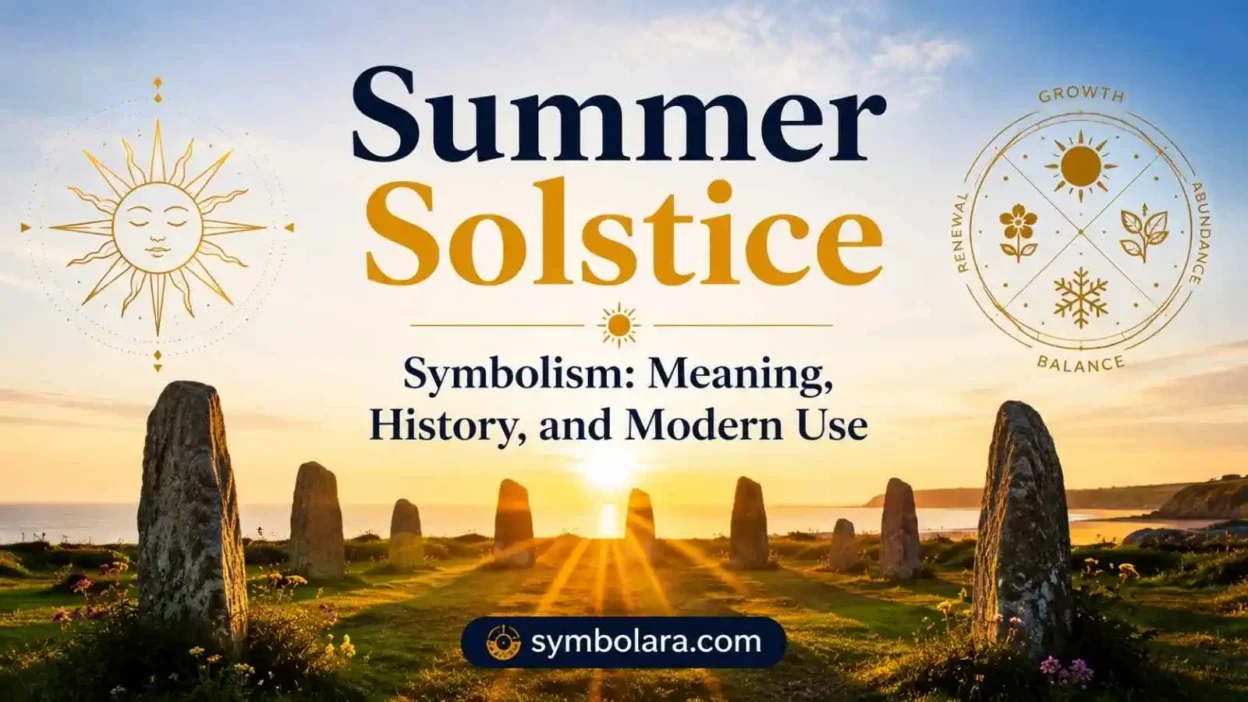
The Summer Solstice Symbolism represents the ideas people connect with the longest day of the year, including growth, abundance, renewal, light, and seasonal change. In modern American culture, the summer solstice is often viewed as a celebration of nature, outdoor life, personal reflection, and the transition into the warmest part of the year.
The summer solstice occurs when one hemisphere of Earth reaches its maximum tilt toward the sun, creating the longest period of daylight. While it is a scientific event, humans have given it cultural meaning for thousands of years by connecting sunlight, crops, and seasonal cycles with human experiences.
Today, many Americans recognize the summer solstice through outdoor gatherings, gardening, wellness practices, festivals, and personal rituals. Its meaning continues to evolve, blending historical traditions with modern appreciation for nature and seasonal awareness.
Quick Answer
Summer Solstice Symbolism commonly represents growth, light, abundance, and renewal in modern American culture, especially through nature appreciation, outdoor celebrations, and personal reflection. Historically, it has also been associated with agricultural cycles, spiritual traditions, and communities honoring the sun’s role in life.
TL;DR
- Symbolizes sunlight, growth, and seasonal abundance.
- Began with ancient agricultural and solar traditions.
- Represents outdoor living in modern America.
- Connects nature cycles with personal reflection.
- Appears in festivals, rituals, and design.
What the Summer Solstice Represents Today
In the United States, the summer solstice is most commonly associated with the arrival of summer, longer days, and the enjoyment of outdoor experiences. Many people connect it with optimism because sunlight often represents energy, activity, and opportunity.
Unlike symbols tied to a single religion or tradition, the summer solstice has a broad cultural meaning. A person may view it as a scientific event, a seasonal milestone, a spiritual moment, or simply a reminder to spend more time outdoors.
Modern interpretations often focus on:
- Appreciation for nature
- Personal growth
- Balance between activity and rest
- Connection with seasonal changes
- Gratitude for natural resources
For many Americans, the solstice reflects a shift from planning and preparation into enjoyment and exploration. It appears in community events, environmental movements, gardening traditions, and wellness practices.
The Physical Event Behind the Symbolism
The summer solstice is not an object or image but a natural astronomical event. It happens when the sun reaches its highest position in the sky for the year from the perspective of a specific hemisphere.
In the Northern Hemisphere, including the United States, it usually occurs around June 20–22. The exact date changes slightly because of Earth’s orbit and calendar adjustments.
The event symbolizes:
| Context | Meaning in the USA | Common Associations | Notes |
| Long daylight | Energy and activity | Outdoor life, freedom | Connected with summer experiences |
| Sun position | Natural cycles | Balance and change | Based on astronomy |
| Seasonal transition | New opportunities | Growth and renewal | Marks the start of summer |
| Harvest preparation | Abundance | Gardens and farming | Linked to agriculture |
The solstice itself has no single universal meaning. Its symbolism comes from the ways different societies have interpreted the relationship between humans, nature, and the changing seasons.
Ancient Roots and Early Solar Traditions
People have observed the movement of the sun for thousands of years. Ancient communities depended on seasonal patterns to grow food, prepare for weather changes, and organize daily life.
Before modern calendars existed, solar events helped people track important points in the agricultural year. The longest day provided information about planting, farming cycles, and upcoming seasonal changes.
Ancient cultures often built structures aligned with solar events. These places allowed communities to observe sunrise or sunset patterns and connect the movement of the sun with religious or social traditions.
The meaning of the solstice developed around several common ideas:
- The sun as a source of life
- The importance of fertile land
- The connection between nature and human survival
- The celebration of seasonal abundance
Although ancient interpretations varied, many societies recognized the summer solstice as a significant moment in the yearly cycle.
Summer Solstice Meaning in Different Cultures
The summer solstice has appeared in many cultural traditions, but each society developed its own interpretation.
In parts of ancient Europe, seasonal celebrations honored sunlight, farming success, and community connections. Some traditions included bonfires, music, dancing, and gatherings during the longest days of the year.
In Northern European cultures, midsummer celebrations became important community events. The season was often linked with fertility, relationships, food production, and protection.
Some Indigenous cultures in North America also developed ceremonies connected with solar cycles. These traditions vary greatly between nations and should not be treated as a single shared belief system.
Across cultures, common themes include:
- Respect for natural cycles
- Gratitude for sunlight
- Community gathering
- Awareness of seasonal change
The similarities show how strongly humans have connected daily life with the movement of the sun.
How Americans Interpret the Summer Solstice
In modern American culture, the summer solstice is usually understood through a combination of environmental awareness, seasonal enjoyment, and personal meaning.
Unlike major national holidays such as Independence Day or Thanksgiving, the solstice is not a federal celebration. However, interest has grown among people who enjoy gardening, outdoor activities, nature studies, and seasonal traditions.
Common American interpretations include:
A Celebration of Nature
Many people use the solstice as a reminder to spend time outside. Hiking, camping, gardening, and outdoor gatherings often reflect appreciation for the natural world.
A Time for Personal Reflection
Some people treat the longest day as a chance to evaluate goals, recognize progress, or welcome a new phase of life.
A Seasonal Marker
For others, the solstice simply represents the beginning of summer experiences such as vacations, outdoor sports, farmers markets, and community events.
The meaning depends on personal beliefs, but the shared idea is an awareness of change and renewal.
The Emotional and Psychological Meaning of Summer Solstice
The summer solstice often carries emotional associations because sunlight affects human experiences in noticeable ways.
Longer daylight hours are commonly linked with increased outdoor activity and social connection. Many people associate summer with memories of vacations, childhood experiences, celebrations, and time spent with family or friends.
Symbolically, the solstice can represent:
- Moving toward personal goals
- Enjoying periods of growth
- Recognizing positive changes
- Creating balance between effort and relaxation
The symbolism does not come from the sun alone. It comes from the human tendency to connect natural patterns with personal experiences.
For example, a person starting a new career, relationship, or personal project may view summer’s beginning as a fitting moment for growth and forward movement.
Why the Summer Solstice Appears in Modern Celebrations
Although the summer solstice is not a major U.S. holiday, it influences many modern celebrations connected with nature, community, and seasonal awareness. Events around this time often focus on outdoor experiences rather than formal ceremonies.
Many communities organize:
- Outdoor music festivals
- Garden events
- Nature walks
- Sunrise gatherings
- Environmental activities
- Cultural celebrations
These activities reflect a modern interpretation of the solstice as a moment to reconnect with the natural world.
In American cities, the solstice may appear through museum programs, botanical garden events, astronomy gatherings, and educational activities. These events usually focus on science and seasonal awareness rather than a single spiritual meaning.
The growing popularity of seasonal celebrations also connects with broader interest in sustainability and mindful living. For many people, the solstice provides a simple reminder that human life is connected to environmental rhythms.
Summer Solstice Symbolism in Spiritual and Religious Traditions
The summer solstice has connections with various spiritual traditions, but its meaning differs widely between communities. It is important to recognize that no single belief system owns the symbolism of this natural event.
Some modern spiritual groups view the solstice as a time for:
- Honoring the sun
- Expressing gratitude
- Reflecting on personal growth
- Recognizing nature’s cycles
In some European pagan traditions, midsummer celebrations developed around themes of fertility, protection, and seasonal abundance. Contemporary practitioners may continue these traditions through ceremonies, gatherings, or personal practices.
Some Christian communities have also connected midsummer traditions with religious celebrations, especially those influenced by European customs. However, these connections developed through specific cultural histories rather than representing all Christian beliefs.
In the United States today, many people approach the solstice from a personal perspective. One person may see it as spiritual, while another may appreciate it purely as an astronomical event.
The Role of the Sun in Summer Solstice Meaning
The sun is the central image behind summer solstice symbolism because it creates the event itself. Across cultures, sunlight has often represented life, visibility, warmth, and growth.
The connection between the sun and human life is practical as well as symbolic. Sunlight supports plant growth, influences seasons, and affects daily routines.
Because of this, the sun has gained meanings such as:
- Vitality
- Hope
- Knowledge
- Strength
- Renewal
In American culture, the sun commonly appears in logos, artwork, clothing, architecture, and advertisements. It often communicates positive ideas such as happiness, energy, and openness.
However, the sun can also represent challenges. Excessive heat, drought, and climate concerns remind people that natural forces require respect and balance.
Summer Solstice in Art, Design, and Decor
The summer solstice influences visual design through images connected with warmth, nature, and seasonal beauty. Designers often use summer imagery to create feelings of comfort, happiness, and connection with the outdoors.
Common visual elements include:
- Sun illustrations
- Golden colors
- Flowers
- Green landscapes
- Fire imagery
- Circular patterns
In American home decor, summer-inspired designs often appear in seasonal decorations, outdoor spaces, and garden arrangements. These designs usually communicate relaxation, hospitality, and enjoyment.
Artists may also use solstice themes to explore ideas about time, change, and the relationship between humans and nature.
The symbolism works because people already recognize summer as a period associated with activity, growth, and shared experiences.
Summer Solstice Symbolism in Tattoos and Personal Expression
Seasonal symbols are common in tattoo culture because people often choose designs that represent personal experiences, memories, or beliefs.
A summer solstice-inspired tattoo may symbolize:
- A new beginning
- Personal growth
- Connection with nature
- A meaningful summer memory
- Appreciation for life changes
Common designs may include:
- Sun circles
- Flowers surrounding the sun
- Landscapes
- Plants and seasonal imagery
- Celestial elements
The meaning depends on the individual. A sun tattoo might represent confidence for one person and family memories for another.
Unlike traditional symbols with fixed meanings, modern tattoos often combine multiple influences. Someone may blend solstice imagery with zodiac signs, plants, animals, or personal dates to create a unique design.
Summer Solstice in Fashion and Popular Culture
Seasonal symbolism frequently appears in fashion because clothing reflects moods, environments, and cultural moments.
Summer-inspired styles often use:
- Bright colors
- Floral patterns
- Natural materials
- Lightweight designs
- Outdoor themes
The solstice itself may appear less directly than general summer imagery, but the connection exists through shared themes of warmth, freedom, and seasonal enjoyment.
In popular culture, summer often represents adventure, independence, romance, and personal transformation. Movies, songs, and advertisements frequently use summer settings to communicate these ideas.
The solstice adds another layer by representing the moment when summer reaches its peak of daylight.
Common Misunderstandings About the Summer Solstice
Because the summer solstice has connections with many traditions, some modern interpretations can become inaccurate or exaggerated.
One common misunderstanding is that the solstice has one universal meaning. In reality, different societies created different interpretations based on their environment, religion, and cultural needs.
Another misunderstanding is that every ancient monument or tradition connected with the sun was specifically built for the summer solstice. Some structures do show solar alignment, but researchers carefully examine evidence before making conclusions.
The solstice is also sometimes presented as a purely mystical event. While some people find personal spiritual meaning in it, others approach it through science, history, or cultural appreciation.
A balanced understanding recognizes both the natural event and the diverse human meanings attached to it.
How Summer Solstice Meaning Has Changed Over Time
The meaning of the summer solstice has shifted as human societies changed.
Ancient agricultural communities depended on seasonal knowledge for survival. The solstice helped mark important points in farming and food production.
Later societies added religious, cultural, and community traditions. Festivals, gatherings, and ceremonies gave the event social importance.
Today, many Americans experience the solstice differently. Modern interpretations often focus on:
- Environmental awareness
- Personal wellness
- Outdoor recreation
- Seasonal enjoyment
- Cultural curiosity
Technology has also changed how people experience the event. Astronomy apps, online communities, and educational content allow people to learn about the solstice from anywhere.
The core idea remains connected to change: one point in the yearly cycle when daylight reaches its maximum before gradually decreasing.
Modern Ways People Observe the Summer Solstice
People celebrate or recognize the summer solstice in many simple ways. These practices do not require a specific belief system and often focus on appreciation and awareness.
Common activities include:
- Watching sunrise or sunset
- Spending time in nature
- Planting flowers or vegetables
- Hosting outdoor meals
- Practicing reflection or journaling
- Learning about astronomy
Families may use the solstice as an educational opportunity to teach children about Earth’s movement and seasons.
For others, it offers a chance to slow down and notice changes in their environment.
The modern approach is often less about following one tradition and more about creating a meaningful connection with the season.
FAQs
In American culture, the summer solstice commonly symbolizes seasonal growth, outdoor living, and appreciation for nature. Many people view it as a marker of summer rather than a formal holiday.
A summer solstice tattoo often represents growth, renewal, nature connection, or an important personal transformation. The meaning depends on the person’s experiences and chosen design elements.
The summer solstice has connections with some spiritual and cultural traditions, but it is not a religious event for everyone. Many people recognize it as an astronomical occurrence or seasonal milestone.
Ancient cultures valued the solstice because the sun influenced farming, calendars, and daily life. The longest day helped communities understand seasonal patterns.
Most interpretations are positive, focusing on growth and abundance. However, some traditions recognize the solstice as a reminder of balance because daylight begins decreasing afterward.
In the past, the solstice often had practical agricultural importance. Today, many people connect it with nature appreciation, wellness, education, and cultural events.
Conclusion
The summer solstice represents a natural turning point that people have interpreted through agriculture, culture, spirituality, and personal experience. In modern America, it is often connected with sunlight, outdoor life, growth, and awareness of seasonal change.
Summer Solstice Symbolism continues to evolve because people bring their own experiences and values to the longest day of the year. Whether viewed scientifically, culturally, or personally, it remains a reminder that human life is closely connected with the rhythms of nature.

[…] Summer often symbolizes abundance, freedom, vitality, and pleasure. In the United States, it is tied to school vacations, beach trips, outdoor festivals, baseball, road trips, and childhood nostalgia. […]