
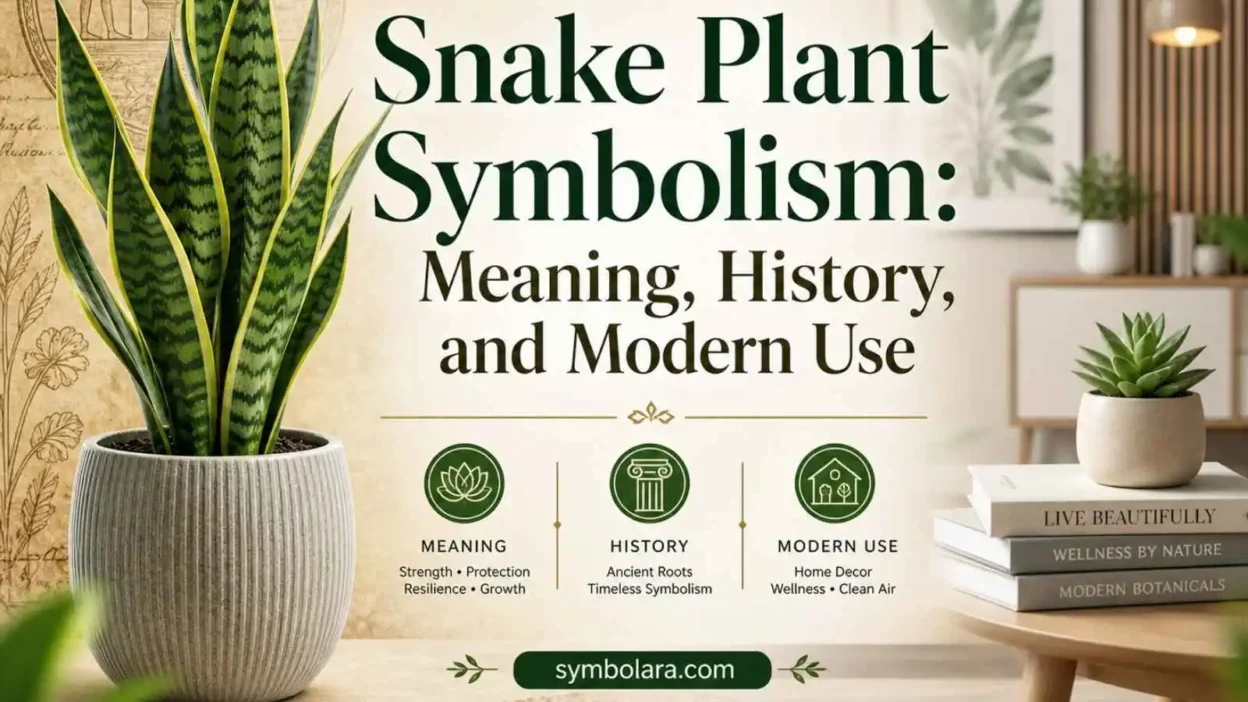
Snake plant symbolism usually starts with the plant’s shape. Its leaves grow upright like blades, hold their form for years, and stay alive under conditions that would stress many other houseplants. In modern American homes, that combination makes the snake plant feel sturdy, self-possessed, and dependable. Its accepted botanical name is Dracaena trifasciata; it is native to tropical western and west-central Africa, and it became popular as a long-lived indoor plant because it tolerates dry conditions and lower light better than many houseplants.
People care about the meaning of a snake plant because it is not just decoration. It is one of those plants that quietly changes the mood of a room. In U.S. homes, apartments, and offices, it often stands for resilience, tidy energy, and the idea that growth does not always need to be loud or dramatic. That modern reading comes less from one ancient fixed tradition and more from the plant’s look, its reputation for durability, and later feng shui and gifting culture.
That distinction matters. Unlike symbols such as the cross, the lotus, or the olive branch, the snake plant does not have one universally agreed ancient symbolic meaning. Much of what people now say about it developed through houseplant culture, interior design, and contemporary spiritual or wellness language. So the most useful way to understand snake plant symbolism is to separate well-established plant facts from the meanings people commonly attach to it today.
Quick Answer
Snake Plant Symbolism most commonly represents resilience, protection, and steady growth in modern American culture, especially in homes, offices, and gift-giving. Historically, its meaning comes less from one ancient symbolic system than from its tough upright form, African origins, later practical uses, and modern feng shui associations with boundaries and protective energy.
TL;DR
• Most Americans read it as resilient and low-stress.
• Its upright leaves suggest order and protection.
• The plant is native to parts of Africa.
• Modern symbolism is stronger than ancient symbolism.
• Feng shui links it with boundaries and protective energy.
• Its popularity comes from durability and clean design.
What a Snake Plant Looks Like and Why That Matters
A snake plant has stiff, upright, sword-shaped leaves with pointed tips and horizontal banding. Some varieties have yellow margins, while others are solid green or silver-toned. The form is what drives most of its symbolism: vertical lines suggest steadiness, the sharp point suggests alertness, and the striped surface gives it a slightly wild look even when it is potted neatly indoors.
In symbolism, shape often matters as much as history. Round trailing plants tend to read as soft or nurturing. A snake plant does the opposite. It creates a feeling of structure. Even people who know nothing about houseplant symbolism often describe it as clean, strong, architectural, or hard to knock off balance. That is why it appears so often in minimalist interiors, office corners, and entryways.
Its Core Meaning in the United States
In the United States, the snake plant most commonly symbolizes endurance. It survives missed waterings, dry indoor air, and inconsistent attention. Because of that, many people read it as a sign of persistence, self-control, and the ability to stay grounded in a difficult environment. Recent home and gardening coverage still treats it as one of the most beginner-friendly, “nearly impossible to kill” indoor plants, which reinforces that meaning in everyday culture.
It also symbolizes protective order. Americans often use the plant where they want a room to feel more composed: beside a desk, near a door, or in an empty corner that needs visual structure. Its vertical leaves act almost like a natural exclamation point. Instead of softness or romance, it usually communicates calm firmness.
A third common meaning is independence. Snake plants do not seem needy. They can thrive with very little fuss, so they often become symbols of self-sufficiency. In modern U.S. plant culture, that makes them especially appealing to first-time plant owners, busy professionals, and people who want their homes to feel alive without feeling high-maintenance.
Where the Symbolism Really Comes From
The symbolism of a snake plant does not come from one single ancient myth. It grows out of three main things: appearance, practicality, and later interpretation. The plant’s stiff leaf shape naturally suggests defense and steadiness. Its survival habits make people associate it with toughness. Then later design, gifting, and feng shui traditions add ideas like protection, luck, and energy control.
This is important because plant symbolism can easily drift into overstatement. There is solid evidence for the plant’s native range, botanical form, and reputation as a durable houseplant. But when people say the snake plant has always symbolized one exact thing across all cultures, that claim is usually too neat. The more accurate view is that its current symbolism is mostly modern and layered rather than ancient and fixed.
African Roots and Early Context
Snake plant is native to regions stretching from southern Nigeria across west-central tropical Africa and into Tanzania, and horticultural references also describe it as native to tropical western Africa. In its home range, it is not just an ornamental houseplant but part of a real ecological and practical landscape. Kew notes environmental, social, and medicinal uses for the species, which helps explain why the plant was historically valued before it became a décor favorite.
That said, its early practical value is not the same as a fully documented ancient symbolic system. Practical plants often gain meaning from how they are used. A durable plant with fibrous leaves and long life naturally invites associations with usefulness and persistence. But readers should be careful not to turn every old use into a symbolic tradition unless the record clearly supports it.
Snake Plant Symbolism in Different Cultures Around the World
Snake plant symbolism changes depending on the cultural setting where people encounter the plant. Unlike symbols with a single documented meaning across civilizations, the snake plant developed different associations through local uses, appearance, and modern traditions.
In parts of Africa where snake plants naturally grow, the plant has long been valued for practical reasons. Its strong fibers, durability, and ability to survive harsh conditions made it a useful plant rather than only a decorative object. These qualities naturally connect with ideas of endurance and adaptability.
In many Western countries, including the United States, the snake plant became strongly associated with resilience because of its reputation as a low-maintenance houseplant. People often connect it with independence because it can survive periods of neglect and still continue growing.
In Asian-inspired home practices, especially feng shui-based decorating, snake plants are often viewed as symbols of protection, strength, and positive growth. However, these interpretations belong to modern spiritual and design practices rather than one universal cultural belief.
The important point is that snake plant symbolism is not fixed. Its meaning develops from the relationship people create with the plant. Across cultures, the strongest shared idea remains the same: a living thing that survives, adapts, and continues growing.
Why the Name Shapes the Meaning
The common names matter a lot here. “Snake plant” comes from the leaf pattern, which resembles snake skin, while “mother-in-law’s tongue” points to the leaf’s long, sharp form. Other names, including “good luck plant,” “viper’s bowstring,” and “St. George’s sword,” push the symbolism in different directions. Some names make the plant sound defensive or cutting. Others make it sound lucky or protective.
In American culture, the “snake” part of the name can create mixed feelings because snakes themselves carry both negative and positive symbolism. Some people think of danger, deceit, or caution. Others think of shedding skin, survival, and transformation. The plant inherits some of that tension. That is one reason people disagree about whether it feels calming or intense. Both reactions make sense.
Feng Shui and Protective Energy
A major source of modern snake plant symbolism comes from feng shui-inspired decorating. Contemporary feng shui sources often describe healthy houseplants as bringing wood-element energy into a space and encouraging growth, vitality, and renewal. Within that framework, snake plants are commonly described as having protective energy, even though their pointed leaves can look “sharp” at first glance.
That reading has strongly shaped how Americans use the plant. It often appears near entryways, work areas, and corners where people want a room to feel cleaner, firmer, or more defended. In other words, the symbolism is less “magic object” and more spatial message: this is a living thing that marks boundaries and holds its ground. That interpretation fits the plant’s form so well that it has spread far beyond strict feng shui practice.
Snake Plant Symbolism in Christianity and Spiritual Beliefs
Many readers search for the biblical or Christian meaning of snake plants, but there is no widely recognized Christian tradition that assigns one specific symbolic meaning to this plant. Unlike olive branches, lilies, or vines, the snake plant does not appear as a major religious symbol in biblical texts.
However, some people create personal spiritual connections with the plant because of its natural qualities. Its ability to survive difficult conditions can remind people of perseverance, patience, and faith during challenging times.
The plant’s upright leaves may also inspire ideas of strength, discipline, and staying grounded. These interpretations are personal reflections rather than established religious teachings.
Modern spiritual communities sometimes connect snake plants with protection, cleansing, and peaceful environments. These ideas usually come from contemporary wellness culture, plant spirituality, and feng shui-inspired practices rather than traditional Christianity.
Understanding this difference helps separate personal symbolism from documented religious history. The snake plant can hold spiritual meaning for individuals while still lacking one official religious interpretation.
Emotional and Psychological Meaning
Emotionally, a snake plant usually communicates steadiness rather than tenderness. It does not have the softness of a peace lily or the cheerful looseness of pothos. Its symbolism is closer to emotional self-command. People often choose it when they want a room to feel more settled, mature, or uncluttered.
There is also a modern wellness layer behind that feeling. Research on indoor plants and indoor greenery suggests that houseplants and greener indoor environments can support perceived restoration, attention, and aspects of well-being, though the effects vary by study and should not be exaggerated. That helps explain why houseplants in general, including snake plants, have become symbols of calm, reset, and everyday care in urban life.
A snake plant can also signal patience. It grows slowly. It does not perform dramatically. That makes it a good symbol for people who value quiet progress over visible hustle.
What It Can Symbolize in Relationships and Identity
As a gift, a snake plant often suggests encouragement. Because it is hardy and easy to keep alive, it works well as a housewarming gift, office gift, or “you’ve got this” kind of plant. It can express support without being overly sentimental. In U.S. gift culture, that makes it especially useful for co-workers, neighbors, new homeowners, and people starting a new phase of life.
On a personal level, the plant can symbolize boundaries. Its upright blades feel self-contained. For some people, that becomes a visual shorthand for protecting their peace, keeping their routine, or staying disciplined. That is one reason snake plants appeal to people who describe themselves as independent, minimalist, or selective about their space.
Why It Shows Up So Often in American Decor
Snake plants are deeply tied to modern American décor because they fit current ideas of home life. They are sculptural, easy to care for, and small-space friendly. Recent home and garden coverage still highlights their popularity, narrow footprint, and ability to handle a wide range of indoor conditions. That practical success feeds the symbolism: a plant that survives modern living becomes a symbol of making modern living feel manageable.
They also work across design styles. In a minimalist room, they look disciplined. In a cozy room, they add contrast. In an office, they read as competent rather than decorative for decoration’s sake. That flexibility is part of their symbolic power in the United States.
Snake Plant Symbolism in Home Placement and Room Meaning
The location of a snake plant can influence how people interpret its symbolism. In modern homes, different placements often create different emotional meanings.
A snake plant near an entrance is commonly associated with protection and creating a strong first impression. Because the leaves grow upward and appear firm, many people use it as a symbol of boundaries and stability.
In offices and workspaces, snake plants often represent focus, discipline, and steady progress. Their simple shape fits professional environments where people want a calm but organized atmosphere.
In bedrooms, some people associate snake plants with relaxation and balance because the plant adds natural elements without creating visual clutter. However, personal preference matters more than any fixed rule.
The symbolic meaning of placement comes from intention. A snake plant does not automatically change the energy of a room, but the way people use it can influence how they experience their space.
Snake Plant Symbolism in Tattoos, Fashion, and Personal Style
Snake plant imagery is less common in tattoos than flowers, snakes, or sacred symbols, but when people do use it, the meaning is usually personal rather than traditional. The tattoo often stands for resilience, personal growth, survival under pressure, or calm protection. Because the leaves are long and graphic, the plant also works well in clean-line tattoo styles and modern botanical illustration.
In fashion and home styling, snake plant symbolism leans even more toward identity. It can signal that someone likes order, natural materials, and quiet confidence. In that sense, the plant has become part of a broader American style language: nature, but controlled; growth, but not chaos.
Snake Plant Symbolism in Dreams: Meaning and Interpretations
Dream interpretations involving snake plants are usually connected to the qualities people associate with the plant in waking life. Because snake plants represent endurance, boundaries, and steady growth, seeing one in a dream may symbolize personal strength or the need for stability.
A healthy green snake plant in a dream may represent growth, patience, or progress that happens slowly over time. It can reflect the idea that important changes do not always happen quickly.
A damaged or dying snake plant may symbolize concerns about energy, personal balance, or an area of life that needs more attention. This interpretation is not a proven prediction but rather a reflection of common symbolic associations.
Dream meanings depend heavily on personal experiences. Someone who loves houseplants may interpret a snake plant differently from someone who dislikes the plant or connects it with a specific memory.
The most useful approach is to view snake plant dreams as personal reflections rather than fixed messages. The symbolism often points back to themes of resilience, care, and maintaining healthy boundaries.
A Quick Comparison of Common Meanings
| Context | Meaning in the USA | Common Associations | Notes |
| Home décor | Stability and calm order | Clean lines, minimalism, balance | Often used in entryways and corners |
| Gift giving | Encouragement and lasting support | Housewarmings, new jobs, fresh starts | Feels thoughtful without being too formal |
| Feng shui-inspired use | Protection and boundary-setting | Entryways, energy flow, grounding | Modern practice, not a universal rule |
| Personal identity | Independence and resilience | Discipline, self-control, low drama | Popular with busy or minimalist lifestyles |
| Wellness culture | Quiet restoration | Greenery, routine, soothing spaces | Best understood as symbolic, not medical |
The Air-Purifying Reputation and What It Symbolizes
Snake plants are often marketed as air-purifying plants. That reputation partly comes from NASA-era indoor air studies, and many home sites still repeat it. But even mainstream gardening sources now note that a single snake plant will not noticeably purify a room by itself. The symbolic value, though, remains strong: people associate the plant with cleanliness, refreshment, and a healthier home environment.
That is a good example of how symbolism and science can diverge. The plant does not need to function like a mechanical air purifier to symbolize freshness. In American home culture, simply being green, upright, and easy to keep alive is enough for many people to read it as a sign of cleaner living.
Common Misunderstandings and Misuse
One misunderstanding is assuming the snake plant has the same meaning everywhere. It does not. In some settings, the “snake” name makes people think of danger or negativity. In others, especially feng shui-influenced spaces, the same pointed leaves are read as protective. Context changes the meaning.
Another misunderstanding is treating all positive claims as harmless. Snake plants are toxic to cats and dogs if chewed, so the plant can symbolize smart boundaries in one sense while also requiring literal practical boundaries in a pet household. That detail matters because modern symbolism should not erase real-world care information.
The old common name “mother-in-law’s tongue” can also feel dated or insulting. Some people still use it casually, but others avoid it because it turns a plant into a joke about women or family dynamics. In current American usage, “snake plant” is usually the more neutral name.
How the Meaning Has Changed Over Time
The meaning of the snake plant has shifted with the spaces it occupies. In its native range, it had practical value. In earlier horticultural use, it was admired as a striking ornamental. In late twentieth-century and early twenty-first-century indoor life, it became the kind of plant associated with apartments, offices, and beginner plant care. That changed its symbolism from simply useful or unusual to emotionally legible: durable, calm, and hard to defeat.
More recently, wellness culture and design trends pushed the symbolism further. Now the snake plant often represents not just survival but intentional living. It suggests that a space can be both disciplined and alive. That is a very modern American reading.
FAQs
What does a snake plant symbolize spiritually?
Spiritually, people often read a snake plant as a sign of protection, grounding, and personal boundaries. In modern practice, that meaning comes mainly from feng shui and wellness culture rather than from one ancient universal religious tradition.
Is snake plant symbolism positive or negative?
Usually it is positive in the United States. Most people associate it with resilience, steadiness, and low-maintenance growth, though the word “snake” can make some people read it as more defensive or intense.
What does a snake plant mean as a gift?
As a gift, it often means support, encouragement, and a wish for lasting stability. Because it is easy to care for, it is especially fitting for housewarmings, work milestones, and fresh starts.
Does a snake plant have a religious meaning?
Not in one fixed, widely shared sense. Some people fold it into broader spiritual systems, but the plant itself is better understood as a modern symbolic object than as a major religious symbol with one agreed meaning.
What does a snake plant symbolize in feng shui?
In feng shui-inspired decorating, it is often linked with protective energy, growth, and stronger boundaries in a space. Placement matters in that system, so the meaning is usually connected to how and where the plant is used.
Is snake plant symbolism connected to tattoos?
Yes, when used in tattoos or botanical body art, it often stands for toughness, recovery, independence, or calm self-protection. That meaning is modern and personal rather than tied to a long tattoo tradition.
Does the plant’s name change its symbolism?
Very much. “Snake plant” can suggest caution, transformation, or defense, while “good luck plant” sounds welcoming and fortunate. Common names shape how people feel about the plant before they even bring it home.
What does giving someone a snake plant mean?
Giving someone a snake plant often represents encouragement, support, and wishes for lasting growth. It is commonly chosen as a housewarming or workplace gift because it is practical and long-lasting.
Conclusion
Snake plant symbolism is most convincing when it stays close to what the plant actually is: upright, durable, slow-growing, and visually disciplined. In modern American culture, those traits have made it a symbol of resilience, protection, independence, and calm order.
Its meaning did not emerge from one single ancient code. Instead, it grew through botany, practical use, houseplant culture, décor trends, and later feng shui influence. That layered history is exactly what makes Snake Plant Symbolism feel so relevant now. It is a modern symbol for people who want their spaces, and sometimes their lives, to feel steady without feeling rigid.



[…] glory climbs quickly, wraps around supports, and reaches upward toward light. Because of that, the plant can symbolize attachment, persistence, and forward motion as much as delicacy. The flower looks fragile, but the […]