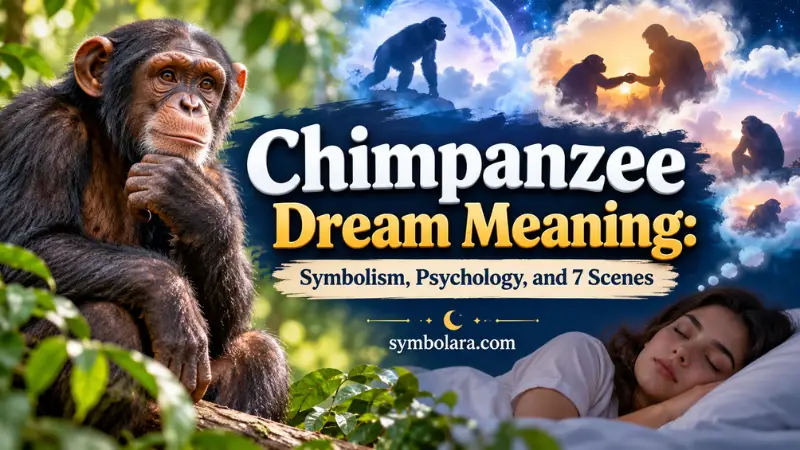
Imagine walking through a forest when a chimpanzee suddenly appears. It watches you closely, reaches for your hand, or begins chasing you. When you wake up, you may wonder whether the experience represents something important. Understanding chimpanzee dream meaning starts with considering the animal’s behavior and how you felt during the dream.
Chimpanzees are intelligent, social animals known for cooperation, curiosity, playfulness, and occasional aggression. These qualities make them interesting dream images, especially when the dream involves friendships, competition, family, or personal boundaries.
For some people, dreaming about a chimpanzee feels funny or comforting. Others experience fear, confusion, or uneasiness. The difference matters because the same animal can represent very different personal associations.
In modern American life, chimpanzees appear in wildlife documentaries, movies, online videos, and conservation stories. Recent experiences with these images, along with everyday emotions and memories, may influence why a chimpanzee appears in a dream.
Quick Answer
Chimpanzee dream meaning is often interpreted symbolically in terms of intelligence, curiosity, social relationships, playfulness, or competition. A friendly chimpanzee might reflect a desire for connection, while an aggressive one could be associated with stress or uncomfortable social situations. However, there is no scientifically proven universal meaning, and interpretation depends on your emotions, memories, and personal circumstances.
TL;DR
- Chimpanzees may symbolize intelligence, curiosity, cooperation, or social competition.
- Friendly encounters can suggest comfort, playfulness, or connection.
- Aggressive chimpanzees may reflect fear, stress, or relationship tension.
- Dream science connects some dream content with waking experiences.
- Religious traditions offer different perspectives, not fixed chimpanzee meanings.
- Your emotional response provides more context than a dream dictionary.
What Does a Chimpanzee Dream Usually Mean?
A chimpanzee in a dream can bring several ideas to mind because real chimpanzees display complex social behavior. They communicate, form relationships, use tools, and sometimes compete for status or resources.
One possible symbolic interpretation is social intelligence. You might associate the chimpanzee with understanding others, recognizing group behavior, or finding creative ways to solve problems.
For example, imagine dreaming about a chimpanzee using a stick to reach food. If you recently solved a difficult problem at work, the animal’s clever behavior might remind you of your own resourcefulness.
Another interpretation involves belonging and acceptance. Chimpanzees live in social communities, which may lead some dreamers to associate them with friendship, family responsibilities, or workplace relationships.
Not every interpretation is positive. An intimidating chimpanzee could remind you of competition, unpredictable behavior, or someone who makes you uncomfortable.
The animal’s actions provide useful clues, but your feelings remain essential. A loud chimpanzee might seem amusing to one person and frightening to another.
Rather than treating the dream as a prediction, consider which associations fit your recent experiences.
Why You Might Dream About a Chimpanzee
Dreams often include pieces of waking life, even when those pieces appear in unusual combinations.
You might dream about chimpanzees after watching an animal documentary, visiting a zoo, reading about Jane Goodall’s research, or seeing a wildlife video online.
Sometimes the connection is less obvious.
A playful chimpanzee may remind you of a funny family gathering. A competitive group of chimpanzees might resemble the social atmosphere of a busy workplace.
Other possible influences include:
- Recent media exposure: A memorable chimpanzee scene may appear again during sleep.
- Curiosity: Learning about animal intelligence might make chimpanzees especially memorable.
- Social concerns: Group interactions could resemble current friendships or conflicts.
- Emotional stress: Strong emotions sometimes appear in dreams through unfamiliar situations.
- Personal memories: Childhood zoo visits or favorite wildlife programs may influence dream imagery.
These are possible influences rather than proven explanations for a specific dream.
Some chimpanzee dreams may have no obvious personal significance. The dreaming brain can combine familiar images into strange stories without producing a clear symbolic message.
Psychological Interpretations of Chimpanzee Dreams
Psychology offers several ways to think about animal dreams, although none establishes a fixed meaning for chimpanzees.
Carl Jung and Animal Symbolism
Psychiatrist Carl Jung developed theories about symbols, archetypes, and the relationship between conscious and unconscious experiences.
From a Jungian perspective, a chimpanzee might invite reflection on qualities people associate with instinct, social behavior, or the less controlled sides of personality.
For example, a dream involving a playful chimpanzee could lead someone to consider whether they have become overly serious about everyday responsibilities.
However, Jung’s approach is a historical psychological framework. It does not scientifically prove that chimpanzees represent one particular personality trait.
Sigmund Freud and Emotional Associations
Sigmund Freud viewed dreams partly through the lens of wishes, conflicts, and personal experiences.
A Freudian-style interpretation might examine what the chimpanzee reminds the dreamer of rather than focusing only on the animal.
Someone who associates chimpanzees with mischief might interpret the dream differently from someone who connects them with family bonds.
Freud’s theories influenced dream interpretation, but modern science does not establish his symbolic explanations as reliable methods for decoding individual dreams.
Modern Psychology and Daily Life
Modern dream research provides a more cautious explanation.
Dream content can reflect waking concerns, memories, relationships, and emotional experiences. Researchers often describe this connection as the continuity hypothesis.
If you are dealing with social pressure, you might experience a dream involving a group of animals competing for attention or resources.
That possibility does not mean the dream proves you have a psychological problem. It simply provides a practical way to examine connections between sleeping experiences and waking life.
What Modern Dream Science Says About Chimpanzee Dreams
Scientists understand some of the brain processes involved in dreaming, but the exact purpose of dreams remains an open research question.
Vivid dreams commonly occur during rapid eye movement (REM) sleep, a stage associated with significant brain activity. Dreaming can also happen during non-REM sleep.
Research suggests that memories and emotional experiences can influence dream content. This helps explain why familiar people, animals, locations, and recent events sometimes appear in unusual combinations.
For example, your brain might combine a wildlife documentary with memories of a difficult conversation. The resulting dream could feature an angry chimpanzee in your living room.
However, that example is only a plausible explanation, not a scientifically established method for interpreting dream imagery.
Dreams can also contain events that seem unrelated to waking experiences. A chimpanzee might suddenly speak, change size, or behave like a human.
Such details do not necessarily carry hidden meanings.
Importantly, there is no established scientific evidence that dreaming specifically about chimpanzees predicts intelligence, conflict, success, or future events.
Researchers can study patterns in dream reports, but they cannot assign a universal psychological meaning to every animal that appears during sleep.
7 Common Chimpanzee Dream Scenarios and Their Meanings
The events in your dream may offer more useful clues than the animal’s appearance alone. A chimpanzee playing peacefully creates a different emotional experience from one chasing you through an unfamiliar place.
Here are seven situations and their possible symbolic interpretations.
1. Dreaming About a Friendly Chimpanzee
A friendly chimpanzee might approach you, sit beside you, play, or show affection.
This experience may symbolize companionship, trust, curiosity, or a desire for enjoyable social connections.
If you recently strengthened a friendship, the dream might reflect those positive feelings. Alternatively, someone feeling lonely might associate the friendly animal with a wish for companionship.
Notice whether you felt safe, surprised, or excited during the interaction.
2. Dreaming About a Chimpanzee Attacking You
An attacking chimpanzee can create an intense and frightening dream.
One possible interpretation involves feeling threatened, pressured, or overwhelmed in waking life. The animal’s aggression might remind you of an unpredictable person or an uncomfortable confrontation.
For example, someone experiencing workplace disagreements might connect an attacking chimpanzee with fears about conflict.
However, frightening dreams do not necessarily represent actual danger. Recent frightening media or unrelated stress may also influence the experience.
3. Dreaming About a Chimpanzee Chasing You
Running from a chimpanzee may reflect a feeling of urgency, avoidance, or uncertainty.
Perhaps you have been postponing a difficult conversation or struggling to complete an important responsibility.
In that context, the chase could resemble the emotional pressure you feel during the day.
Still, the interpretation depends on the dream. Running playfully with a chimpanzee feels very different from escaping an aggressive animal.
Consider whether the chase involved genuine fear or excitement.
4. Dreaming About a Baby Chimpanzee
A baby chimpanzee may inspire feelings of tenderness, curiosity, or protectiveness.
Some dreamers might associate this image with caregiving, new responsibilities, or relationships requiring patience.
For example, someone adjusting to parenthood or caring for a younger family member might find the image personally meaningful.
If the baby chimpanzee appeared abandoned or frightened, the dream might instead connect with concerns about protection or responsibility.
The animal’s age does not establish a fixed meaning. Your emotional response gives the scene its personal context.
5. Dreaming About Feeding a Chimpanzee
Feeding a chimpanzee might represent generosity, responsibility, or a desire to build trust.
You may associate the action with supporting someone, sharing resources, or caring for another living being.
A person helping a friend through a difficult period might connect this dream with their caregiving role.
However, if the chimpanzee aggressively demands food, the same scene could raise questions about boundaries or feeling pressured to give too much.
6. Dreaming About a Chimpanzee in Your House
Finding a chimpanzee inside your home can feel amusing, surprising, or uncomfortable.
Homes in dreams often have strong personal associations because they are connected with privacy, family, and familiar routines.
A playful chimpanzee wandering around your living room might remind you of unexpected visitors or changes to everyday life.
An aggressive animal damaging furniture might instead reflect feelings of disruption or lost control.
Think about whether the chimpanzee was welcome and how the people inside the house reacted.
7. Dreaming About a Group of Chimpanzees
A group of chimpanzees may draw attention to relationships, cooperation, social rules, or competition.
Watching them groom each other peacefully might remind you of friendship and mutual support.
Seeing them argue or fight could resemble tensions within your family, workplace, or social circle.
Your role also matters. Were you observing the group, interacting with it, or trying to escape?
Being included might feel reassuring, while being surrounded by unfamiliar animals could create anxiety.
These differences help explain why group dreams do not have one reliable interpretation.
Chimpanzee Dream Meaning Table
| Dream Scenario | Possible Meaning | Emotional Association | Important Context |
| Friendly chimpanzee | Social connection or trust | Comfort, happiness | Recent friendships |
| Chimpanzee attacking | Pressure or perceived conflict | Fear, tension | Stressful interactions |
| Chimpanzee chasing | Avoidance or urgency | Anxiety, excitement | Unfinished responsibilities |
| Baby chimpanzee | Caregiving or vulnerability | Affection, concern | Family responsibilities |
| Feeding a chimpanzee | Support or generosity | Kindness, obligation | Personal boundaries |
| Group of chimpanzees | Social dynamics or belonging | Acceptance, uncertainty | Group relationships |
These interpretations are possibilities, not proven meanings. The same scenario can have a different personal significance for each dreamer.
Is Dreaming About a Chimpanzee Good or Bad?
A chimpanzee dream is not automatically positive or negative.
The emotional atmosphere matters more than the animal itself.
A peaceful dream involving a chimpanzee could encourage thoughts about cooperation, affection, adaptability, or enjoyable relationships. If you felt curious and confident, the experience might connect with positive changes in your daily life.
An aggressive or unpredictable chimpanzee might bring up concerns about personal boundaries, competition, or stressful interactions.
However, negative emotions during a dream do not guarantee that something bad will happen.
Some dreams simply create intense experiences without reflecting a specific real-life problem.
Instead of asking whether the animal is lucky or unlucky, consider whether the dream left you feeling supported, threatened, amused, or confused.
That distinction offers a more useful starting point.
Spiritual, Religious, and Cultural Interpretations
Spiritual interpretations depend heavily on personal beliefs and cultural background.
Chimpanzees do not have one widely established religious dream meaning shared across major faith traditions.
In Christianity, biblical accounts sometimes describe meaningful dreams, but the Bible does not provide a specific interpretation for dreaming about chimpanzees. A Christian reader might use the experience for personal reflection without assuming it represents a divine warning.
Islamic traditions also recognize different categories of dreams, including ordinary dreams connected with everyday thoughts. However, that general teaching does not establish a specific meaning for chimpanzee imagery.
Historically, dream interpretation appeared in different societies through religious writing, folklore, and dream manuals. These traditions often used symbolic associations, but their interpretations were not scientific findings.
There is also an important difference between general monkey symbolism and chimpanzee symbolism. Chimpanzees are great apes, not monkeys, and interpretations associated with one animal should not automatically be transferred to another.
Some modern spiritual readers may personally associate chimpanzees with intelligence, community, or human nature. Such associations can support individual reflection, but they should not be presented as ancient teachings without historical evidence.
How Americans Interpret Chimpanzee Dreams Today
In the United States during 2025–2026, people may encounter chimpanzees through wildlife documentaries, educational programs, zoos, movies, and social media.
These experiences can influence what a chimpanzee represents to an individual.
Someone interested in animal conservation may connect chimpanzees with empathy, wildlife protection, and family bonds. Another person familiar with dramatic ape movies might associate them with strength, conflict, or unpredictable behavior.
Everyday responsibilities can also shape interpretation.
For example, a college student preparing for group presentations might associate several noisy chimpanzees with classroom dynamics. Someone managing a difficult team at work could connect the same image with competition.
Online dream dictionaries sometimes assign fixed meanings to animal symbols. Although these explanations may spark ideas, they rarely account for individual experiences.
A more useful contemporary approach combines personal memories, emotional reactions, and an understanding of how dreams can reflect waking concerns.
How Your Emotions Change the Dream’s Meaning
Two people can dream about the same chimpanzee and interpret the experience differently.
Imagine one person who enjoys watching chimpanzee documentaries. A chimpanzee approaching them might create excitement and curiosity.
Another person who remembers a frightening animal encounter might react with fear.
Neither emotional response is necessarily incorrect.
Your relationship with the animal’s image matters.
Pay attention to three details: how you felt when the chimpanzee appeared, how its behavior changed, and how you felt when you woke up.
Sometimes the strongest emotion comes from another character rather than the animal itself.
For example, seeing a loved one protect you from an aggressive chimpanzee might make the dream more about feelings of safety and trust than about the chimpanzee.
Emotional details often provide a clearer basis for reflection than assigning one meaning to the animal.
Why Do I Keep Dreaming About Chimpanzees?
Recurring chimpanzee dreams can feel especially memorable because the same animal appears repeatedly.
Repeated dreams sometimes relate to ongoing concerns, familiar memories, or situations that continue to hold emotional importance.
If several dreams involve aggressive chimpanzees during a stressful work period, you might reasonably consider whether workplace tension is influencing your sleep experiences.
On the other hand, repeated peaceful dreams might connect with a lasting interest in wildlife or a familiar positive memory.
Not every recurring dream has an unresolved psychological cause.
Sleep patterns, repeated media exposure, and ordinary memory processes may also contribute.
Recording the setting, events, and emotions can help you notice changes between dreams.
If repeated nightmares seriously disturb your sleep or affect your daytime well-being, speaking with a qualified health professional may be helpful.
Common Misunderstandings
Several popular assumptions can make animal dreams seem more mysterious or alarming than necessary.
A chimpanzee dream predicts betrayal. There is no reliable scientific evidence that seeing an aggressive chimpanzee predicts betrayal or another future event.
Friendly chimpanzees guarantee good luck. A pleasant dream can create positive feelings, but it does not establish that success or good fortune is approaching.
All chimpanzees represent uncontrolled instincts. Although some symbolic theories connect animals with instinctive behavior, that association does not apply universally.
Recurring chimpanzee dreams prove something is wrong. Repeated dreams are not, by themselves, evidence of a psychological disorder.
The most important distinction is between personal interpretation and established scientific knowledge.
Dream symbols can invite reflection without acting as reliable predictions or diagnoses.
How to Understand Your Own Chimpanzee Dream
You do not need a complicated interpretation system to reflect on an unusual dream.
Begin by writing down the main events before the details fade.
Then consider these questions:
- What was the chimpanzee doing?
- Did I feel afraid, happy, curious, or protective?
- Was the animal friendly, aggressive, injured, or playful?
- Did anyone else appear in the dream?
- Have I recently watched or read something involving chimpanzees?
- Does any part of the experience remind me of a current relationship or responsibility?
Look for connections that genuinely fit your circumstances rather than forcing an explanation.
A dream journal may help identify repeated images and emotional patterns over time. However, keeping one does not scientifically prove what a particular symbol means.
It is also reasonable to conclude that the dream was simply unusual or entertaining.
FAQs
A chimpanzee may symbolically suggest intelligence, curiosity, relationships, playfulness, or social tension. Its possible meaning depends on the animal’s behavior, your emotions, and relevant waking experiences.
A friendly or peaceful chimpanzee may feel positive and remind you of trust, cooperation, or companionship. However, there is no scientific evidence that seeing one guarantees good luck.
An aggressive chimpanzee could reflect feelings associated with pressure, conflict, or uncertainty. It might also result from frightening media or ordinary dream imagery rather than a specific real-life threat.
A baby chimpanzee may bring to mind affection, protection, caregiving, or vulnerability. The most useful interpretation depends on whether the dream felt comforting, stressful, or emotionally neutral.
Some people may give chimpanzee dreams personal spiritual interpretations involving intelligence, connection, or behavior. Major religious traditions do not establish one universal meaning for this specific dream image.
Repeated chimpanzee dreams might connect with ongoing concerns, memorable experiences, or recurring emotional themes. If they become distressing or regularly interrupt sleep, professional guidance may be helpful.
There is no reliable scientific evidence that chimpanzee dreams predict future events. A vivid dream may feel meaningful, but its emotional impact does not establish that it contains a prediction.
Conclusion
Chimpanzee dream meaning can involve personal associations with intelligence, curiosity, social connections, competition, or caregiving. A friendly chimpanzee might remind you of companionship, while an aggressive encounter could resemble feelings of stress or uncertainty.
Modern dream research supports connections between some dreams and waking experiences, but it does not establish fixed meanings for individual animal symbols. Religious interpretations and cultural beliefs offer different ways to reflect on dreams, not scientifically verified explanations.
The most useful details are usually the chimpanzee’s behavior, your emotional response, and anything in your recent experiences that resembles the dream. These observations can help you understand why the experience stood out without assuming it predicts something about your future.