
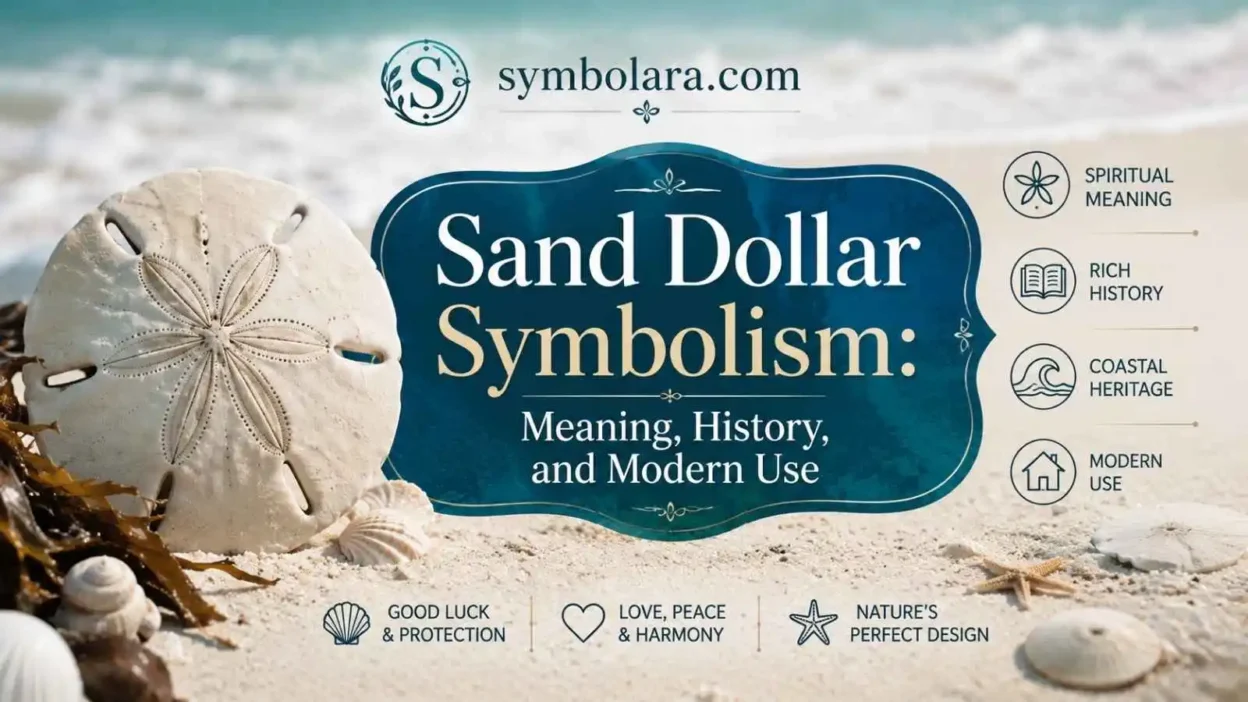
Sand Dollar Symbolism often begins with a simple beach moment: someone finds a pale, round shell-like form in the sand and feels as if they have discovered a small ocean treasure. Its flat shape, flower-like center, and coin-like appearance make it one of the most recognizable objects associated with the coast.
In the United States, sand dollars carry several layers of meaning. Some people see them as signs of peace, luck, and coastal calm. Others connect them with Christian imagery, especially through the well-known “Legend of the Sand Dollar.” For many families, they also represent summer trips, childhood beach walks, weddings by the water, or memories of someone who loved the ocean.
A sand dollar is not just a decorative shell. It is the hard skeleton, or test, of a marine animal related to sea urchins. That biological reality matters because modern meaning now includes a growing awareness of conservation, ethical beachcombing, and respect for living coastal ecosystems.
Quick Answer
Sand Dollar Symbolism commonly represents peace, hope, good luck, and a calm connection to the sea in modern American culture. Historically, it is also linked to Christian folk symbolism, where its five-pointed pattern, small openings, and inner “doves” are interpreted as reminders of the life, death, and resurrection of Christ.
TL;DR
- Sand dollars often symbolize peace and coastal calm.
- Their coin shape connects them with luck and treasure.
- Christian tradition gives them devotional meaning.
- Americans use them in jewelry, décor, and tattoos.
- Ethical collecting matters because live sand dollars are animals.
- Their meaning has shifted from souvenir to conservation symbol.
What a Sand Dollar Looks Like
A sand dollar is flat, round, and usually pale white or gray when found washed up on the beach. The top often shows a five-part pattern that looks like a flower, star, or pressed botanical design. Many species also have small slots or openings near the edges, especially the keyhole sand dollars seen along parts of the Atlantic and Gulf coasts.
People often call it a “shell,” but that is only partly accurate in casual language. A dead sand dollar leaves behind a hard, chalky skeleton. When alive, it looks very different: darker, often gray, brown, purple, greenish, or reddish, and covered with tiny moving spines that give it a velvety texture.
That contrast shapes much of its symbolism. The beach-worn sand dollar looks quiet, clean, and delicate, while the living animal belongs to a hidden world beneath shallow sand and water.
What It Commonly Means in the United States
In modern American culture, the sand dollar most often symbolizes peace, luck, simplicity, and the emotional pull of the beach. A whole sand dollar is fragile and not always easy to find, so many people treat it as a lucky discovery rather than an ordinary object.
Its round shape also gives it a “coin” association. This is where the name itself matters. A sand dollar looks like old money washed clean by the sea, so it easily becomes a symbol of natural treasure, abundance, and small blessings. The meaning is rarely about literal wealth. Instead, it points to the kind of richness people associate with quiet mornings, family vacations, and time away from daily pressure.
For many Americans, the sand dollar says, “I belong near the water.” It signals coastal identity, beach memories, and a slower way of living.
Why the Sand Dollar Feels Peaceful
The sand dollar’s peaceful meaning comes from its setting as much as its shape. People usually encounter it while walking slowly along a beach, watching the tide, or searching the sand after waves pull back. That experience already encourages reflection.
Its color adds to this effect. A sun-bleached sand dollar is usually white or off-white, colors often associated with calm, cleanliness, simplicity, and remembrance. Its soft circular outline feels less sharp than many shells, while the flower-like center gives it a balanced look.
There is also an emotional contrast in its fragility. A sand dollar can break easily, so people often handle it with care. That carefulness becomes part of the meaning. It reminds people that peace is not loud or forceful. It is something preserved gently.
The Christian Legend of the Sand Dollar
One of the most familiar American interpretations is the Christian “Legend of the Sand Dollar.” In this devotional folk reading, the markings on the sand dollar are treated as symbols of Christ’s birth, crucifixion, and resurrection.
The star-like center is often connected with the Star of Bethlehem. The five openings or marks are interpreted as wounds. The flower-like shape is sometimes linked with the Easter lily, while the small white pieces found inside a broken sand dollar are described as doves of peace.
This tradition is especially common in coastal gift shops, church crafts, Sunday school lessons, greeting cards, and religious keepsakes. It should be understood as folk symbolism rather than biological fact or ancient doctrine. The animal did not develop its shape for religious purposes, but people later used its natural form as a teaching image.
That distinction helps preserve both meanings: the sand dollar as a real marine creature and the sand dollar as a devotional object.
Earlier Folklore and Ocean Imagination
Beyond Christian symbolism, sand dollars have inspired lighter forms of beach folklore. Their coin-like shape led to stories about mermaid money, lost coins from Atlantis, or treasure scattered by the sea. These stories are playful rather than formal religious traditions, but they explain why the sand dollar feels magical to beachcombers.
American beach culture has always made room for this kind of storytelling. Children collect shells, families bring home souvenirs, and coastal towns turn natural objects into local symbols. The sand dollar fits perfectly into that world because it looks designed, even though its pattern comes from biology.
These stories also show how humans often interpret natural symmetry as meaningful. When an object looks ordered, balanced, and rare, people instinctively attach stories to it. The sand dollar became a canvas for imagination because it already looked like a small sign from the sea.
Meaning in Coastal American Culture
In the United States, sand dollars are strongly tied to coastal places such as Florida, the Carolinas, Georgia, Alabama, California, Oregon, and Washington. They appear in beach-town gift shops, coastal homes, vacation rentals, wedding decorations, and local art.
Their meaning shifts slightly by setting. In Florida and the Gulf Coast, they often feel connected with warm-weather vacations and family shelling trips. In the Pacific Northwest, they may suggest tide pools, marine life, and a quieter, cooler coastline. Along the Carolinas, they often appear as classic beach souvenirs and symbols of Lowcountry or island life.
The shared American meaning is still clear: sand dollars represent the beach as a place of rest, memory, and renewal. They are less flashy than starfish or conch shells, which makes them feel understated and personal.
Sand Dollar Symbolism Compared With Other Ocean Symbols
Ocean symbols often share themes of connection, change, and natural beauty, but each object carries a different emotional message. The sand dollar is usually associated with peace, simplicity, memory, and quiet discovery.
Unlike a seashell, which often represents listening, protection, and the hidden life of the ocean, the sand dollar is more closely connected with balance, luck, and gentle reflection. A starfish is commonly linked with renewal and regeneration because of its ability to regrow arms, while a sand dollar focuses more on calmness and personal meaning.
A conch shell often carries associations with communication, travel, and ceremonial traditions in different cultures. The sand dollar, by contrast, usually feels more personal and subtle. It is less about sound or movement and more about stillness.
Together, these symbols show how people use natural objects to express different emotions. The sand dollar stands out because its simple circular shape combines ideas of wholeness, fragility, and peaceful connection with the sea.
Sand Dollar Meanings by Context
| Context | Meaning in the USA | Common Associations | Notes |
| Beachcombing | Luck and discovery | Vacation, childhood, treasure | Whole sand dollars feel rare and special |
| Christian gifts | Faith and peace | Easter, Christ, doves, resurrection | Based on folk devotional interpretation |
| Home décor | Coastal calm | White, sand, ocean, simplicity | Common in beach houses and summer styling |
| Tattoos | Memory and resilience | Ocean identity, loved ones, healing | Often chosen for quiet personal meaning |
| Weddings | Lasting love and peace | Beach ceremonies, unity, blessings | Works best in coastal or natural themes |
| Conservation | Respect for marine life | Ethical collecting, tide pools, habitat | Modern meaning includes leaving live animals alone |
Emotional and Psychological Meaning
Emotionally, the sand dollar often represents a wish for calm. People choose it when they want a symbol that feels gentle, coastal, and hopeful without being dramatic. It can suggest healing after grief, a return to balance, or a desire to live more simply.
Its connection to memory is especially strong. A sand dollar may remind someone of a grandparent’s beach house, a honeymoon, a childhood vacation, or a place where they felt safe. Because it is delicate, it can also represent the tenderness of memory itself.
Psychologically, the object combines order and vulnerability. The five-part design feels structured, but the test can snap with little pressure. That makes it a fitting symbol for people who value quiet strength: not toughness in a harsh sense, but endurance shaped by gentleness.
Sand Dollar Symbolism in Dreams: Possible Meanings and Interpretations
Dreams about sand dollars are often interpreted through personal emotions, memories, and experiences rather than one fixed meaning. For many people, seeing a sand dollar in a dream connects with feelings of peace, emotional healing, protection, or a desire for a calmer period of life.
Finding a sand dollar in a dream may represent discovering something valuable that was overlooked. Because sand dollars are linked with the ocean, beaches, and memories, the dream may also relate to nostalgia, childhood experiences, or a meaningful connection to a person or place.
Some spiritual interpretations associate sand dollars in dreams with guidance, hope, or inner balance. However, dream symbolism is personal, and the meaning depends on the dream’s details. A broken sand dollar may suggest change, loss, or acceptance, while a whole sand dollar may represent preservation, harmony, or a treasured memory.
The most useful way to understand a sand dollar dream is to consider what the symbol means to the dreamer. A person who connects the ocean with happiness may interpret it differently from someone who associates the sea with grief, travel, or transformation.
Sand Dollars in Jewelry and Personal Style
Sand dollar jewelry is popular because the shape is instantly recognizable but still subtle. Pendants, earrings, charms, and bracelets often use the sand dollar as a sign of beach identity, faith, or personal calm.
A person wearing a sand dollar necklace may be expressing love for the ocean, a connection to a coastal hometown, or a memory of a specific trip. In Christian jewelry, the same image can carry a more devotional message, especially when paired with crosses, doves, or Easter themes.
Its style meaning is usually soft and natural. Unlike gemstones that suggest luxury, sand dollar designs suggest ease, summer, and simplicity. They work well with linen, white clothing, nautical colors, and relaxed coastal fashion because they communicate quiet beauty rather than status.
Sand Dollar Symbolism as a Gift: What It Represents
Giving a sand dollar as a gift often represents peace, good wishes, and a meaningful connection between people. Because sand dollars are associated with the ocean and special beach memories, they are commonly given as reminders of shared experiences or favorite places.
A sand dollar gift may symbolize encouragement during a difficult time, appreciation for a friendship, or a wish for happiness and calm. Some people give sand dollar jewelry, artwork, or keepsakes to someone who loves the beach or has a strong emotional connection to coastal life.
In Christian settings, a sand dollar gift may carry additional meaning related to faith, hope, and spiritual reflection through the traditional sand dollar legend. In nonreligious settings, it may simply represent natural beauty, memories, and peaceful moments.
The meaning of the gift depends on the relationship and the reason behind giving it. Like many symbols from nature, a sand dollar becomes more meaningful when connected to a personal story.
Why Sand Dollars Appear in Tattoos
Sand dollar tattoos often carry personal meanings tied to peace, survival, memory, and the ocean. Some people choose them as reminders of a beach they love. Others use them to honor a loved one, mark a period of healing, or represent faith in a subtle way.
The shape also works well visually. It can be drawn in fine lines, realistic detail, watercolor style, or simple outline. Some tattoos include waves, sea oats, shells, flowers, initials, dates, or small doves to make the meaning more specific.
A sand dollar tattoo is usually positive. It rarely signals rebellion or danger. Instead, it tends to communicate softness, reflection, and emotional steadiness. For many people, it says that the ocean is not just scenery; it is part of their inner life.
Use in Home Décor and Coastal Design
In American coastal décor, sand dollars are used to create a clean, breezy, beach-inspired mood. They appear in framed art, wreaths, ornaments, table settings, bathroom décor, wedding centerpieces, and summer displays.
Their pale color makes them easy to pair with driftwood, sea glass, rope, whitewashed wood, blue accents, and natural fibers. In design, they often symbolize simplicity and relaxed coastal living. A room with sand dollar art usually aims to feel calm, open, and connected to nature.
However, modern coastal design is also changing. Many people now prefer replicas, illustrations, ceramic versions, or responsibly sourced pieces instead of collecting large numbers from beaches. This shift reflects a wider cultural awareness: beauty from the ocean should not require harming the ocean.
Wedding and Love Symbolism
Sand dollars are common in beach weddings because they combine natural beauty with gentle symbolism. They can represent unity, peace, good fortune, and a shared life shaped by patience. Their circular form suggests wholeness, while their fragile texture reminds couples to care for the relationship they are building.
They may appear on invitations, place cards, favors, ring dishes, aisle decorations, or memorial tables. Some couples use them to honor family members who loved the beach or could not attend the ceremony.
In this setting, the sand dollar does not usually symbolize passion in a fiery sense. It represents steadier forms of love: calm companionship, shared memories, and the hope for a peaceful home. That makes it especially fitting for coastal, intimate, or nature-centered weddings.
Mourning, Memory, and Remembrance
Sand dollars can also carry quiet mourning symbolism. Because they are found after the living animal is gone, they can represent what remains after loss: memory, beauty, and a trace of life shaped by time.
This meaning appears in memorial jewelry, beach ceremonies, remembrance tables, and keepsakes from places where someone spent meaningful time. A family might keep a sand dollar from a loved one’s favorite beach, not because the object is expensive, but because it holds place-based emotion.
The Christian “doves of peace” interpretation can strengthen this memorial meaning for believers. For others, the sand dollar may simply represent the ocean’s rhythm: life changes, grief softens, and memory remains. Its symbolism is tender because it does not force a single message.
Cross-Cultural and Religious Interpretations
The sand dollar does not have one universal meaning across all cultures. Its symbolism is strongest in coastal communities and places where people regularly encounter it. In Spanish-speaking beach regions, names meaning “sea cookie” may emphasize shape more than spiritual meaning. In South Africa, some related forms are called pansy shells because their pattern resembles a flower.
Christian symbolism is especially visible in the United States and in communities shaped by Catholic or Protestant devotional storytelling. Still, not every Christian uses the sand dollar as a faith symbol, and many people enjoy it without any religious meaning.
The best way to understand cross-cultural meaning is to separate natural resemblance from formal tradition. A sand dollar can look like a flower, star, coin, or dove-bearing object, but the interpretation depends on the community telling the story.
Common Misunderstandings About Sand Dollars
The biggest misunderstanding is that sand dollars are just empty shells waiting to be collected. Live sand dollars are animals. They move, feed, burrow, and play a role in marine ecosystems. A dark or velvety sand dollar near the water may still be alive and should be left alone or gently returned to shallow water if stranded.
Another misunderstanding is that the Christian legend is the “original” meaning of the sand dollar. It is better described as a devotional folk interpretation that became popular through postcards, church teaching, coastal souvenirs, and family storytelling.
A third mistake is treating every beach object as free décor. Local rules vary, and some beaches restrict collecting living marine life. Even where dead sand dollars may be collected, taking only a small number and leaving uncertain ones behind is the more respectful choice.
How the Meaning Has Changed Over Time
The sand dollar’s meaning has moved through several stages in American culture. First, it was a natural beach find: unusual, delicate, and worth keeping as a souvenir. Then it became a storytelling object, especially through Christian legend and mermaid-coin folklore.
Later, it became a design motif. Coastal homes, jewelry makers, wedding planners, and tattoo artists turned the sand dollar into a visual shorthand for beach life, calm, and memory. In recent years, its meaning has expanded again because environmental awareness has changed how people think about collecting from nature.
Today, the sand dollar can symbolize both beauty and responsibility. It still represents peace, luck, and faith for many people, but it also reminds beachgoers that the coast is alive. The modern symbol is not only about what we take from the beach. It is also about what we leave unharmed.
How to Use the Symbol Respectfully
Using the sand dollar respectfully begins with knowing the difference between a dead test and a living animal. A bright white, dry, brittle sand dollar found above the tide line is usually no longer alive. A darker, fuzzy, or moving one near the water should be left alone.
For décor, jewelry, crafts, or weddings, consider using replicas, drawings, metal charms, ceramic pieces, or ethically sourced materials. These options still carry the same symbolism without encouraging careless collecting.
Respect also means being careful with religious meaning. The Christian legend can be meaningful to believers, but it should not be presented as the only correct interpretation. A sand dollar can symbolize faith, peace, memory, luck, coastal identity, or ecological care depending on the person and context.
FAQs
What does a sand dollar symbolize?
A sand dollar usually symbolizes peace, hope, luck, and a calm connection to the ocean. In American culture, it also carries meanings tied to beach memories, coastal living, and quiet personal reflection.
What is the Christian meaning of a sand dollar?
In Christian folk tradition, the sand dollar’s markings are interpreted as symbols of Christ’s birth, crucifixion, and resurrection. The small pieces inside a broken sand dollar are often described as doves representing peace and goodwill.
Is a sand dollar good luck?
Many beachgoers treat a whole sand dollar as a good-luck find because it is delicate and not always easy to discover unbroken. Its coin-like shape also connects it with treasure, blessings, and small gifts from the sea.
What does a sand dollar tattoo mean?
A sand dollar tattoo often means peace, healing, ocean love, faith, or remembrance. The meaning depends on the design, especially if it includes waves, doves, initials, dates, or other personal details.
Is it okay to collect sand dollars from the beach?
Only collect sand dollars when you are sure they are dead and when local rules allow it. Live sand dollars are marine animals, and many coastal areas restrict or prohibit removing living sea life.
Why do sand dollars have a flower or star shape?
The flower-like pattern comes from the animal’s internal structure and five-part body plan. People later interpreted that natural pattern as a star, flower, lily, or spiritual sign.
Are sand dollars considered lucky?
Many people consider sand dollars lucky because finding an intact one on the beach feels rare and special. Their coin-like shape also encourages associations with treasure, blessings, and good fortune.
Conclusion
The sand dollar carries meaning because it brings together several things Americans recognize immediately: the beach, quiet luck, fragile beauty, faith stories, and memories of time spent near the water. Its simple shape allows different people to see different messages without losing the object’s calm coastal character.
Sand Dollar Symbolism is strongest when it honors both imagination and reality. It can represent peace, hope, love, remembrance, and spiritual reflection, but it also belongs to a living marine world that deserves care. The most meaningful sand dollar is not always the one taken home. Sometimes it is the one noticed, understood, and left where the tide placed it.
A sand dollar usually symbolizes peace, hope, luck, and a calm connection to the ocean. In American culture, it also carries meanings tied to beach memories, coastal living, and quiet personal reflection.
In Christian folk tradition, the sand dollar’s markings are interpreted as symbols of Christ’s birth, crucifixion, and resurrection. The small pieces inside a broken sand dollar are often described as doves representing peace and goodwill.
Many beachgoers treat a whole sand dollar as a good-luck find because it is delicate and not always easy to discover unbroken. Its coin-like shape also connects it with treasure, blessings, and small gifts from the sea.
A sand dollar tattoo often means peace, healing, ocean love, faith, or remembrance. The meaning depends on the design, especially if it includes waves, doves, initials, dates, or other personal details.
It can be either. Some people connect the sand dollar with Christian teachings, while others see it as a beach symbol of calm, luck, memory, and natural beauty.
The flower-like pattern comes from the animal’s internal structure and five-part body plan. People later interpreted that natural pattern as a star, flower, lily, or spiritual sign.


