
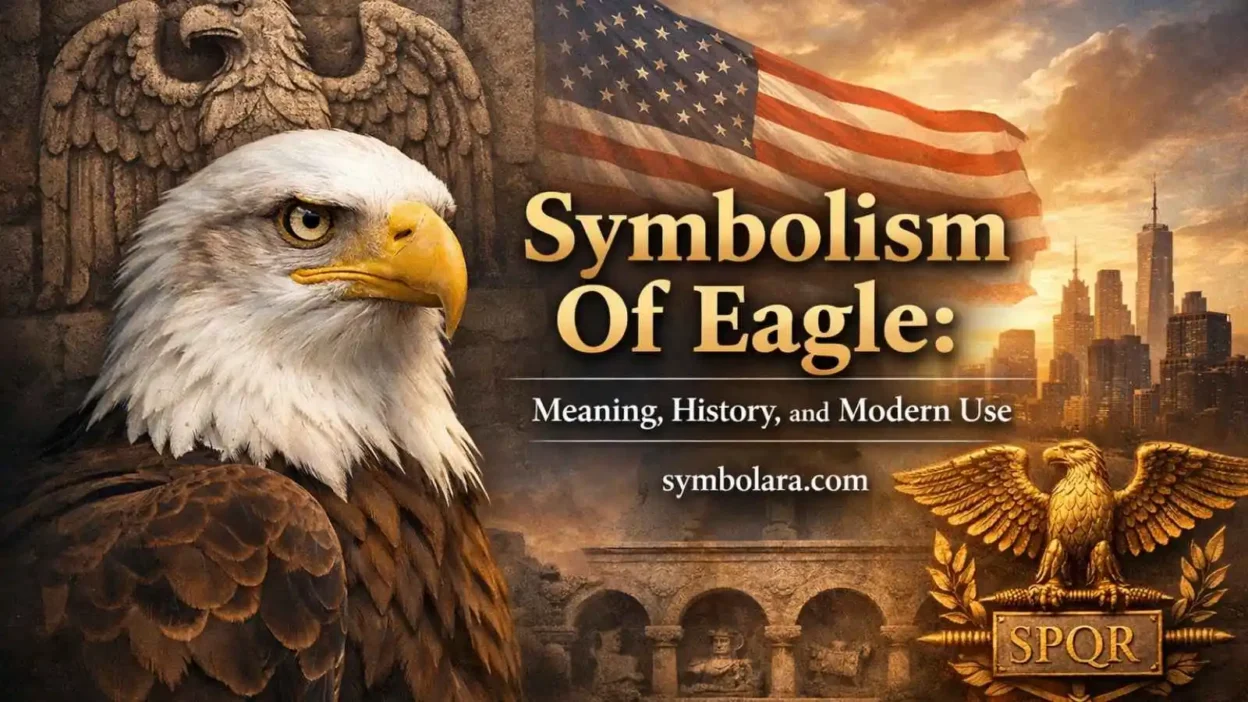
When people search for Symbolism Of Eagle, they are usually trying to decode more than a bird. They want to understand why the eagle appears on government seals, military insignia, tattoos, jewelry, sports branding, patriotic decor, and memorial art, and why it still carries such a strong emotional charge in the United States.
Part of the answer is visual. Eagles fly high, hunt with precision, and dominate the sky in a way few other birds do. That combination has made them easy to read symbolically across cultures: they suggest command, vigilance, reach, and a viewpoint above ordinary struggle. In the U.S., those meanings became tied especially to freedom, sovereignty, and civic power when the bald eagle was adopted for the Great Seal in 1782, and its status was formally codified as the national bird in December 2024.
But eagle symbolism is not only patriotic. In different traditions, the bird has also stood for divine authority, spiritual ascent, victory, revelation, and protective strength. That broader background helps explain why the eagle can feel personal as well as political.
Quick Answer
Symbolism Of Eagle most commonly represents freedom, strength, leadership, and national identity in modern American culture, especially in public life, military imagery, and patriotic design. Historically, the eagle has also symbolized divine authority, victory, spiritual elevation, and far-reaching vision in older Mediterranean, Christian, and Indigenous traditions.
TL;DR
- In the U.S., the eagle most often means freedom and sovereignty.
- Its sky-high flight suggests vision and command.
- Ancient empires used eagles to signal authority and victory.
- Many Indigenous traditions treat eagles with spiritual respect.
- Today it appears in tattoos, flags, logos, and memorial art.
What The Eagle Looks Like And Why That Matters
The eagle’s symbolism starts with its body. It is a large raptor with a hooked beak, strong talons, wide wingspan, and an unmistakable style of movement: circling, soaring, then striking. Even people who know little about birds tend to read those features the same way. The hooked beak and talons imply force. The soaring height implies perspective. The still, watchful posture implies control.
In the United States, the bald eagle adds another layer because of its distinctive white head against a dark brown body. It looks formal, almost heraldic, which is one reason it translated so easily into seals, coins, badges, and official emblems. The bird’s physical presence helped make it readable as a symbol of statehood rather than just wildlife.
What It Commonly Means In The United States
For most American readers, the eagle signals four ideas first: freedom, strength, independence, and national identity. That does not mean every use of the bird says all four at once. A tattoo may lean more toward resilience. A courthouse seal may emphasize authority. A Memorial Day display may stress sacrifice and national continuity.
Still, the U.S. pattern is clear. Once the bald eagle became attached to the Great Seal, it stopped being only an animal and became a civic shorthand. The olive branch and arrows in its talons framed the country’s self-image: prepared for war, but also empowered to make peace. The motto in its beak and the constellation above it reinforced unity and statehood.
That is why Americans often read eagle imagery as more formal than a flag print or a red-white-and-blue pattern. The eagle tends to suggest the nation as an institution, not just patriotism as a mood.
Ancient Roots And Early Symbolism
Long before it became American, the eagle already carried political and religious weight. In the classical Mediterranean world, it was linked with supreme rule and the sky. Greek tradition associated the eagle with Zeus, and Roman state symbolism used the eagle to represent the legions and the authority of Rome.
Those older meanings matter because they established a durable symbolic logic: the bird that flies highest becomes the bird of highest power. Height became a metaphor for rank. Keen sight became a metaphor for intelligence or foresight. Predatory force became a metaphor for victory and command.
When later nations adopted eagle imagery, they were not starting from scratch. They were inheriting a long visual language already associated with rule, reach, and legitimacy.
How The Eagle Became An American Symbol
American use of the eagle was shaped by the founding era. The Continental Congress adopted the Great Seal in 1782, and the accepted design placed a bald eagle at the center. The choice mattered partly because the bird was native to North America and partly because eagle imagery already carried the kind of republican and sovereign associations the new nation wanted.
That does not mean the symbol was inevitable. Early seal proposals included many other images, and the final design emerged after several committees and revisions. What the eagle offered, finally, was a way to connect the young republic to older traditions of public authority while still choosing a bird identified with the American landscape.
A recent twist is worth noting. The bald eagle had long been treated as the national bird in common usage, but that status was formally written into U.S. law only in late 2024. That legal step did not change the symbol’s cultural meaning so much as confirm how settled that meaning already was.
Why The Eagle Suggests Freedom
Americans often describe the eagle as a symbol of freedom, and the reason is partly behavioral, partly visual, and partly political. Visually, the bird occupies open sky and vast distance. That makes it a natural image for liberty, especially in a country that has long linked freedom with open land, expansion, mobility, and self-direction.
But the idea is not simple. The eagle does not symbolize freedom in a soft or carefree sense. It usually suggests defended freedom: freedom backed by strength, alertness, and willingness to act. That is why the image works so easily in military memorials, veterans’ organizations, and civic monuments. It promises not only liberty, but the capacity to protect it.
Vision, Height, And The Idea Of Leadership
Another common reading is vision. People call someone “eagle-eyed” when they notice what others miss. Symbolically, that turns the bird into a sign of foresight, strategic thinking, and elevated perspective.
This is one reason eagle imagery appears in leadership branding, executive offices, and institutional architecture. The bird implies someone who sees the whole field rather than only the immediate problem. In personal symbolism, that can translate into ambition, discipline, or a desire to rise above chaos.
Psychologically, the appeal is straightforward. Many people are drawn to symbols that promise clarity when life feels crowded or confusing. The eagle offers an image of distance without detachment: high above the scene, but still sharply focused on what matters.
Spiritual And Religious Meanings
The eagle also has a religious life. In Christian symbolism, the eagle became associated with John the Evangelist, often as a sign of lofty vision and theological insight. That use rests on the older belief that the eagle belongs to the heights and is fitted for contemplation of what lies above ordinary human sight.
In many Indigenous traditions in North America, eagle feathers and eagle imagery carry sacred meaning, though those meanings are not identical across nations. Broadly speaking, the bird is often treated with exceptional respect and may be connected to prayer, honor, ceremonial life, and a relationship between human beings and the Creator. Any summary should stay careful here: there is no single pan-Indigenous doctrine of eagle symbolism, and flattening distinct traditions into one message erases real cultural differences. Federal rules around possession and distribution of eagle feathers reflect the bird’s recognized religious and spiritual importance in Native communities.
What links these traditions is not sameness, but elevation. In both Christian and many Indigenous contexts, the eagle often points upward, outward, or beyond the ordinary.
Eagle Symbolism in Native American Traditions
Eagle symbolism holds deep importance in many Native American traditions, but meanings differ among individual nations and communities. It is important to recognize that there is no single Native American interpretation of the eagle.
Across many traditions, eagles are respected as powerful beings connected with honor, prayer, courage, and a relationship between humans and the spiritual world. Eagle feathers, in particular, may carry significant ceremonial importance and are treated with great respect.
The eagle’s ability to fly high in the sky contributes to its symbolic connection with perspective, communication, and closeness to the Creator in some traditions. However, these meanings are part of living cultural practices rather than simple symbols that can be separated from their communities.
Understanding eagle symbolism in Native traditions requires respect for the diversity of Indigenous cultures and recognition that each nation may have its own teachings and practices.
Eagle Symbolism in Dreams: Common Meanings and Interpretations
Dreams about eagles often connect with ideas of freedom, confidence, awareness, and personal growth. Because the eagle is commonly associated with height and clear vision, many people interpret an eagle dream as a reminder to look at a situation from a wider perspective.
The details of the dream usually shape the meaning. A flying eagle may represent ambition, progress, or the desire to break free from limitations. An eagle watching from above may suggest awareness, patience, or the need to carefully observe before making a decision.
A powerful or calm eagle can symbolize confidence and inner strength, while an injured eagle may reflect feelings of vulnerability, setbacks, or the need for recovery. A dream involving an eagle attack may point to pressure, competition, or a situation where someone feels challenged.
Dream symbolism is personal, so there is no single universal meaning. A person’s emotions, experiences, and cultural background influence how they understand the image. Still, across many interpretations, the eagle remains connected with perspective, courage, and rising above difficulties.
Cross-Cultural Meanings Beyond The United States
Outside the United States, eagle symbolism continues to represent strength, authority, and spiritual importance, although its meaning changes across different cultures and historical traditions. In ancient Rome, the eagle served as a powerful emblem of imperial rule, military victory, and the authority of the state. In Greek mythology, it was associated with Zeus, reflecting divine power, protection, and a connection to the heavens. Across Mesoamerican cultures, eagle imagery was connected with the sun, warrior traditions, and sacred purpose. Mexico’s national emblem, featuring an eagle, reflects deep roots in Mexica symbolism while also representing the nation’s history, heritage, and modern identity.
That variety matters because it shows how stable the bird’s symbolic base really is. Across very different societies, people repeatedly read the eagle as a creature of height, force, and exceptional status. What changes is the frame: empire, religion, nationhood, destiny, protection, or revelation.
What The Eagle Communicates Emotionally
Emotionally, the eagle tends to communicate steadiness under pressure. It is less about warmth than about resolve. Dove imagery suggests peace and tenderness. Eagle imagery suggests confidence, vigilance, and earned authority.
That distinction explains why people choose eagle symbols during moments of recovery, transition, or self-definition. Someone might wear one after military service, after a difficult career change, or after surviving hardship. The message is not usually “I feel gentle.” It is closer to “I endured, I see clearly, and I am not easily pushed off course.”
In grief settings, eagle imagery can also suggest honor and continuation, especially in veteran memorial contexts. It gives loss a public frame of dignity rather than only private sorrow.
Where Americans Use The Eagle Today
The eagle remains active in everyday visual culture. It appears in government insignia, veterans’ memorials, patriotic holiday graphics, school mascots, motorcycle and outdoor branding, jewelry, tattoo art, home decor, and social media imagery around national events. Its look can shift from realistic wildlife art to highly stylized linework, but the main meanings usually stay recognizable.
Eagle tattoos are often chosen to represent independence, courage, resilience, and the inner strength developed through personal experiences. When used in jewelry, this powerful bird commonly reflects pride, protection, heritage, and a connection to family or cultural traditions. Within home decor, particularly rustic, classic, or patriotic styles, eagle imagery often highlights values such as freedom, national pride, and civic identity rather than focusing only on spiritual meaning.
Digital culture has changed the tone but not erased the symbolism. The eagle still appears in memes, campaign imagery, sports edits, and Fourth of July posts because it remains instantly legible. Even people who use it ironically are relying on its old meaning to make the joke work.
Eagle Symbolism in Tattoos: Meaning Behind Popular Designs
Eagle tattoos are popular because the bird combines visual power with strong personal meanings. For many people, an eagle tattoo represents independence, courage, resilience, and the ability to overcome challenges.
A flying eagle often symbolizes freedom, ambition, and the desire to move beyond limitations. A detailed eagle head design may focus on strength, focus, and sharp awareness. An eagle with a flag, shield, or military elements may represent service, patriotism, sacrifice, or connection to national identity.
Some people choose eagle tattoos after major life experiences, such as overcoming hardship, completing military service, or reaching an important personal goal. In these cases, the eagle becomes a symbol of transformation and personal achievement.
However, eagle tattoo meanings are not fixed. The same design can represent different ideas depending on the person’s story, cultural background, and artistic style. The most meaningful interpretation usually comes from the individual wearing it.
A Quick Comparison Table
| Context | Meaning In The USA | Common Associations | Notes |
| Government seals | Sovereignty and authority | Great Seal, law, state power | Formal and institutional |
| Military memorials | Honor, sacrifice, defended freedom | Service, vigilance, nation | Often solemn rather than decorative |
| Tattoos | Independence and resilience | Strength, survival, identity | Usually personal, not official |
| Home decor | Patriotism and heritage | Flags, rustic Americana, veterans | Can feel civic or nostalgic |
| Religious or ceremonial use | Reverence and elevation | Prayer, sacred status, vision | Meanings vary by tradition |
Why The Eagle’s Meaning Changed Over Time
The symbolism of the eagle has evolved significantly throughout history. In ancient cultures, it was primarily associated with kingship, divine authority, military triumph, and the protection or favor of powerful deities. Within Christian art and tradition, the eagle often represented spiritual vision, revelation, and a connection to higher understanding. Over time, particularly in the United States, the eagle developed a strong association with republican ideals, freedom, independence, and national identity.
Modern environmental history added another layer. Because the bald eagle’s population suffered serious decline and later recovered, the bird can now also symbolize restoration and national self-correction. That meaning is newer than the founding-era symbolism, but it matters to many Americans who see the eagle not just as a symbol chosen by the state, but as a species the country nearly lost and then helped recover.
White Eagle Symbolism: Meaning of Purity, Wisdom, and Transformation
A white eagle is often interpreted as a symbol of purity, wisdom, clarity, and spiritual awareness. The color white adds meanings connected with peace, renewal, and a higher perspective, while the eagle itself contributes ideas of strength, vision, and leadership.
In symbolic art and personal interpretation, a white eagle may represent a period of change, personal growth, or the search for greater understanding. Its image combines the eagle’s traditional qualities with the peaceful associations often connected to white.
However, white eagle symbolism varies depending on culture, religion, and personal beliefs. Some interpretations come from mythology, art, or modern spiritual practices rather than shared historical traditions.
Common Misunderstandings About The Symbol
One common mistake is to assume the eagle always means the same thing everywhere. It does not. A U.S. government eagle, a Christian eagle, an Indigenous ceremonial eagle, and an imperial eagle may all share certain visual logic while carrying very different histories.
Another mistake is to treat eagle symbolism as automatically positive. The bird can express noble ideals, but it can also be used to project dominance, exclusion, or aggressive nationalism. Because empires, states, and regimes across time have favored eagle imagery, the symbol can slide from liberty into intimidation depending on context. That is why design details matter. A naturalistic eagle in a wildlife print feels different from a militarized or authoritarian rendering, even when the bird itself is the same.
Why The Eagle Still Endures
The eagle lasts because it works on several levels at once. It is biologically impressive, visually recognizable, and culturally overlearned. A person can understand it without needing an explanation, but the image also has enough history behind it to reward deeper reading.
That combination is rare. Some symbols are easy to recognize but shallow. Others are historically rich but obscure. The eagle manages to be both immediate and layered, which is why it still appears in public life and private expression without feeling obsolete.
Eagle vs Hawk Symbolism: What Is the Difference?
Eagles and hawks share many symbolic qualities because both are powerful birds of prey. They are often connected with vision, independence, focus, and strength. However, their symbolic emphasis is usually different.
The eagle is more commonly associated with authority, freedom, leadership, and national identity. Its larger size and connection with governments, empires, and sacred traditions give it a more powerful public image.
The hawk is often linked with observation, awareness, strategy, and quick action. Because hawks are known for their sharp eyesight and hunting ability, they are frequently used as symbols of focus and attention.
Both birds represent strength and intelligence, but eagle symbolism usually carries a broader message of power and elevation, while hawk symbolism often focuses more on awareness and precision.
FAQs
What does an eagle symbolize in American culture?
In American culture, the eagle most often symbolizes freedom, national identity, strength, and official authority. Because it is tied so closely to the Great Seal and federal iconography, it often feels more civic and institutional than other patriotic images.
Is eagle symbolism always positive?
No. The eagle can represent admirable ideals like courage or liberty, but it can also be used to project dominance or exclusion. The meaning depends heavily on context, style, and the institution or message attached to the image.
What does an eagle tattoo usually mean?
An eagle tattoo often signals independence, resilience, courage, or a desire for self-mastery. In the United States, it may also reflect military service, patriotism, or family heritage, especially when combined with flags, names, dates, or memorial elements.
Does the eagle have religious meaning?
Yes. In Christian symbolism, the eagle is associated with John the Evangelist and can suggest spiritual insight or elevated vision. In many Indigenous traditions, eagles and eagle feathers carry sacred importance, though the exact meanings vary by nation and should not be treated as interchangeable.
Why is the bald eagle different from a generic eagle symbol?
A generic eagle may suggest authority or vision in many cultures, but the bald eagle carries a specifically American layer because it is tied to the nation’s official imagery. Its white head and strong contrast also make it especially effective in seals, monuments, and patriotic art.
Can the eagle symbolize personal growth?
Yes, though usually in a disciplined way. Unlike symbols of softness or rebirth, the eagle suggests growth through perspective, control, ambition, and recovery after difficulty rather than emotional surrender.
What does a flying eagle symbolize?
A flying eagle commonly symbolizes freedom, ambition, independence, and personal growth. Its movement through open skies often represents overcoming limitations and pursuing higher goals.
Conclusion
At its center, the eagle symbolizes elevation: elevation of sight, status, responsibility, and aspiration. That is why it has been used so often to represent rule, divine favor, military power, and national identity, and why Americans continue to read it as a sign of freedom joined to strength rather than freedom alone.
In modern U.S. life, Symbolism Of Eagle still carries unusual range. It can speak for the state, for service, for personal resilience, for sacred respect, or for the desire to rise above confusion and see clearly. The symbol lasts because it does not merely decorate an idea; it gives that idea a body, a posture, and a place in the sky.