Calendula symbolism usually centers on healing, warmth, comfort, and steady optimism. People are drawn to this flower not only because of its bright color, but because it sits at the intersection of garden beauty, home remedy traditions, religious naming, and older flower-language systems that gave blossoms emotional meaning.
In the United States, calendula often appears in a practical rather than ceremonial setting. Americans know it from herb gardens, skin-care products, seed catalogs, cottage-style floral design, and seasonal plantings. That everyday familiarity shapes its symbolism: calendula does not usually suggest luxury or romance first. More often, it suggests care, resilience, sunlight, and the kind of hope that feels useful rather than dramatic.
There is also a layer of confusion around the flower. Calendula is commonly called pot marigold or English marigold, but it is not the same plant as the Tagetes marigolds that many Americans associate with fall borders or Día de los Muertos imagery. That distinction matters, because the two flowers overlap in color and common name, yet they do not always carry the same symbolic history.
Quick Answer
Calendula Symbolism most commonly represents healing, comfort, warmth, and cheerful endurance in modern American culture, especially in gardens, herbal products, and personal symbolism. Historically, it has also been linked to devotion, remembrance, protective folklore, and the older flower-language meanings attached to marigold varieties.
TL;DR
- Calendula usually symbolizes healing and warmth.
- Its bright color connects it with sunlight and cheer.
- Medieval Christian naming linked it with Mary.
- Americans often read it as practical comfort.
- Victorian flower language added grief and remembrance.
- It is often confused with Tagetes marigolds.
What Calendula Looks Like and Why That Affects Its Meaning
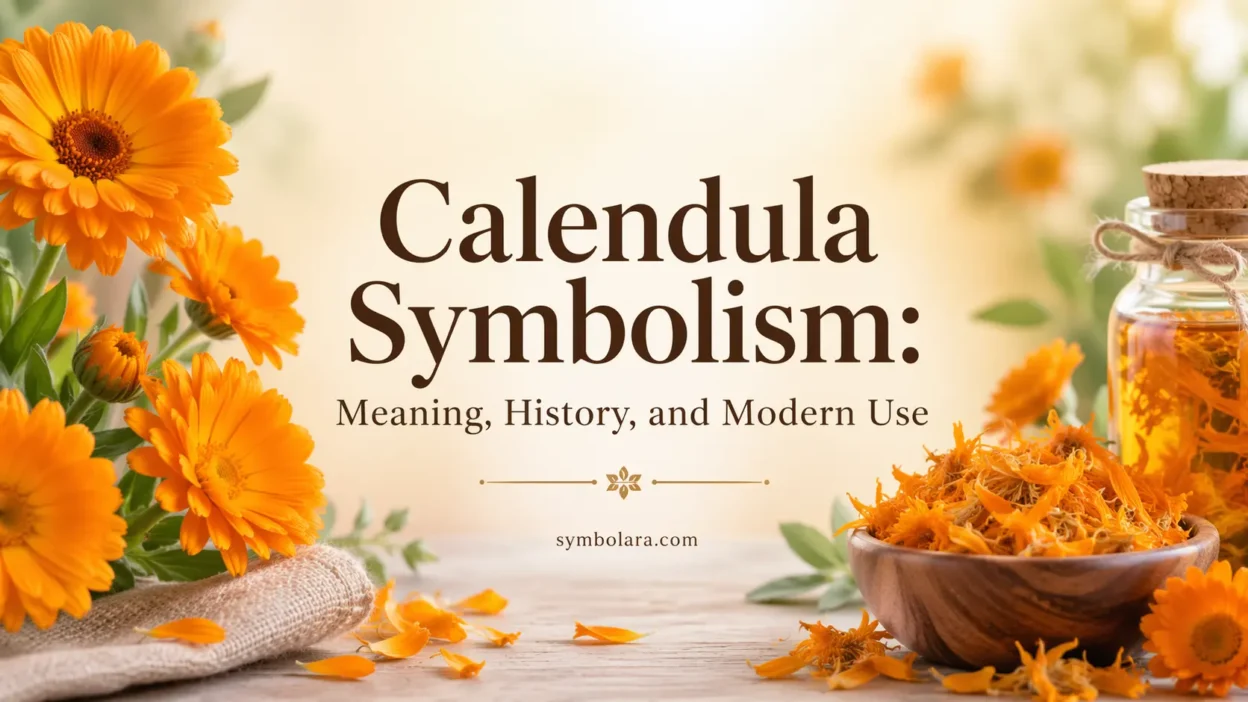
Calendula officinalis has vivid yellow to orange daisy-like flower heads, aromatic leaves, and a long blooming season. The flowers often open and close with the light, and the plant is known for blooming generously across a long stretch of the growing season. Even its name is often connected to the Latin calendae, or the first day of the month, reflecting the idea of regular return.
That physical character explains a lot of its symbolism. A flower that looks sunlit, blooms repeatedly, and is easy to grow naturally comes to represent persistence, brightness, and renewal in ordinary life. Unlike flowers valued mainly for rarity, calendula suggests accessibility. Its symbolism is shaped by the fact that it feels close at hand.
Calendula Flower Color Meaning: Yellow and Orange Symbolism
The colors of calendula strongly influence its symbolism. Most calendula flowers appear in shades of yellow, gold, and orange, and these colors naturally shape how people interpret the plant.
Yellow calendula is often associated with happiness, optimism, clarity, and emotional brightness. Because yellow resembles sunlight, it can symbolize encouragement, fresh energy, and a positive outlook during challenging times.
Orange calendula carries meanings of creativity, warmth, confidence, and vitality. Orange flowers often feel energetic and welcoming, which supports calendula’s connection with comfort and emotional renewal.
Together, these colors create a symbolism based on warmth rather than intensity. Calendula does not usually represent overwhelming passion or dramatic change. Instead, it suggests steady encouragement, gentle strength, and the kind of positivity that supports everyday life.
The Most Common Meanings Today
Today, calendula most often symbolizes healing, protection, emotional uplift, and resilience. These meanings are not arbitrary. They come from the plant’s long use in herbal skin preparations, its warm gold-orange color, and its reputation as a dependable garden flower rather than a fragile showpiece.
In plain terms, calendula tends to stand for help, recovery, and steadiness. It is the sort of flower people choose when they want a symbol of getting through something, caring for a body, or bringing light into a difficult season. In American use, that makes it feel closer to comfort and restoration than to grand passion.
What Does Calendula Symbolize Spiritually?
Calendula has a gentle spiritual symbolism connected with healing, renewal, protection, and inner strength. Unlike symbols that focus on dramatic transformation, calendula represents the quieter process of restoring balance and finding light during difficult periods.
Its golden and orange colors often connect it with sunlight, energy, and emotional warmth. Because the flower continues blooming through changing seasons, many people view it as a reminder of endurance, patience, and the ability to continue growing.
In spiritual interpretations, calendula may represent the idea that healing happens gradually. The flower’s symbolism focuses less on avoiding challenges and more on developing strength while moving through them.
Some traditions also connect calendula with gratitude, devotion, and offering. Its historical association with “Mary’s gold” added meanings of tenderness, faith, and respectful care in Christian symbolism.
Today, many people choose calendula as a personal symbol because it reflects hope that feels realistic: the belief that comfort, recovery, and renewal can come through small but meaningful steps.
Ancient and Early Roots of Calendula Symbolism
Calendula’s symbolic life reaches back into the ancient Mediterranean world, where it was used in gardens, food, dyeing, and traditional remedies. Reports of use in Greek and Roman settings, along with its long cultivation in southern Europe and the eastern Mediterranean, help explain why it gathered meanings tied to festivity, usefulness, and repeated cycles rather than a single fixed myth.
Because the flower opens with daylight and carries a sunlike color, it was readily associated with vitality and the visible rhythms of time. Some later writers also tied its name to regular blooming through the calendar, which strengthened meanings of constancy and return. Whether every old claim can be proven in exact detail, the broad pattern is clear: calendula became meaningful because it was bright, recurrent, and practically useful.
How Christian Tradition Shaped the Flower’s Meaning
One of the most influential layers of calendula symbolism comes from the older English name “Mary’s gold,” which connected the flower to the Virgin Mary. In medieval and later Christian tradition, flowers were often linked with Mary as signs of purity, humility, praise, or loving devotion, and calendula became part of that devotional naming world.
That history matters because it shifts calendula away from being only a cheerful garden flower. It also carries associations with reverence, faithful care, and offering. In Christian contexts, especially in garden symbolism, calendula can suggest tenderness joined with service: beauty that is not ornamental alone, but given over to use, honor, and remembrance.
Calendula in Folk Practice and Protective Symbolism
Calendula also appears in older European folk beliefs about protection, healing, and divination. Historical accounts describe the flower in charms, midsummer practices, and household customs meant to guard the home or reveal truth in love. These uses should be treated carefully; they belong to folklore rather than modern science. But symbolically, they are important because they show calendula was once viewed as a flower that did something, not just a flower that looked pretty.
That practical-magical role still echoes in modern interpretation. Even when Americans do not know the old folklore, they often read calendula as protective and restorative. The symbolism survives in softened form: less about warding off evil, more about creating a sense of safety, gentleness, and recovery.
What It Commonly Means in the United States
In the United States, calendula is usually interpreted through gardening and wellness culture. It shows up in home herb gardens, farmers market soaps, balms, salves, seed packets, pollinator beds, and cottage-style floral design. Because of that, its meaning often feels domestic and approachable. It signals care, natural simplicity, and the idea that small things can still be restorative.
Americans also tend to respond strongly to color psychology. Orange and yellow flowers often suggest sunlight, openness, friendliness, and visible life. Calendula benefits from that visual instinct. Even people who know nothing about its history often read it as a “feel better” flower. In U.S. symbolism, then, calendula tends to mean recovery with warmth, not suffering with grandeur.
A Quick Comparison of Common Meanings
| Context | Meaning in the USA | Common Associations | Notes |
| Herb gardens | Healing and usefulness | Salves, teas, home care | Strong practical association |
| Floral symbolism | Warmth and optimism | Sunlight, gold, cheer | Usually positive |
| Religious naming | Devotion and offering | Mary, reverence, care | Comes from “Mary’s gold” |
| Victorian flower language | Grief, jealousy, remembrance | Mourning, emotional complexity | Older meaning, less common now |
| Personal style or tattoos | Resilience and recovery | Growth, surviving hard seasons | Modern individualized meaning |
Why Calendula Can Mean Both Joy and Grief
At first glance, calendula seems like a purely cheerful flower. Its color is sunny, and its current American associations are overwhelmingly positive. But older flower-language traditions attached marigold forms, including calendula, to grief, jealousy, despair, or remembrance. Victorian floriography was not always based on botany alone; it mixed poetry, social codes, inherited symbolism, and changing custom.
That is why calendula has a split symbolic record. One stream emphasizes brightness, devotion, and cure. Another emphasizes sorrow, mourning, and the emotional sting of attachment. The contradiction is not really a contradiction. Bright flowers are often used around grief because they hold memory against darkness. Calendula can therefore symbolize both comfort and the pain that made comfort necessary.
Emotional and Psychological Meaning
On an emotional level, calendula often communicates grounded hope. It does not have the high-drama symbolism of a red rose or the ceremonial purity of a white lily. Instead, it suggests everyday endurance: getting up again, tending a wound, making a home softer, keeping something alive through weather.
Psychologically, that makes calendula appealing to people who identify with healing in progress rather than perfection. The flower can stand for self-repair, emotional warmth, and the wish to make life more livable. Its symbolism works especially well for people who dislike grand declarations but still want a symbol that feels tender and hopeful.
Calendula Symbolism in Dreams: Meaning and Interpretations
Seeing calendula in a dream is often interpreted as a symbol of healing, emotional renewal, and positive change. Because flowers commonly represent growth and personal development, calendula may appear as a reminder to care for yourself or pay attention to areas of life that need restoration.
A blooming calendula flower in a dream may suggest hope, recovery, or a new stage of personal growth. A field of calendula could represent abundance, emotional support, or a desire for a calmer and more balanced lifestyle.
Dream symbolism is personal, and there is no universal meaning for every image. The emotions connected with the dream often matter more than the flower itself. A dream involving calendula may represent comfort for one person and resilience for another.
In modern interpretations, calendula dreams are often connected with themes of healing, patience, and finding brightness after difficult experiences.
Cross-Cultural Meanings Beyond the United States
Outside the United States, calendula has also carried ritual and decorative meaning in Christian, Mediterranean, South Asian, and herbal traditions. Some traditions treat marigold-type flowers as sacred offerings, while others value them in feast-day decoration, household medicine, or seasonal observance. Because common names overlap across regions, cultural meanings can blur together, and not every marigold tradition belongs specifically to calendula officinalis.
That distinction is important. Readers should be careful not to collapse all marigold symbolism into one global meaning. Calendula does share a broad symbolic field of gold color, devotion, and ritual usefulness, but some of the most famous marigold associations in Mexico and South Asia involve related but different plants. Respecting that difference makes the symbolism more accurate, not less meaningful.
Why It Appears in Tattoos, Jewelry, and Personal Style
Calendula works well in tattoos and personal symbols because it is visually bright but not overused. People often choose it when they want a floral image that suggests healing, self-protection, or surviving a difficult period without using a more conventional flower like a rose or lotus. Its many petals and warm palette make it easy to personalize without losing recognizability.
In jewelry, art prints, and apparel, calendula often signals a cottage-garden aesthetic, herbal identity, or attachment to slower, more tactile forms of care. It can also carry a seasonal feeling, especially late summer into fall. In that sense, calendula symbolism in personal style often says, “I value restoration, warmth, and usefulness.”
Calendula in Home Decor and Digital Culture
In modern decor, calendula appears in botanical prints, dried flower arrangements, natural-dye palettes, herbal packaging, and handmade skin-care branding. When used this way, the flower often stands for clean simplicity, handmade care, and a domestic world organized around comfort rather than display.
On social media, calendula often belongs to a broader visual language that includes cottage gardens, herbalism, kitchen apothecary aesthetics, and seasonal rituals. That does not mean every online use is historically rigorous. But it does show how the flower now functions as a visual shorthand for gentle self-care and earth-toned calm in American digital culture. This is a modern extension of older meanings, not a direct copy of them.
Common Misunderstandings About Calendula Symbolism
The most common misunderstanding is assuming calendula means exactly the same thing as every other marigold. It does not. Calendula officinalis has its own European garden history, herbal associations, and Christian naming tradition. Tagetes marigolds have overlapping colors and some shared symbolic territory, but they come with different cultural histories as well.
Another misunderstanding is assuming that a medicinal use automatically equals a symbolic meaning. Often it contributes to symbolism, but the symbolic meaning comes from how people interpret that use socially. Calendula symbolizes healing partly because people have long handled it in healing contexts. The meaning is cultural before it is abstract.
Calendula vs Marigold: Understanding the Symbolic Difference
Calendula and marigold are often confused because calendula is commonly called “pot marigold.” However, they are different plants with separate histories and symbolic traditions.
Calendula officinalis belongs to the Calendula genus and has strong associations with European herbal traditions, healing, devotion, and garden symbolism. Its meaning often centers around care, restoration, and warmth.
Tagetes marigolds, which include many popular garden marigold varieties, have different cultural histories. In some regions, especially in celebrations and rituals, Tagetes flowers carry meanings connected with remembrance, spirituality, and honoring ancestors.
Because both flowers share bright yellow and orange colors, some symbolic meanings overlap. However, understanding the botanical difference helps create a more accurate interpretation of each flower’s cultural meaning.
How the Meaning Has Evolved Over Time
Calendula’s meaning has moved from ritual and practical use toward personal identity and lifestyle symbolism. Earlier meanings grew out of religion, folk practice, cooking, and medicinal tradition. Nineteenth-century flower language then added a more emotional code, including grief and jealousy. In current American culture, the emphasis has shifted again toward comfort, care, natural living, and emotional resilience.
That evolution makes sense. Modern Americans are less likely to use a flower as a secret social code and more likely to use it as a personal symbol. Calendula now fits especially well in a culture that values wellness, garden intimacy, and visible reminders of recovery. The older meanings have not vanished, but the center of gravity has clearly changed.
FAQs
What does calendula symbolize spiritually?
Spiritually, calendula is often read as a symbol of healing, protection, and light returning after hardship. In Christian-inflected symbolism, its older link to “Mary’s gold” can also add meanings of devotion, tenderness, and reverent care.
Is calendula a positive symbol?
Most of the time, yes. In modern American use it usually carries positive meanings such as comfort, warmth, resilience, and restoration, even though older flower-language traditions also linked marigold forms to grief or jealousy.
What does a calendula tattoo mean?
A calendula tattoo often suggests recovery, emotional endurance, or the decision to keep growing after a painful period. Some people also choose it because it feels more personal and less conventional than other symbolic flowers.
Is calendula connected to religion?
It can be. The traditional name “Mary’s gold” ties calendula to Marian symbolism in Christian contexts, where flowers were often used to express devotion and praise.
Does calendula mean the same thing as marigold?
Not always. Calendula is commonly called pot marigold, but it is botanically distinct from Tagetes marigolds, so some symbolic meanings overlap while others belong to different plant traditions.
Why is calendula associated with healing?
That meaning comes largely from long-standing culinary and herbal use, especially in preparations for skin comfort and minor household care. Over time, repeated practical use helped turn the flower into a cultural symbol of soothing and repair.
What does calendula symbolize in love?
Calendula usually symbolizes caring, loyalty, warmth, and emotional support rather than romantic passion. It represents a steady type of love built through kindness, healing, and commitment.
Is calendula a symbol of good luck?
Calendula is sometimes viewed as a symbol of good fortune because of its bright color, protective folklore, and association with positive energy. However, meanings vary across cultures and traditions.
Conclusion
Calendula symbolism is most clearly about healing, warmth, and cheerful endurance. What makes the flower interesting is that those meanings are not merely modern inventions. They grow out of the plant’s bright appearance, long garden history, devotional naming, household usefulness, and later flower-language traditions.
In the United States today, calendula usually feels practical, kind, and emotionally steady. It is a flower people reach for when they want to express care, recovery, and light that stays close to daily life.